

You sit in the barber chair, and the barber asks, “Taper or fade?” Many people freeze at this point. Both cuts clean up the sides and neckline, and both look sharp. Yet they feel quite different once you leave the shop.
This guide explains low taper vs low fade in plain language. You will learn how each cut is made, how each one looks and grows out, and which suits your face shape, hair type and schedule. You will also get a simple script to use with your barber.
The Main Difference
A low taper shortens the hair gradually and leaves some length at the bottom. A low fade shortens the hair much more and blends down to very short stubble or bare skin.
Here is the quick version:
- Low taper: soft, subtle and natural. The hair stays visible, even at its shortest point.
- Low fade: sharper, with more contrast. The sides disappear into skin or a very short shadow.
Both cuts start low, near the ears and along the neckline. That is why people mix them up. The difference is how far down the hair is cut and how fast the length changes.
Think of a taper as a gentle slope. A fade is a steeper drop.
What Is a Low Taper?

A low taper is a haircut where the hair on the sides and back gets shorter in small, even steps. The change happens only in the lower part of the head, around the sideburns, behind the ear and across the nape.
The hair at the bottom is not cut to skin. It usually stays at a short length, often around a number 1 or 2 clipper guard, which is roughly 3 mm to 6 mm. The result is a clean edge that still looks like hair.
Key traits of a low taper
- The change in length is slow and smooth.
- The hair never fully disappears at the bottom.
- The upper sides and top stay longer.
- It follows the natural hairline, so it looks tidy and relaxed.
- It grows out softly, with no harsh line.
Why people choose it?
A low taper looks polished without looking styled. It works in an office, a classroom, a wedding or a weekend out. It also suits people who want a neat cut without a big change.
Barbers often call it a “classic” for this reason. It has been a staple of men’s cutting for decades, and it still holds up today.
What Is a Low Fade?
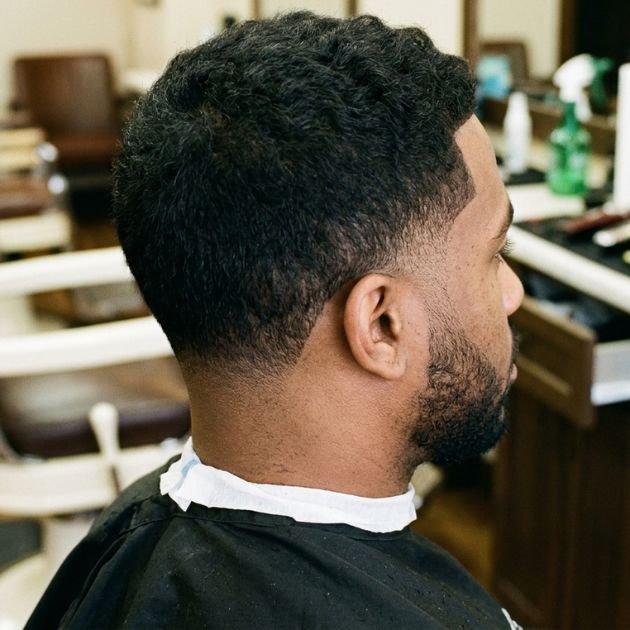
A low fade is a haircut where the sides and back blend from longer hair on top down to very short hair or skin at the bottom. The fade starts low, just above the ear and along the neckline, and stays low on the head.
The key word is fade. The hair does not only get shorter. It seems to vanish. A skilled barber blends the guard lengths so the transition looks smooth, like a gradient in a photo.
Key traits of a low fade
- The bottom of the cut is often skin (a bald or skin fade) or a very short shadow.
- The contrast between the sides and the top is stronger.
- The blend sits low, so the upper sides keep more hair than they would in a mid or high fade.
- It looks crisp and modern.
- It needs more upkeep to stay sharp.
See also: Burst Fade Mullet: Styles, Hair Types, Barber Guide and Maintenance
Types of low fade
The low fade has a few common versions:
- Low skin fade (bald fade): goes down to bare skin at the bottom.
- Low shadow fade: stops at a very short length, so there is a soft shadow instead of skin.
- Low drop fade: the fade line curves down behind the ear, following the shape of the head.
- Low burst fade: the fade circles the ear and leaves more length at the back.
Knowing these names helps you describe what you want. It also shows your barber that you have thought about it.
Low Taper vs Low Fade at a Glance
| Feature | Low Taper | Low Fade |
| Bottom length | Short hair left (about 3 to 6 mm) | Skin or near skin |
| Contrast | Soft and subtle | Sharp and bold |
| Transition | Gradual and natural | Quick and blended |
| Overall look | Classic, polished | Modern, crisp |
| Upkeep | Every 3 to 4 weeks | Every 2 to 3 weeks |
| Grow out | Soft, forgiving | Shows faster |
| Best for | Work, formal, low effort | Style focused, high contrast |
If you only remember one thing from the table, remember this: taper means subtle, fade means contrast.
Which One Looks More Natural, and Where Each Works Best
Which looks more natural?
The low taper looks more natural. The hair keeps its length at the edges, so the cut feels like your own hair, just cleaner. People often notice that you look “fresh” without being able to say why.
The low fade looks more deliberate. The skin or shadow at the bottom creates a clear border. That is the whole point, but it does stand out more.
Where a low taper works best
- Corporate and conservative offices
- Job interviews and client meetings
- Schools, universities and uniformed roles
- Weddings and formal events
- Anyone growing out a longer style
Where a low fade works best
- Creative workplaces and social settings
- Gym, sports and active lifestyles
- Men who like a sharp, defined look
- People who enjoy visiting the barber often
- Cuts with textured or longer tops where contrast adds shape
Neither is “too casual” or “too formal” in every setting. A well-made fade looks sharp in a suit. A rough taper looks messy anywhere. The skill of the barber matters as much as the name of the cut.
Choosing Based on Your Face Shape
Face shape does not decide everything, but it helps. The goal is to balance your features, not hide them.
Oval face
Almost anything works. Choose based on your style and upkeep. A low fade adds edge, while a low taper keeps things classic.
Round face
A low fade can help. The sharper contrast adds structure and makes the head look longer. Keep some height on top for the same effect.
Square face
A low taper is a smart pick. It keeps the strong jawline looking balanced instead of too angular. A low fade also works if you like a bolder look.
Oblong or long face
A low taper with a bit of length at the sides keeps the face from looking even longer. Avoid adding too much height on top.
Heart shaped face
A low taper softens the area near the temples and sits well with a narrower chin. A low fade works too, but keep the top fuller.
Diamond face
Either works. A low taper with texture on top balances wide cheekbones. A low fade with a fuller top also looks good.
A quick note: A beard changes the equation. If you wear a beard, a low fade or low taper that blends into the sideburns and beard looks cleanest. Ask your barber to match the beard line with the haircut.
See also: Mid Taper Fade for Boys: 10 Best Styles (2026)
Choosing Based on Your Hair Type
Hair texture changes how each cut looks and how long it lasts. This is the part most guides skip, so it deserves attention.
Straight hair
Straight hair shows every line. A low fade looks very crisp, but any uneven spot also shows. A low taper is more forgiving and grows out neatly.
Wavy hair
Waves add natural volume to the top. A low taper keeps the sides tidy while the top moves freely. A low fade adds clean contrast to the waves.
Curly hair
Curls look great with both cuts. A low fade makes the curls on top stand out, which many people love. A low taper gives a softer, more relaxed frame. In both cases, keep the top long enough for the curl pattern to show.
Coily and afro textured hair
Both cuts are very popular on coily hair. A low fade gives a sharp, high contrast finish with a clean line up. A low taper keeps the shape rounded and natural. Coily hair grows out dense, so fades can look fuzzy sooner. Plan more frequent visits if you want that crisp edge.
Thick hair
Thick hair can look bulky at the sides. A low fade removes that bulk neatly. A low taper keeps more weight, so ask for slightly shorter guard lengths if you want less volume.
Thin or fine hair
Thin hair can show skin quickly. A low taper often looks fuller and more natural. A low fade can work, but the contrast may make thinning areas more visible.
Receding hairline
Keep the top longer and choose a low taper or a low shadow fade. Avoid very tight lines at the temples, since they can highlight the recession.
Maintenance and How Long Each Lasts
Hair grows roughly 1 cm per month on average. On a short cut, that small change is easy to see.
Low taper upkeep
- Looks best for: about 3 to 4 weeks
- Grows out: softly, with no hard line
- Home care: shampoo and condition, brush or comb, trim the neckline if needed
- Cost: usually lower, because you visit less often
Low fade upkeep
- Looks best for: about 2 to 3 weeks
- Grows out: the skin area fills in first, which softens the contrast
- Home care: same as above, plus moisturizing the skin along the fade
- Cost: usually higher, because you visit more often
Tips to make either cut last longer
- Book your next visit before you leave. A regular schedule keeps the shape.
- Ask for a line up only when you need it. Too many line ups can push the hairline back.
- Keep the neckline clean. A neat neckline makes a week old cut look fresh.
- Moisturize your scalp. Dry skin shows more under a fade.
- Avoid cutting at home. Fixing a mistake on a fade often means going shorter.
Cost and time
Taper cuts are often quicker, since there is less blending. Fades take longer because the barber works with several guard lengths and finishes with a blade or foil shaver. If your time or budget is tight, the taper is the practical choice.
Pairing with Popular Styles on Top
The sides are only half of the haircut. The top decides the final look.
Styles that suit a low taper
- Classic side part: professional and timeless
- Textured crop: casual and easy to style
- Quiff: gives height while the sides stay soft
- Slick back: works best with a bit of length
- Natural curls: keeps the shape clean without looking forced
- Longer top with messy texture: the taper keeps it neat
Styles that suit a low fade
- Textured quiff or pompadour: high contrast shows off the volume
- French crop: short fringe with sharp sides
- Buzz cut: the fade adds shape to a simple cut
- Twists, coils and curls: crisp edges frame the texture
- Crew cut: a modern take on a classic
- Faux hawk or spikes: the fade adds drama
A simple rule
The longer and softer the top, the better it often pairs with a taper. The shorter or bolder the top, the better it pairs with a fade. There are exceptions, so use this as a starting point.
How to Ask Your Barber?
Barbers hear “taper fade” every day, and they may interpret it as either cut. The term is used loosely across the industry. Avoid the confusion by being specific.
What to say?
Use this simple script:
“I’d like a low taper. Keep some length at the bottom, around a number 2. Blend it up gradually and keep the top about [length] with [style].”
Or for a fade:
“I’d like a low skin fade. Start the fade just above the ear, take it down to skin, and leave the top about [length].”
Details worth mentioning
- Where the cut starts. Say “low,” and point to just above your ear.
- The shortest length. Skin, a number 0, a number 1 or a number 2.
- The top length. Use a guard number or show with your fingers.
- The neckline. Natural, rounded or squared.
- Line up or no line up. Tell them if you want a crisp edge.
- Beard blending. If you have a beard, ask for it to match.
Bring a photo
A reference photo removes guesswork. Choose one that shows the cut from the side and the back. If the photo shows a different hair type from yours, tell your barber, so they can adjust.
If you are unsure
Say, “I’m deciding between a low taper and a low fade. Which would suit my hair and face?” A good barber will be glad to help. Ask to start longer. They can always take more off, but they cannot put hair back.
So, Which Should You Choose?
Use this checklist to decide.
Choose a low taper if:
- You want a natural, polished look
- You work in a formal or conservative setting
- You prefer visiting the barber every 3 to 4 weeks
- You are growing your hair out
- You have thin hair or a receding hairline
- You like a cut that needs little styling
Choose a low fade if:
- You want a sharp, modern finish
- You enjoy visible contrast between the sides and the top
- You are fine with a barber visit every 2 to 3 weeks
- You have thick or curly hair and want clean shape
- You wear a textured top that needs a bold frame
- You like the clean look of skin along the edges
Still stuck? Start with a low taper. It is the safer option, and you can go to a low fade at your next visit. Going from a fade to a taper takes weeks, but going from a taper to a fade takes one appointment.
FAQ’s
These five questions are written the way people ask them out loud, so they work for voice search and AI assistants.
What is the difference between a low taper and a low fade?
A low taper keeps short hair at the bottom and blends gradually. A low fade cuts down to skin or near skin for a sharper, higher contrast look.
Which is better, a low taper or a low fade?
Neither is better overall. A low taper suits a natural, classic look, while a low fade suits a bolder, more defined style.
How often should I get a low fade or a low taper?
Get a low fade every 2 to 3 weeks and a low taper every 3 to 4 weeks. Both stay neat longer if you keep the neckline clean.
Is a low taper the same as a taper fade?
Not exactly. A taper fade is a blend of both, and the term is used loosely, so tell your barber the shortest length you want.
Can I get a low taper or low fade with curly or thick hair?
Yes, both work very well on curly, coily and thick hair. Fades give crisp contrast, and tapers give a softer shape.
Conclusion
The low taper vs low fade question comes down to contrast and commitment. A low taper is soft, natural and easy to maintain. A low fade is sharp, bold and needs more frequent visits.
Look at your face shape, your hair type and your schedule. Think about where you spend your days and how much time you want to spend in the barber chair. Then use the barber script from this guide, bring a photo, and be specific about the shortest length you want.
If you are unsure, begin with the taper. You can always go shorter next time, and a good barber will help you find the cut that fits you best.

Abu Huraira is the administrator of Faxhion Crown, a blog dedicated to hairstyles, fashion trends, and personal style. He is passionate about helping readers discover fresh hairstyle ideas, explore modern fashion, and find inspiration for everyday looks. Through Faxhion Crown, Huraira aims to share helpful styling tips, beauty inspiration, and fashion insights that help readers express their individuality with confidence.
2 thoughts on “Low Taper vs Low Fade: What’s the Difference, and Which Should You Choose?”