

A burst fade is one of the few cuts that changes your whole head shape, not just your sides. It curves around the ear like a half circle, leaves length at the back, and gives almost any top style a sharper frame. This guide explains how it works, which version suits you, and exactly what to tell your barber.
Quick answer: A burst fade is a fade that wraps in a semicircle around the ear. Hair shortens sharply behind and above the ear, while the nape stays longer. It works on straight, wavy and curly hair, and most men book a refresh every 2 to 4 weeks.
Burst Fade Haircuts: What Makes the Shape Different?
Most fades run in a flat band around the head. A burst fade does not. The fade starts near the temple or sideburn, arcs over and behind the ear, then drops toward the neckline. The result looks like a rounded wedge cut into the side of your hair.
Three things define the shape:
- A curved fade line that follows the ear instead of running straight across.
- Longer hair at the nape, which is why it pairs so well with mullets and tapered backs.
- A strong contrast between the faded area and the hair on top.
Because the curve frames the ear, the cut also makes the head look more sculpted. That is a big reason barbers report it as a steady request in 2026, especially from men who already wear a standard fade and want a change without losing the clean look.
Burst Fade vs Regular Fade
A regular fade is a horizontal gradient. A burst fade is a gradient that bends. Both blend short hair into longer hair, but the layout is different.
| Feature | Regular Fade | Burst Fade |
| Fade line | Straight, runs around the head | Curved, wraps the ear |
| Back of head | Usually faded all the way | Often left longer at the nape |
| Best paired with | Almost any cut | Mullets, mohawks, curls, textured tops |
| Barber skill needed | Moderate | Higher, curves are harder to blend |
| Look | Classic, uniform | Bold, shaped |
If you want a safe cut for every setting, a regular fade is simple. If you want people to notice the shape of your haircut, choose the burst.
Burst Fade Styles: 13 Looks to Show Your Barber
Use these as reference points when you describe your ideal cut.
Classic burst fade
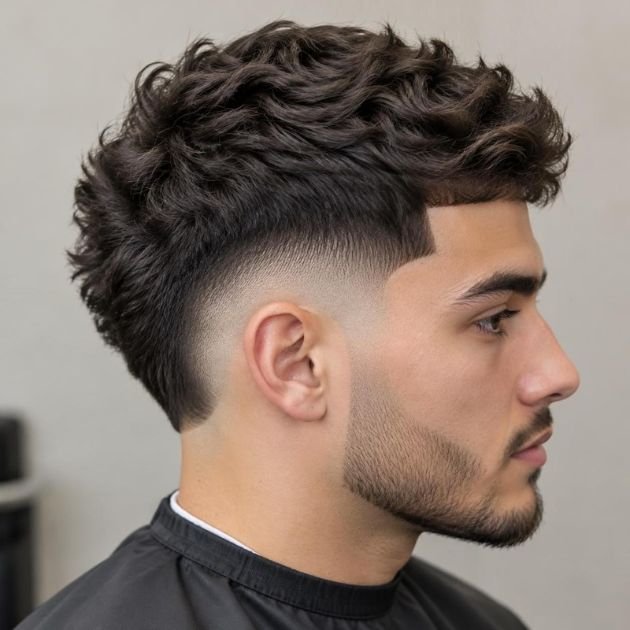
The baseline version. A smooth curve around the ear, short sides and a medium length top. It works for work, weekends and nearly every face shape.
The burst fade from the back
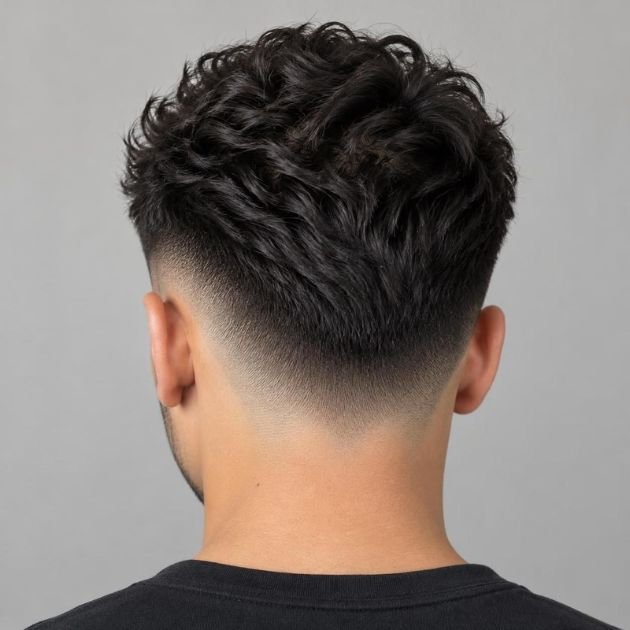
From behind, the cut looks like two matching arcs rising from the neck, with a longer center strip. It is the angle to check for symmetry.
Low burst fade vs high burst fade

A low burst sits near the ear and looks subtle. A high burst climbs toward the temple and gives a bold, high contrast shape. Choose by how much attention you want.
Mid burst fade

The middle option. It balances sharpness and wearability, which makes it the most requested height for first timers.
High burst fade

Maximum drama. Best on men with strong head shape and thick hair, and best paired with a voluminous top.
Burst fade mullet
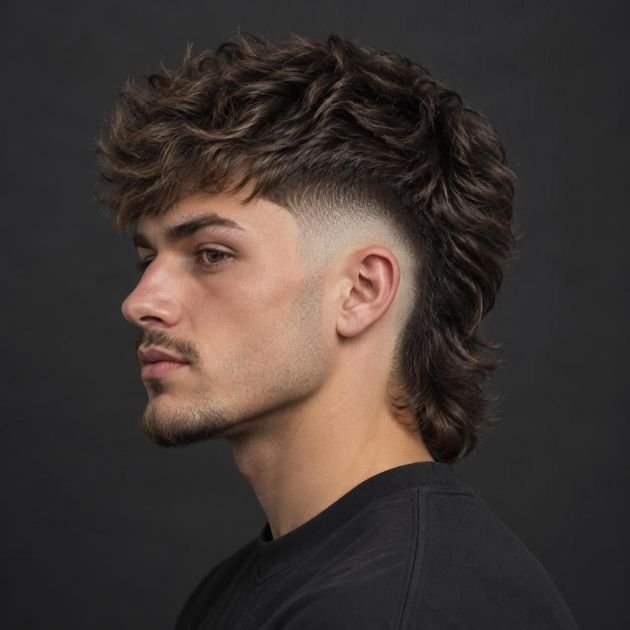
The cut that made the burst famous again. Short sides with a curved fade, and hair left long at the back. Ask for texture through the length so it looks modern, not dated.
Burst fade mohawk
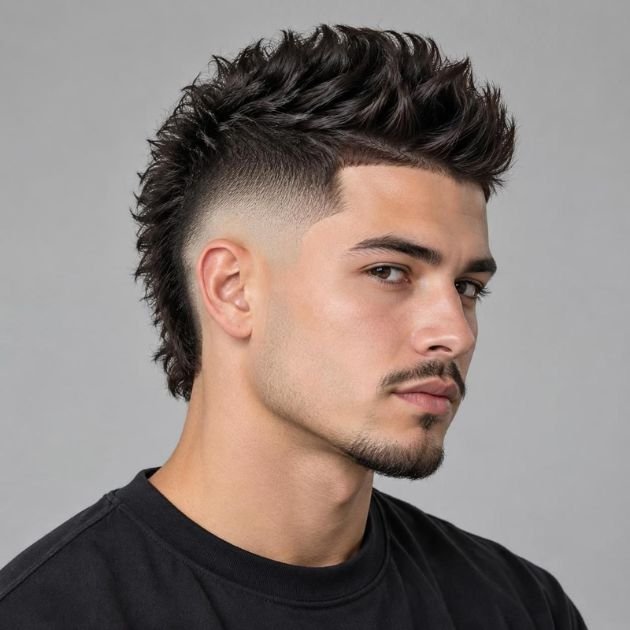
A central strip of hair with curved fades on both sides. Style it up for a statement look or flatten it for a quieter version.
Burst fade with a design
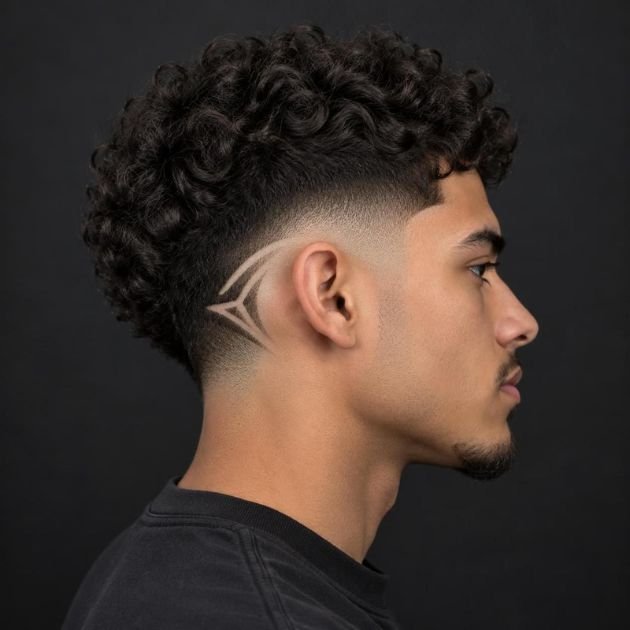
Barbers can carve lines, stripes or small patterns into the faded section. Keep designs simple if you need to look professional, since they grow out in a few days.
Burst fade with a V at the back
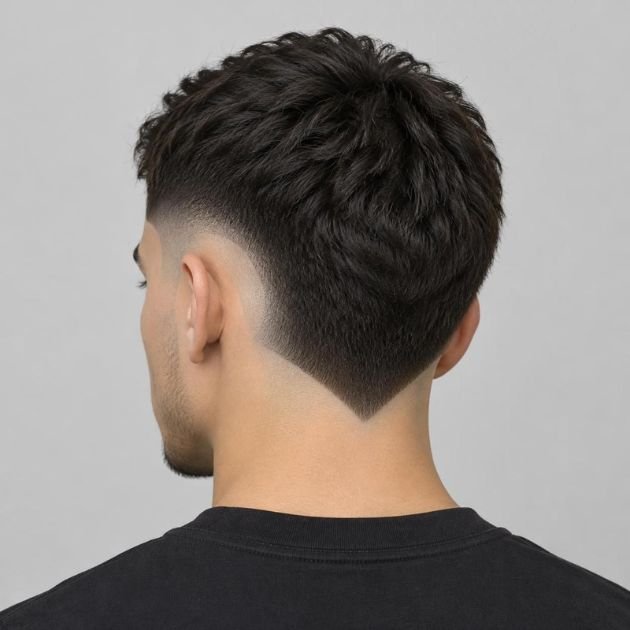
The nape is cut into a V shape that points down. It looks sharp from behind and suits men who keep their hair longer at the back.
Burst fade on curly hair

Tight faded sides with defined curls on top. Use a curl cream to keep the tops soft and separated.
Burst fade with a buzz cut
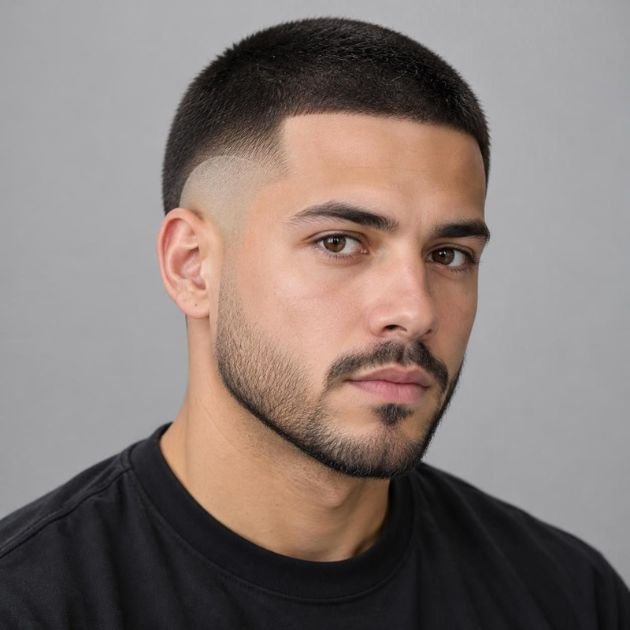
A very short top with a curved fade. It is quick to maintain, practical in hot weather and easy for beginners to try.
Burst fade with waves

A favorite for coily hair. Brushed waves on top contrast with the clean curve at the side. Use a durag at night to keep the pattern crisp.
Burst fade with a slick back
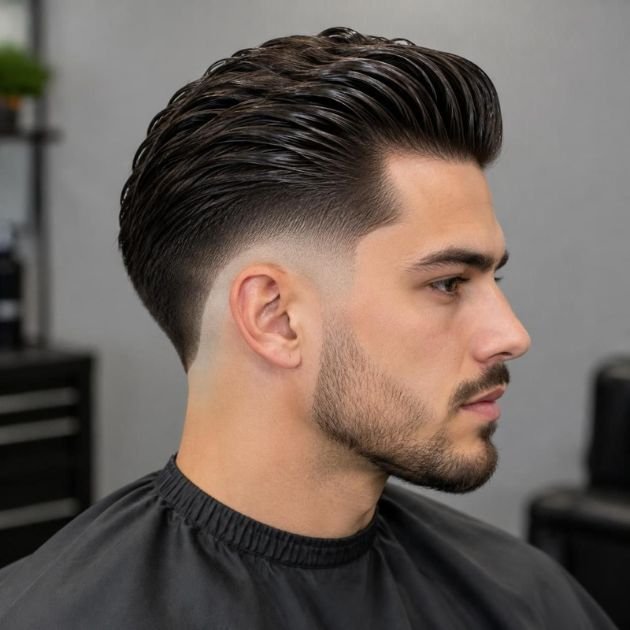
Combed back top with a strong fade on the sides. Use pomade or cream for shine, and keep the nape neat for a formal finish.
Burst Fade Placement: Side and Rear Views
Placement is where most bad burst fades go wrong, so check it from every angle.
Side view: The fade should begin in front of the ear or at the temple and loop around the back of the ear. The curve should look smooth, with no flat spots or visible steps.
Rear view: Look for a rounded shape on both sides that meets a longer center section at the nape. The two curves should mirror each other. If one side sits higher, it will show immediately.
Front view: The sideburn and temple should flow into the curve. A clean lineup here makes the whole cut look intentional.
A quick test: take a photo of the back of your head after every cut. If the two sides are not level, ask your barber to correct it before you leave the chair.
Types of Burst Fade: Low, Mid and Strong
Height controls how bold the cut looks. The names vary slightly between barbershops, but the idea is consistent.
- Low burst fade: Starts just above the ear. Subtle, office-friendly and easy to grow out.
- Mid burst fade: Starts around the temple. This is the balanced pick for most men.
- High (strong) burst fade: Starts high on the side of the head. Dramatic, with the most contrast and the shortest sides.
If you are trying this cut for the first time, start with low or mid. You can always go higher next visit, but you cannot add hair back.
Shadow, Zero or Skin Burst Fade?
The fade height is one choice. The finish at the bottom is another.
- Shadow burst fade: The fade ends in a faint shadow of stubble. It looks soft and natural.
- Zero burst fade: The clippers go down to a zero setting, leaving the very shortest hair that is not shaved.
- Skin burst fade: The fade reaches bare skin, often using a foil shaver. It is the sharpest option and the highest maintenance.
Terms differ from barber to barber, so describe the result you want, not just the label. Say “I want it to fade to bare skin” or “I want some shadow left.” Darker hair on lighter skin shows skin fades most clearly, while shadow fades are more forgiving if you do not want a harsh contrast.
Best Top Styles for Burst Fade Haircuts
The fade is only half the cut. These tops pair best with it:
- Textured crop: Short, messy and easy to style with matte clay.
- Quiff or pompadour: Adds height and balances the strong sides.
- Curly top: Curls grow outward and make the curve more visible.
- Slick back: A polished, formal take.
- Mullet or longer back: Uses the nape length that the burst naturally leaves.
- Buzz top: A low effort version with a clean, military-inspired feel.
Match the top to your daily routine. If you spend two minutes on your hair, choose a crop or buzz. If you enjoy styling, go with a quiff or slick back.
How Hair Texture Changes the Result?
Your hair type affects how the curve reads.
- Straight hair: Shows every imperfection in the blend, so the fade must be very smooth. Hair falls flat, so add texture spray for body on top.
- Wavy hair: The most forgiving. The fade looks soft and the top holds shape naturally.
- Curly hair: The contrast between tight faded sides and defined curls is the whole appeal. Keep curls moisturized so they do not look dry against the clean sides.
- Coily hair: Holds sharp edges and clean lines extremely well, which is why the burst is popular on short coils and waves. Skin fades show the curve at its crispest.
- Thick or dense hair: Needs more blending time. Ask your barber to thin the transition so it does not look blocky.
- Fine or thinning hair: A lower burst keeps more hair around the ear and avoids exposing thin areas.
What to Tell Your Barber?
Barbers cannot read minds, and “burst fade” can mean different things. Use this checklist:
- Bring two or three photos, including one from the back.
- Say the height: low, mid or high.
- Say the finish: shadow, zero or skin.
- Say how long you want the nape: keep it, taper it or cut it short.
- Mention the top length and style you want.
- Explain how much time you spend styling.
A simple script: “I would like a mid burst fade with a skin finish, keep the length at the back, and a textured crop on top.” That gives enough detail to get it right the first time.
Maintenance and Grow-Out
Hair grows roughly half an inch a month on average, and a fade loses its sharpness quickly.
- Skin burst fade: Refresh every 2 weeks.
- Shadow or zero burst fade: Refresh every 2 to 4 weeks.
- Long top: Trim every 4 to 6 weeks.
Between visits:
- Wash and condition regularly to keep the scalp healthy.
- Use a light styling product, not heavy gel that can flake against short sides.
- Moisturize the skin around the faded area to prevent dryness and razor irritation.
Growing it out: The burst grows out better than many fades because the longer nape blends naturally. Expect around 6 to 8 weeks for the shape to soften, and 3 to 4 months for sides to reach a regular length. A barber can tidy the edges along the way.
Common Burst Fade Mistakes
- Picking the wrong height. A very high burst can overwhelm a small head or thin hair.
- Uneven sides. Check the back and both profiles before paying.
- Skipping the photo. Words alone lead to guesswork.
- Ignoring hair type. Fine hair and dense hair need different blending.
- Overstyling. Too much product makes the top look heavy and the contrast look harsh.
- Waiting too long between cuts. A burst fade without upkeep looks like a messy regular fade.
- Going to a barber with no fade experience. Curved blends take practice, so check their portfolio first.
More visual references
A photo helps more than any description. Search social media with terms such as “low burst fade curly,” “burst fade mullet back view” and “skin burst fade side profile.” Save pictures that match your hair type and face shape, and screenshot the back view in particular. Keep them in a folder on your phone so you can show them at every appointment.
Is a Burst Fade Professional?
It can be. A low or mid burst with a shadow finish, a neat top and a clean neckline suits most offices. High skin burst fades with bold designs or long mullet backs may feel too casual in conservative workplaces such as law, finance or client-facing roles.
To keep it professional, choose a lower height, keep the top tidy, avoid designs and maintain it every 2 to 3 weeks. If you are unsure, check your workplace dress code or ask your manager.
Can You Have a Burst Fade in the Military?
Usually not in its full form. Military grooming standards in most countries require a neat, tapered, uniform look. The curved shape, long nape and any shaved designs often conflict with those rules, and they differ by branch and country.
A conservative version, such as a tapered or standard fade with short, even hair, is more likely to meet the standard. Always read your branch’s current grooming regulations or ask your chain of command before booking, because rules change and enforcement varies.
Frequently Asked Questions
What is a burst fade haircut?
A burst fade is a fade that curves in a semicircle around the ear, leaving longer hair at the nape.
What is the difference between a burst fade and a regular fade?
A regular fade runs straight around the head, while a burst fade bends around the ear for a rounded shape.
How often should I get a burst fade touched up?
Every 2 to 4 weeks, or every 2 weeks if you wear a skin finish.
Does a burst fade work on curly or thick hair?
Yes. Curly and thick hair hold the contrast well, as long as your barber blends the curve carefully.
What should I tell my barber to get a burst fade?
Say the height (low, mid or high), the finish (shadow, zero or skin), the nape length and the top style, and bring a back-view photo.
Conclusion
The burst fade gives you a clean, curved shape that looks modern without being hard to wear. Pick a height that suits your head and your workplace, choose a finish that matches your upkeep habits, and match the top to your hair type. Most of all, bring photos and speak clearly with your barber. Do that, and you will walk out with a cut that looks sharp from every angle.
Related Hairstyles
25 Best Mid Taper Fade Blowout Haircuts for Men (2026)
Blowout Taper Haircut: Styles, Types, and How to Get the Look
Low Taper Fade Haircut for Straight Hair: Complete Style Guide for 2026
Low Taper Fade Fringe: 20 Fringe & Crop Styles With Images

Abu Huraira is the administrator of Faxhion Crown, a blog dedicated to hairstyles, fashion trends, and personal style. He is passionate about helping readers discover fresh hairstyle ideas, explore modern fashion, and find inspiration for everyday looks. Through Faxhion Crown, Huraira aims to share helpful styling tips, beauty inspiration, and fashion insights that help readers express their individuality with confidence.
1 thought on “Burst Fade Haircuts: 13 Trendy Styles for Men in 2026”