

The mullet is back, but it is not the stiff, spiky cut your dad wore in a 1985 photo. Today’s version is blended, textured, and far easier to wear. Athletes, musicians, and everyday people are choosing it because it feels bold without looking forced.
This guide covers what a modern mullet is, which fades work best, how to match the cut to your hair type, and how to grow one out. You will also get a barber script, a styling routine, and quick answers to common questions.
What Is a Modern Mullet?
A modern mullet is a haircut with shorter hair on the top and sides and longer hair at the back, where the two sections are blended instead of sharply split. The old “business in the front, party in the back” idea is still there, but the transition is smoother and the shape is more intentional.
Here is what separates it from the retro version:
- Softer blending: The sides taper or fade into the length at the back.
- More texture: Layers and point cutting add movement instead of a flat, heavy look.
- Flexible length: It can be a subtle “baby mullet” or a dramatic shoulder-length cut.
- Wider appeal: Men, women, and nonbinary people all wear it.
A barber or stylist usually builds the shape using clippers on the sides, scissors on top, and a texturizing technique on the back. That mix of tools is why a good mullet looks designed, not accidental.
Is the mullet still in style in 2026? Yes. Mullet-inspired cuts keep showing up in barber shops, on sports fields, and on runways. The trend has moved from a joke to a legitimate haircut choice.
Modern Mullet Fade Options
The fade controls how clean or relaxed your mullet looks. A tighter fade gives a sharper, more polished finish. A softer blend gives an easy, lived-in vibe. Pick the one that fits your daily routine and workplace.
Low taper mullet

A low taper trims the sides gradually, staying close to the ears and the neckline. It is the safest choice if you want a mullet that still looks professional.
- Best for: Office settings, first-time mullet wearers, and beards
- Maintenance: A clean-up every 3 to 4 weeks
- Why it works: The edges stay neat, so the longer back looks planned
Burst fade mullet
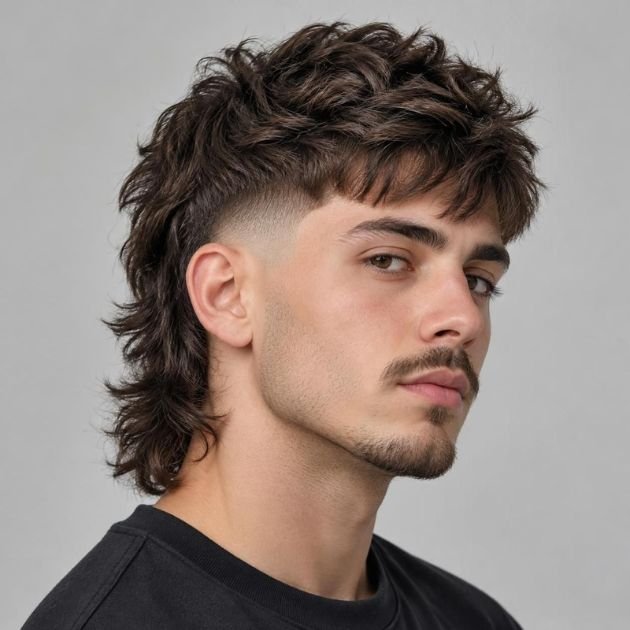
A burst fade curves around the ear, fading out in a half-circle shape and leaving more length at the nape. This shape makes the mullet feel rounded and gives extra contrast at the back.
- Best for: Medium to long mullets and wavy or curly hair
- Look: Rounded, textured, and a little edgy
- Tip: Ask for a low or mid burst so the shape stays wearable
Drop fade mullet
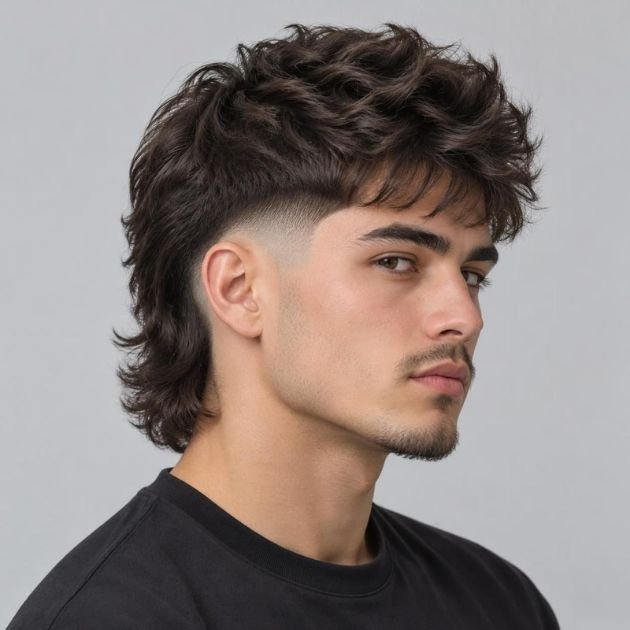
A drop fade follows the curve of the head, dipping lower behind the ear. It creates a dramatic arc that frames the longer back section.
- Best for: People who want a visible, stylish fade line
- Look: Sharp and modern with strong contrast
- Note: It needs frequent touch-ups to keep the arc crisp
Mohawk mullet

The mohawk mullet, sometimes called a “mohawk-hawk,” keeps the center strip longer and tapers the sides short. The strip flows back into the longer mullet length.
- Best for: Confident styles, concerts, and creative workplaces
- Look: Bold, high-energy, and easy to restyle
- Pairing: Works well with a skin or high fade on the sides
Soft mullet with no fade
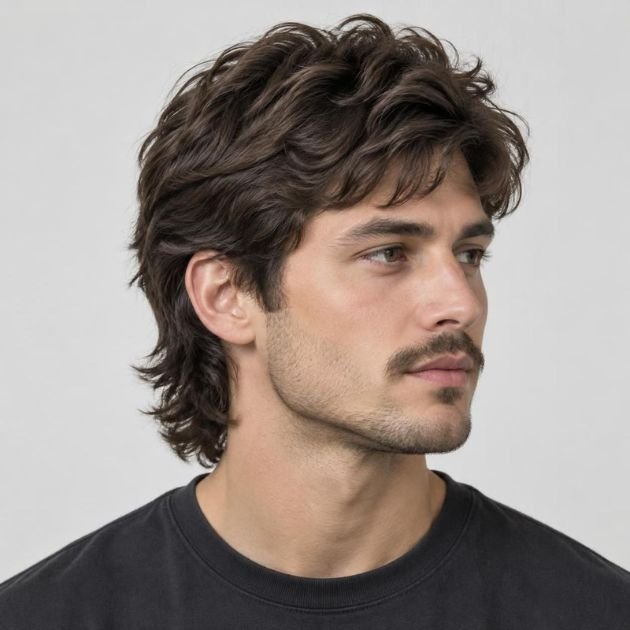
A soft mullet skips the clipper fade and uses scissor work for a gentle, layered shape. The sides are cut shorter but not buzzed, so the whole cut looks natural.
- Best for: Fine hair, wavy hair, and relaxed styles
- Maintenance: Lower, since there is no sharp fade to maintain
- Look: Shaggy, effortless, and slightly undone
Short vs Long Modern Mullet

Length changes the personality of the cut more than anything else. Here is a quick comparison.
| Feature | Short (baby) mullet | Long mullet |
| Back length | Just past the collar | Shoulder length or longer |
| Statement level | Subtle | Bold |
| Styling time | 3 to 5 minutes | 8 to 12 minutes |
| Trim frequency | Every 3 to 4 weeks | Every 6 to 8 weeks |
| Best for | Work and school | Creative and casual settings |
A short mullet is a great starting point. It gives you the shape without the commitment, and it grows out easily if you change your mind. A long mullet needs more patience and more product, but it makes a stronger statement.
Curly mullet

Curls are a natural fit for this cut. The curl pattern adds volume on top and bounce at the back, so the contrast shows up without any heavy styling.
- Keep the sides faded or tapered to control bulk
- Ask your stylist to cut curls dry or in their natural state
- Use a leave-in conditioner or curl cream to reduce frizz
Tight coils work well too, especially with a sharp fade that makes the length at the back stand out.
Straight hair mullet

Straight hair shows clean lines and sharp layers, so the cut looks precise. The downside is that it can fall flat.
- Add layers on top for lift
- Use a texturizing spray or sea salt spray for grip
- Choose point cutting at the ends to avoid a blunt, stiff look
Wavy hair and the middle part mullet

Wavy hair gives you the easiest mullet. The natural bend creates movement without much work. A middle part adds a soft, 90s feel and frames the face evenly.
- Let waves air dry, then scrunch in a light mousse
- Use a middle part with curtain-style fringe for a relaxed look
- Avoid heavy gels that weigh waves down
Thick hair Mullet
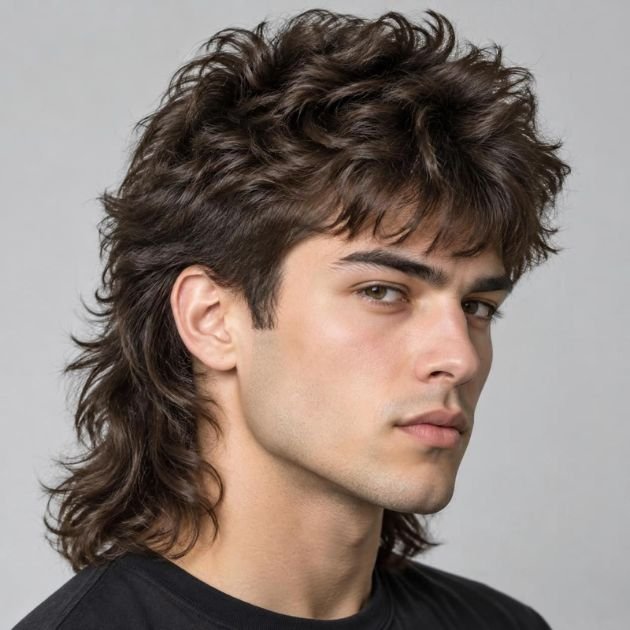
Thick hair needs weight removal, or the back can look like a solid block. Thinning shears and internal layers help the hair sit flat and move.
- Ask for texturizing, not just length
- Keep the sides tapered to avoid a triangle shape
- Trim regularly so the back does not get too heavy
Fine hair can work too. Keep the layers light and avoid cutting too short on top, or the shape can look thin.
Modern Mullet vs Wolf Cut

Both cuts use layers and a shaggy finish, so people confuse them. The main difference is the contrast between the top and the back.
- Modern mullet: Clear short-to-long contrast, often with a fade or taper on the sides
- Wolf cut: A blend of shag and mullet with heavy layering and less contrast, so it looks fuller and rounder
- Maintenance: Wolf cuts are usually easier to grow out; mullets need more frequent shaping
- Best choice: Pick a mullet for a sharper silhouette, and a wolf cut for a softer, shaggier shape
If you want the drama of a mullet without the strong edges, ask for a wolf cut with a slightly shorter top.
How to Grow a Mullet?
Growing a mullet takes patience, but the process is simple. Most people need 4 to 8 months, depending on starting length and hair growth rate.
- Stop cutting the back. Let the nape and lower section grow freely.
- Trim the top and sides lightly. Keep them tidy so the contrast starts to show.
- Get shape trims every 6 to 8 weeks. This removes split ends without losing length.
- Choose a growing-out cut. A tapered or layered shape keeps things neat in the awkward stage.
- Support your scalp. Wash regularly, condition the ends, and avoid too much heat.
- Use hats and clips if needed. A beanie or small clip helps through the in-between weeks.
Hair grows about half an inch per month on average, so a 4-inch gain takes roughly 8 months. Expect the middle stage to feel messy, and stay consistent.
What to Tell Your Barber?
A clear request saves you from a bad cut. Bring a photo and use these points:
- Name the style: “I want a modern mullet with a low taper.”
- Set the length: Say how long you want the back, such as “just past the collar” or “to my shoulders.”
- Choose the fade: Mention taper, burst, drop, or no fade.
- Describe the top: Ask for layers, a fringe, or a quiff.
- Mention your hair type: Curly, wavy, thick, or fine.
- Ask for texture: Say “point cutting” or “texturizing” to avoid a blunt finish.
Useful phrases to avoid confusion: “blend the sides into the back,” “keep the nape soft,” and “no harsh lines.” If you are unsure, ask your barber to recommend a shape based on your face and hair.
Styling and Maintenance
A great mullet is about 20 percent cutting and 80 percent styling. The good news is that most versions look best slightly messy.
Daily routine in four steps:
- Wash with a gentle shampoo and condition the lengths.
- Towel dry, then apply a light product: mousse for waves, cream for curls, sea salt spray for straight hair.
- Blow dry the top with your fingers for lift, or air dry for natural texture.
- Finish with a small amount of clay or paste on the top, and a touch of oil on the back to control frizz.
Maintenance tips:
- Book a trim every 3 to 4 weeks for fades and every 6 to 8 weeks for soft styles
- Deep condition once a week to keep the longer back healthy
- Limit heat styling and use a heat protectant when you do
- Sleep on a silk pillowcase to reduce tangles and frizz
- Brush gently from the ends upward to avoid breakage
If the back looks dry or frayed, trim it. Healthy ends make a mullet look intentional.
Common Modern Mullet Mistakes
These errors make a mullet look dated or messy. Avoid them and your cut will look sharper.
- Skipping the blend: A harsh gap between the sides and back looks retro, not modern.
- Ignoring hair type: Fine hair needs light layers, and thick hair needs weight removed.
- Going too long, too fast: A very long back with no shape can look like unfinished growth.
- Overusing product: Too much gel makes the cut stiff and shiny.
- Neglecting the nape: A messy neckline ruins even a good cut.
- Skipping trims: Split ends and uneven length make the mullet look unkempt.
- Picking the wrong fade: A high fade on a soft style can feel mismatched.
Frequently Asked Questions
Is the mullet still in style in 2026?
Yes. The modern mullet is one of the most popular cuts of 2026, with softer blends and more texture than the old version.
What is the difference between a mullet and a wolf cut?
A mullet has a clear contrast between short sides and a long back. A wolf cut uses heavy layers and has less contrast.
How long does it take to grow a mullet?
Most people need 4 to 8 months, since hair grows about half an inch each month.
What face shapes suit a modern mullet?
Oval, round, square, and heart shapes can all wear it. Your barber can adjust the layers and fade to balance your features.
Can you get a mullet with short or fine hair?
Yes. Ask for a short baby mullet with light layers, which adds shape without needing much length.
Conclusion
The modern mullet works because it is flexible. You can go sharp with a low taper, bold with a mohawk, or relaxed with a soft, no-fade cut. The best version matches your hair type, lifestyle, and comfort level.
Start by choosing a length and fade, bring a clear photo to your barber, and use the right products for your texture. With regular trims and a simple routine, your mullet will look fresh all year. Save this guide, pick your favorite style, and book your next appointment with confidence.
Related Hairstyles:
Low Taper vs Low Fade: What’s the Difference, and Which Should You Choose?
High Taper Fade Haircut: What It Is, Who It Suits, and What to Ask For?
Mid burst fade: what it is, who it suits and how to ask your barber

Abu Huraira is the administrator of Faxhion Crown, a blog dedicated to hairstyles, fashion trends, and personal style. He is passionate about helping readers discover fresh hairstyle ideas, explore modern fashion, and find inspiration for everyday looks. Through Faxhion Crown, Huraira aims to share helpful styling tips, beauty inspiration, and fashion insights that help readers express their individuality with confidence.