

A high taper fade is a haircut where the sides and back get shorter in a smooth gradient, and the shortening starts high on the head, around the temple. It gives you a clean, sharp outline without the stark bald look of a full skin fade. That balance is why it shows up in offices, gyms, and weddings alike.
The tricky part is the name. One barber says “high taper,” another says “high fade,” and a third says “temple taper.” If you walk in with the wrong word, you can leave with a cut you did not want.
This guide fixes that. You will learn what the cut actually is, how it differs from similar fades, who it flatters, how to match it to your hair texture, and exactly what to say in the chair. You will also find upkeep timelines, safety notes, and alternatives.
What is a high taper fade?
A high taper fade is a short back and sides cut where the hair gets progressively shorter from the middle of the sides down to the neckline. The gradient begins high, usually near the temple or just above the ear, and ends very short at the bottom. The top stays longer and can be styled many ways.
In simple terms, it is a taper (a gradual shortening) combined with a fade (a blend that reaches very short or skin level). The result looks cleaner than a classic scissor cut and softer than an aggressive bald fade.
Cut anatomy: fade zone, blend, and retained length
Think of the cut as three connected parts. Knowing them helps you describe exactly what you want.
- Fade zone. This is the section where the hair visibly gets shorter. In a high taper, it starts near the temple and travels down to the ears and nape.
- Blend. The blend is the transition between the fade zone and the longer hair above it. A tight blend looks sharp and graphic. A wide, soft blend looks gradual and natural.
- Retained length. This is the hair left on top and on the upper sides. It sets the overall shape, and it decides how much you can style.
Two more details finish the look:
- The shortest point. Some tapers end at a #1 or #2 guard length. Others go down to skin. Always confirm this.
- The outline. This covers the sideburns, the area around the ears, and the neckline. A crisp outline makes the whole haircut look fresher.
Terminology: why the name varies between barbers?
Barbering has no single rulebook for names. Here is why you hear different terms:
- Regional habits. Terms shift between the US, UK, Australia, and elsewhere. A “taper” in one shop may mean what another calls a “fade.”
- Technical overlap. Many people say a taper keeps some length at the bottom, while a fade goes to skin. In practice, plenty of barbers blend both ideas in one haircut.
- Trend labels. Names like “temple fade,” “high skin taper,” or “high taper fade” often describe nearly the same cut.
The safest move is to stop relying on the name alone. Describe the starting height, the shortest length, and the top length. That is more precise than any label.
High taper fade vs high fade, low taper, and mid taper
These cuts look alike in photos, but they behave differently on your head. The main variable is where the shortening begins and how short it ends.
| Cut | Where it starts | Typical contrast | Best for |
| Low taper | Just above the ear and nape | Subtle | Office settings, first-time tapers |
| Mid taper | Around the temple, slightly lower than high | Moderate | A balanced everyday cut |
| High taper | Near the temple or higher | Noticeable | A sharp look with some softness |
| High fade | High on the sides, often to skin | Strong | A bold, high contrast look |
Here are the practical differences:
- High taper vs high fade. A high fade usually removes more hair and often reaches skin, so the contrast is stronger. A high taper tends to keep a little more length and feels slightly softer, though many barbers use the terms loosely.
- High taper vs low taper. A low taper only touches the area around the ears and neck. A high taper changes the whole side profile, so it looks more deliberate.
- High taper vs mid taper. A mid taper sits between the two. If a high taper feels too bold but a low taper feels too plain, a mid taper is the safer test.
If you are unsure, start one step lower than you think you want. It is easy to go higher at the next visit. You cannot add hair back.
See also: Burst Fade Haircut: What It Is, Types, Styles and Barber Guide
What are the main benefits of a high taper fade?
This cut is popular for clear reasons.
- Clean, framed look. The shorter sides draw attention to the top and your face, which makes the haircut look intentional.
- Flexible styling. It works under a quiff, textured crop, curls, twists, or a simple short top.
- Professional but modern. It looks tidy enough for work and still feels current.
- Lighter and cooler. Less hair on the sides and back helps in hot weather and under hats or helmets.
- Good base for facial hair. A taper blends neatly into a beard.
- Easy to adjust over time. You can go lower, higher, or softer at each visit.
The trade-off is upkeep. Short sides show regrowth quickly, so the sharp look fades within a couple of weeks. More on that later.
Who does a high taper fade suit?
It suits a wide range of people, but results depend on a few personal factors. Check each one before you book.
Hair texture, density, and growth pattern?
- Straight hair. It works well because the blend shows clearly. Fine, flat hair may need a bit of top length for volume.
- Wavy hair. The tapered sides keep waves from looking bulky at the temples.
- Curly and coily hair. The cut defines the shape of the top and keeps edges neat. Texture on top stays full while the sides stay clean.
- Thick hair. A high taper removes bulk on the sides, which many people find easier to manage.
- Thin or fine hair. The cut can still work, but very high contrast may expose thin areas. A mid taper is often kinder.
- Cowlicks and crowns. Ask your barber to check your growth pattern before cutting. A strong cowlick at the nape or temple can change how the blend sits.
Face, head shape, hairline, and scalp visibility
- Round faces. Height on top plus short sides adds length and structure.
- Square or oval faces. Almost any version works.
- Long or narrow faces. Keep the top shorter or fuller at the sides so you do not look stretched. A mid taper may balance better.
- Head shape. Bumps, flat spots, or scars become more visible when hair is short. Ask the barber to leave a little extra length around them if you want them softened.
- Receding hairline or thinning temples. A high taper can emphasize the temples. A softer blend or a slightly lower start often looks better.
- Scalp visibility. If you have very light hair on dark skin, or the reverse, skin shows through as hair shortens. Decide whether you are comfortable with that before going to skin.
Lifestyle and upkeep tolerance
Be honest about your routine.
- Low effort. If you want a cut you can style in two minutes, choose a short top.
- Moderate effort. If you can spend five to ten minutes, a textured top or quiff is realistic.
- High effort. Pompadours and defined curls need product, tools, and time.
- Budget and schedule. A sharp taper usually wants a visit every two to four weeks. If you cannot do that, choose a softer blend that grows out gracefully.
Which high taper fade style fits your hair?
The fade is the base. The top is where your personality shows. Here are practical pairings by hair type.
High taper fade styles for curly and coily hair
Rounded afro or defined curly top
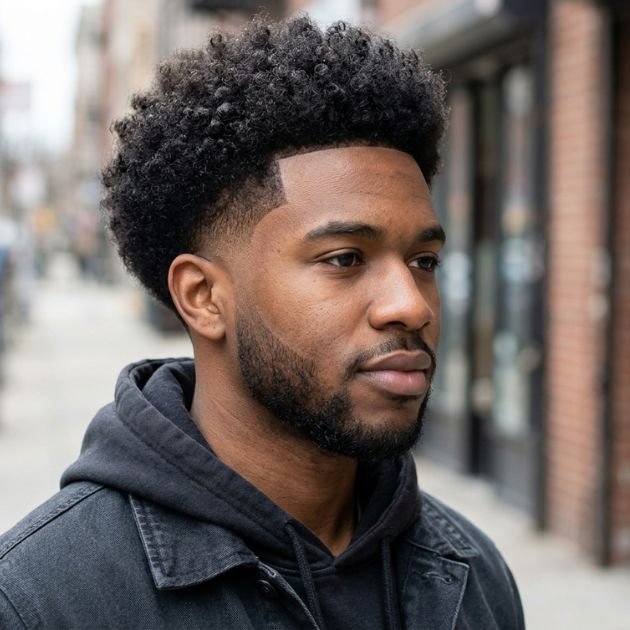
Keep the curls or coils long enough to form a rounded shape. The tapered sides create contrast and make the curls look deliberate. Ask the barber to shape the top with scissors or clippers over comb so the outline looks even from every angle.
- Works best with moisturized, well-defined texture.
- Use a curl cream or leave-in conditioner to keep the shape soft.
- Ask for a light shape-up at the front hairline for extra definition.
See also: Burst Fade Mullet: Styles, Hair Types, Barber Guide and Maintenance
Twists, locs, or braids with a high taper

A high taper keeps the sides crisp while the top carries twists, locs, or braids.
- Make sure the barber knows how you plan to style the top before cutting.
- Short twists or sponge twists need enough length on top to hold.
- With locs, ask the barber not to cut the base of the locs when tapering nearby.
- Braids look best when the scalp parts stay neat, so schedule the taper close to the braid appointment.
High taper fade styles for straight and wavy hair
Textured crop or forward fringe

A short, choppy top combined with a high taper looks modern and needs very little effort.
- Ask for a messy, textured finish on top.
- A forward fringe helps soften a high forehead.
- Matte clay or paste gives separation without shine.
Side part, quiff, or pompadour

These styles need more length on top, usually three to five inches, so the taper makes the difference between a classic cut and a modern one.
- Side part. A defined parting line plus a sharp taper looks polished.
- Quiff. Blow-dry the front upward and back for volume.
- Pompadour. The tallest and most dramatic option. It needs strong hold and careful styling.
See also: Low Taper Fade Fringe: 20 Fringe & Crop Styles With Images
Short high taper fade options with less daily styling
Buzz cut or crew cut

A buzz with a high taper is the lowest maintenance version. The top is cut to one length, and the sides fade away into it.
- Great for a quick morning routine.
- Shows head shape clearly, so check that you like it.
- A crew cut leaves slightly more length at the front for a bit of shape.
Short textured top

This is a middle ground. The top is short but cut with texture so it looks natural without much product.
- Needs a light cream or sea salt spray at most.
- Grows out well compared with a bald fade.
Beard and neckline pairings
Temple-to-beard blend

A high taper can flow from the temple into the sideburns and then into the beard. Done well, the whole sides of your head look connected.
- Ask the barber to taper the beard lower down the cheek so it matches the haircut.
- Keep the cheek line clean and the beard fuller on the jaw.
- If you are growing a beard, tell the barber so they do not cut it too short.
Tapered nape versus defined neckline

There are two common back finishes.
- Tapered nape. The hair fades into the neck with no hard line. It grows out softly and looks natural.
- Defined neckline. A squared, rounded, or blocked line. It looks sharp on day one but shows regrowth faster.
If you want less upkeep, pick the tapered nape.
See also: Mid Taper Fade Fringe: Complete Style & Length Guide (2026)
How do you ask a barber for a high taper fade?
Use specific words. A short, clear brief gets better results than a vague label.
Seven haircut specifications to agree on
Agree on these before the clippers turn on:
- Starting height. Where does the shortening begin? Point to the temple or just above the ear.
- Shortest length. Skin, #0.5, #1, or #2 guard.
- Blend width. Tight and sharp, or long and soft.
- Top length. Say it in inches or centimeters, or show it with your fingers.
- Neckline. Tapered, rounded, or blocked.
- Sideburn and temple shape. Natural, squared, or angled.
- Front hairline. Natural, lightly lined, or a sharp edge up.
Reference-photo checklist
Photos help, but only if they match your hair.
- Bring two or three images, not ten.
- Choose a side view and a back view.
- Pick people with hair texture close to yours.
- Check that the hair color and skin tone contrast resemble yours.
- Mark what you like: the blend, the top, or the neckline.
- Mention what you do not like so the barber can avoid it.
Copyable barber script
You can copy and adapt this:
“I would like a high taper fade. Start the taper around my temple and blend it down to a number one at the bottom. I want a soft, gradual blend, not a harsh line. Keep about [length] on top and texture it a little. Please taper the neckline instead of blocking it, and keep my sideburns natural. Can you show me the guard length before you start?”
If you want it sharper, say “tight blend” and “skin at the bottom.” If you want it safer, say “start one step lower than a true high taper.”
Your pre-appointment checklist
- Wash your hair the day before, or ask for a wash at the shop.
- Do not trim or edge at home right before.
- Bring your photos and know your top length.
- Mention any scars, moles, sensitive skin, or ingrown hair history.
- Ask how long the cut should last and when to return.
- Confirm the price, especially if you add a beard trim.
How do you maintain and style a high taper fade?
Refresh schedule and grow-out
Short sides change quickly.
- Every 2 weeks. Best for skin or very tight fades.
- Every 3 to 4 weeks. Fine for softer tapers and longer guard lengths.
- Every 5 to 6 weeks. Possible if you accept a softer look.
During grow-out, the high contrast fades into a standard short haircut. If you want to grow the sides, ask for a mid or low taper first. That step makes the transition less awkward.
Daily styling by hair texture
- Straight hair. Use a light paste or clay. Blow-dry with a comb for direction.
- Wavy hair. Apply sea salt spray or cream, then scrunch or air dry.
- Curly hair. Use a curl cream or gel on damp hair. Do not brush dry curls.
- Coily hair. Moisturize first, then shape with a pick or brush. Silk or satin protection at night helps.
- Short crops. Rub a pea-sized amount of matte product between your palms and tousle.
Use less product than you think you need. Heavy product can make the top look greasy and hide the contrast with the fade.
Safe between-visit cleanup
You can keep things tidy at home, carefully.
- Use small trimmers, not a razor, for the neckline.
- Trim only loose hairs below the line. Do not move the line upward.
- Check with a mirror, and avoid cutting into the fade zone.
- Clean your tools after use.
- Skip cleanup if you are unsure. A mistake on short hair takes weeks to fix.
What are the drawbacks and safety considerations?
Practical drawbacks and edge cases
- Frequent upkeep. The sharp look is short lived.
- Exposed scalp features. Scars, birthmarks, or sunburn show more easily.
- Sun exposure. Newly cut skin needs sunscreen.
- Not ideal for very thin sides. The fade can look patchy.
- Difficult to fix at home. Uneven blends need a barber.
- Occasional poor fit. Some people prefer a longer, softer silhouette.
Irritation, razor bumps, and barber-tool hygiene
Close cutting can irritate skin, especially on the neck and temples.
- Razor bumps (pseudofolliculitis barbae). They are more common with curly hair cut very close. Ask the barber to avoid going against the grain on the neckline.
- Ingrown hairs. Exfoliate gently and keep the area clean.
- Check hygiene. A good barber washes hands, cleans clippers, and uses a fresh neck strip or cape. Tools should be disinfected between clients.
- Speak up. If something burns, tell the barber at once.
- See a professional. If you get repeated pus-filled bumps, spreading redness, or persistent irritation, talk to a doctor or dermatologist.
This article gives general grooming guidance and is not medical advice.
What are the best alternatives to a high taper fade?
If the high taper does not feel right, try one of these:
- Low taper. The most subtle option, good for office dress codes.
- Mid taper. A balanced middle choice.
- Classic scissor cut. Soft, natural sides with no visible fade.
- Undercut. A sharp disconnect between top and sides.
- Skin fade. More dramatic if you want maximum contrast.
- Drop fade. The line curves down behind the ear for a shaped look.
- Longer taper with a mullet or fringe. More relaxed and trendy.
FAQ’s
What is a high taper fade in simple words?
It is a haircut where the sides get gradually shorter starting high near the temple. The top stays longer.
Is a high taper fade the same as a high fade?
Not exactly. A high taper is usually softer and keeps slightly more length, while a high fade often goes to skin with stronger contrast.
How often should I get a high taper fade?
Every two to four weeks keeps it sharp. A softer blend can last up to five or six weeks.
What do I say to my barber for a high taper fade?
Say where the taper starts, the shortest length, the top length, and the neckline style. A reference photo helps.
Who should avoid a high taper fade?
People with thinning temples, sensitive skin, or little time for upkeep may prefer a mid or low taper.
Conclusion
The high taper fade is a clean, flexible haircut that works on many hair types. It frames the face, supports many styles, and looks sharp without being extreme. The key is clear communication. Know where you want the taper to start, how short it should go, and how you plan to style the top.
Pick the version that fits your hair, your face, and your schedule. If you are new to it, begin with a slightly lower taper and adjust next time. Bring photos, use the script above, and ask your barber questions. With the right brief and a realistic upkeep plan, you will get a cut you actually like.

Abu Huraira is the administrator of Faxhion Crown, a blog dedicated to hairstyles, fashion trends, and personal style. He is passionate about helping readers discover fresh hairstyle ideas, explore modern fashion, and find inspiration for everyday looks. Through Faxhion Crown, Huraira aims to share helpful styling tips, beauty inspiration, and fashion insights that help readers express their individuality with confidence.
1 thought on “High Taper Fade Haircut: What It Is, Who It Suits, and What to Ask For?”