

A low taper fade with textured fringe is one of the easiest ways to look sharp without looking try-hard. The sides stay neat. The top stays relaxed. You get a clean outline and a bit of attitude in one cut.
This guide explains what the haircut is, how it compares with a mid taper, and which fringe style fits your hair. You will also get a barber script, a styling routine, upkeep costs and a grow-out timeline.
What Is a Low Taper Fade with Textured Fringe?
A low taper fade with textured fringe is a men’s haircut with two parts. The sides and back are cut short and blended gradually, starting low near the ears and neckline. The top is kept longer and cut into choppy layers so it falls forward over the forehead.
The “taper” is the soft, gradual shortening of hair. The “fringe” is the front section that sits across the forehead. The “textured” part means the ends are broken up so the hair looks light and piece-y, not blunt.
A low taper leaves most of the side length intact. Only the hair around the sideburns, the edge of the ear and the nape gets cut very short. That makes it a safe choice for office, school and weekend wear.
At a glance
- Best for: Men who want a clean look with room to style the top
- Side length: Short at the perimeter, longer higher up
- Top length: About 2 to 5 inches (5 to 12 cm), depending on hair type
- Style effort: Low to medium, about 3 to 5 minutes
- Barber visits: Every 3 to 5 weeks
- Works with: Straight, wavy, curly and coarse hair
- Beard friendly: Yes, the taper connects easily to a short beard
Low Taper vs Mid Taper with a Textured Fringe
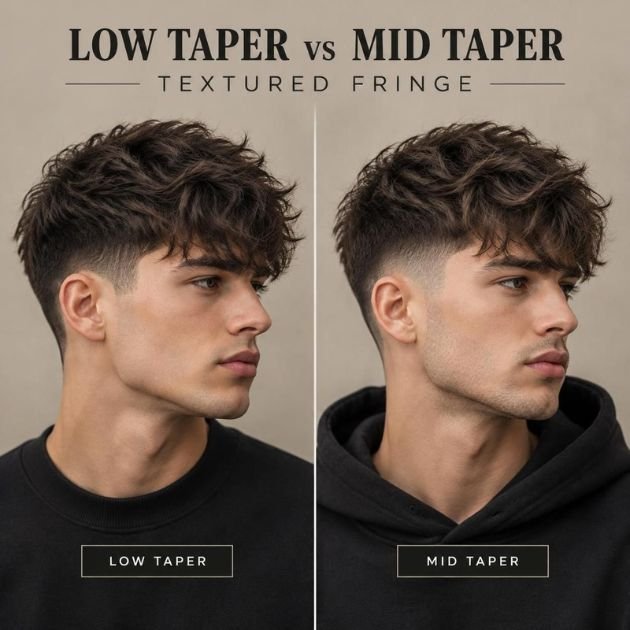
The main difference is where the shortening starts. A low taper begins near the ear and nape. A mid taper begins around the temple, roughly halfway up the side of the head.
A low taper is subtle. A mid taper has more contrast and a sharper shape. Both work with a textured fringe, but they feel different in everyday life.
Compare your preferences first
Use this quick check before you book.
| Feature | Low Taper | Mid Taper |
| Starting point | Around the ear and nape | Around the temple |
| Contrast | Soft and subtle | Moderate and defined |
| Workplace friendly | Very | Mostly |
| Grow-out | Easy and forgiving | Needs more tidying |
| Best for | Conservative or classic looks | Modern, sharper looks |
| Beard pairing | Natural blend | Cleaner, more dramatic |
Choose a low taper if:
- You want a safe, polished cut.
- You do not like visible skin on the sides.
- You have a dress code at work.
Choose a mid taper if:
- You want the fringe to stand out more.
- You like sharper lines.
- You are happy to visit the barber more often.
Textured Fringe Styles with a Low Taper
The same taper can look very different depending on the top. Here are seven options and who they suit.
Classic textured fringe
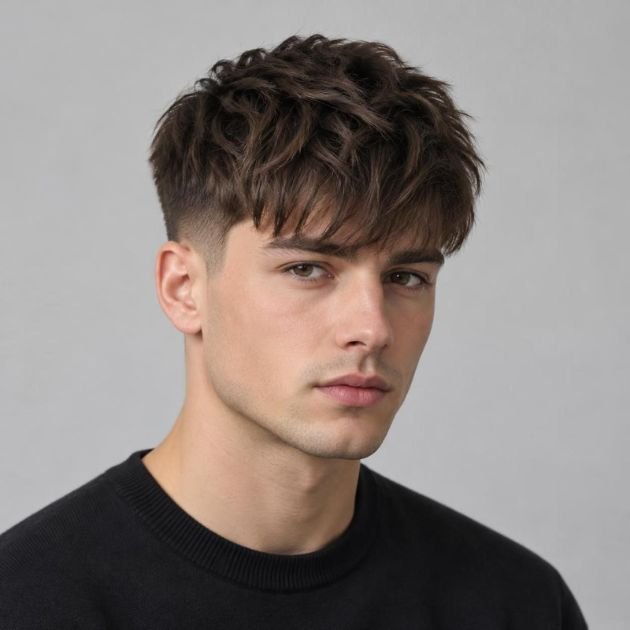
This is the standard version. The hair is cut a little longer at the front and brushed forward. It lands between mid-forehead and the brow. It suits most men and works well for first-timers.
Messy fringe

A messy fringe uses more layering and looser styling. The ends are point cut so pieces fall in different directions. It looks relaxed and works best on thick or slightly wavy hair. Use a matte product to avoid a greasy shine.
Short textured crop

A crop keeps the top shorter, often around 1.5 to 3 inches. The fringe is cut short and straight, then broken up with texture. It is a good pick if you want less styling and more structure. It also hides a receding hairline better than longer fringes.
Blowout taper with a textured fringe
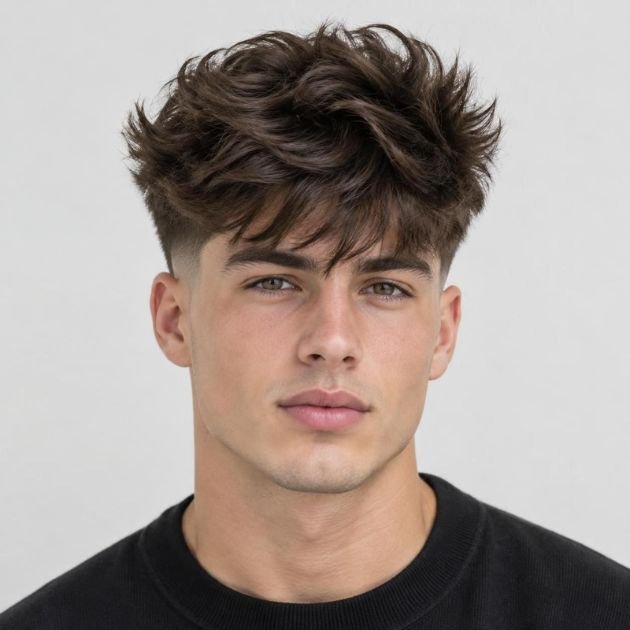
This version uses a blow dryer to add lift at the front, then a low taper keeps the sides neat. It gives volume without needing much length. Fine or thinning hair responds well to it. Use a round brush or your fingers while drying.
Straight hair fringe
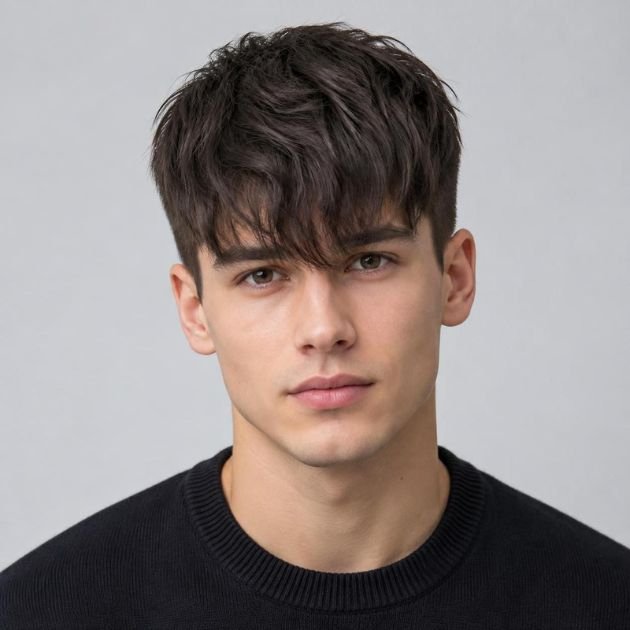
Straight hair can fall flat, so it needs layers and a bit of grit. Ask for internal texture and finish with a light clay or powder. Keep the length slightly longer than you think, because straight hair sits heavier.
Wavy fringe

Wavy hair already has movement, so the barber can keep more length. A low taper keeps the shape tidy while the waves do the work on top. Scrunch in a sea salt spray and air dry for a natural finish.
Curly fringe
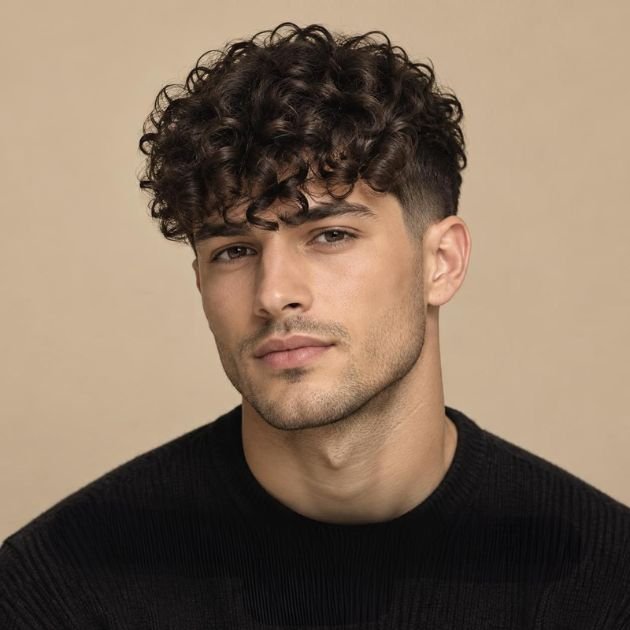
Curls bring volume and a natural texture. A low taper stops the sides from looking wide and balances the top. Ask your barber to cut curls dry or to shape them carefully so the fringe does not shrink too short once it springs up. Use a curl cream, not a heavy wax.
Who Suits a Textured Fringe?
Most men can wear it, but a few details matter.
Face shape
- Oval: Almost any fringe works.
- Round: Keep more height at the front and let the fringe sweep to the side.
- Square: A softer, messier fringe balances strong angles.
- Long or oblong: Keep the fringe lower and avoid too much height.
- Heart-shaped: A side-swept fringe softens the forehead.
Hair type
- Thick hair: Needs thinning or point cutting so it does not puff out.
- Fine hair: Benefits from a blowout and texture powder for body.
- Curly hair: Works well when cut with the curl pattern in mind.
- Coarse or afro-textured hair: Can hold a short, sculpted fringe with a clean taper.
Hairline and growth patterns
A strong cowlick at the front can push the fringe in an odd direction. A good barber will cut around it or use weight to control it. Men with a receding hairline can still wear it. A shorter, forward-swept fringe tends to look better than a long one.
What to Tell Your Barber?
Clear words save you from a bad haircut. Photos help, but also describe the shape you want.
A simple script:
- “I want a low taper on the sides and back.”
- “Keep the length above the ear and only taper around the edge.”
- “Leave the top about [X] inches, cut with texture.”
- “I want a fringe that sits [mid-forehead / just above the brow].”
- “Please point cut the ends, not a straight line.”
- “Clean up the neckline with a natural taper, not a hard block.”
Extra details to mention:
- Your usual morning routine and how much time you have
- Whether you wear a beard and where it should blend
- Any cowlicks or thinning spots
- Your preferred guard number at the shortest point, such as a 1 or 2
If you are unsure, ask the barber what they recommend for your hair type. Good barbers like that question.
How to Style a Textured Fringe?
You only need a few tools. A towel, a blow dryer, a matte clay or paste, and a comb or your fingers.
Step by step:
- Start with damp hair. Towel dry until it is no longer dripping.
- Apply a pre-styler. Use sea salt spray or a light mousse for hold and grip.
- Blow dry forward. Point the dryer down and move the fringe with your fingers.
- Add product. Warm a pea-sized amount of clay between your palms.
- Shape the fringe. Work from back to front. Pinch and twist the ends for separation.
- Finish. Use a light hairspray if you need all-day control.
Product guide:
| Hair type | Best product | Finish |
| Fine | Texture powder or light clay | Matte |
| Thick | Paste or heavier clay | Matte or low shine |
| Curly | Curl cream or gel | Natural |
| Wavy | Sea salt spray | Soft hold |
Tips for better results
- Use less product than you think. You can always add more.
- Avoid heavy pomades, which weigh the fringe down.
- Do not comb through a textured fringe. It breaks up the texture you paid for.
Maintenance and Cost
A low taper grows out gracefully, but the neckline and sideburns lose their clean look first. Most men do best with a trim every 3 to 5 weeks.
Typical upkeep:
- Full haircut: Every 4 to 5 weeks
- Neckline and sideburn tidy: Every 2 to 3 weeks if you like it crisp
- Styling time: 3 to 5 minutes
- Products: One styling product and one shampoo are enough
Cost: Prices depend on your city and barber. In many places, a taper with scissor work on top costs more than a simple clipper cut. As a rough guide, expect a basic haircut to run between $25 and $60 in the United States. Barbershops in Lahore and other South Asian cities usually charge less, and premium studios charge more. Ask for a price before you sit down.
Ways to save money:
- Book a full cut every 5 weeks and a quick tidy in between.
- Learn to style it yourself, so you do not need salon products every day.
- Stick with one barber who knows your hair.
How It Grows Out
The low taper is one of the more forgiving fades when it grows out. It does not show a harsh line because the blend is soft.
Timeline:
- Week 1 to 2: Sharp and clean. This is the peak look.
- Week 3 to 4: The sides begin to fill in, and the fringe lengthens.
- Week 5 to 6: The taper is softer. The fringe may start touching the eyebrows.
- Week 7 to 8: The shape loosens and the haircut becomes a general shaggy style.
Hair grows about half an inch per month on average, though it varies from person to person. If you want a longer fringe later, tell your barber and keep the sides trimmed to stay neat while the top catches up.
Common Mistakes
Avoid these errors to keep the cut looking intentional.
- Asking for a fade when you want a taper. A fade can go down to skin. A taper is gentler.
- Going too short on the sides. This can make the top look heavy and disconnected.
- Skipping texture. A blunt fringe looks flat and school-boy.
- Using too much product. The fringe ends up stiff, greasy or crunchy.
- Ignoring your hair type. Curly hair cut like straight hair will shrink and puff.
- Waiting too long between cuts. The edges lose shape fast.
- Fighting a cowlick. Work with the direction it grows.
- Not mentioning the beard. The taper should blend into the facial hair line.
Frequently Asked Questions
What is a low taper fade with a textured fringe?
It is a short, gradual taper on the sides and back with a longer, choppy fringe on top. The result is neat edges and relaxed, textured movement at the front.
How often should I get a low taper fade with a textured fringe trimmed?
Every 3 to 5 weeks keeps it looking fresh. A quick neckline tidy every 2 weeks helps the taper stay sharp.
Is a low taper fade with a textured fringe good for thin hair?
Yes, if the barber adds layers and you style it with texture powder and a blow dryer. A shorter fringe tends to look fuller than a long one.
What product should I use for a textured fringe?
A matte clay, paste or texture powder works best for most hair types. Curly hair does better with a light curl cream.
Can I get a textured fringe with curly or straight hair?
Yes, both work well with the right cutting technique. Curly hair needs shaping for the curl pattern, and straight hair needs added texture.
Conclusion
A low taper fade with textured fringe is a flexible, modern haircut that works in almost any setting. The low taper keeps the sides clean. The textured fringe adds movement and personality.
Pick the fringe style that matches your hair type, bring a clear script to your barber, and keep up with regular trims. Use a small amount of matte product and a quick blow dry, and you will have a polished look in minutes.
If you are unsure where to start, bring two or three photos and ask your barber to adapt the cut to your face shape and hair texture. The best version of this haircut is the one that fits you.
Related Hairstyles
Low Taper Fade Fringe: 20 Fringe & Crop Styles With Images
Low Taper Fade Haircut for Straight Hair: Complete Style Guide for 2026
Low Taper Fade vs Mid Taper Fade: Which One Is Right for You?
High Taper Fade Haircut: What It Is, Who It Suits, and What to Ask For?

Abu Huraira is the administrator of Faxhion Crown, a blog dedicated to hairstyles, fashion trends, and personal style. He is passionate about helping readers discover fresh hairstyle ideas, explore modern fashion, and find inspiration for everyday looks. Through Faxhion Crown, Huraira aims to share helpful styling tips, beauty inspiration, and fashion insights that help readers express their individuality with confidence.