

The burst fade is a curved fade that wraps around the ear and leaves the back and top longer. It looks sharp, it frames the face, and it works on almost every hair texture. It also gets mixed up with other fades all the time, which is why so many people leave the chair with a cut they did not ask for.
This guide explains what a burst fade is, how low, mid and high versions differ, which styles are worth screenshotting, and how to brief your barber without confusion. You will also find styling steps, upkeep timelines and honest trade-offs, so you can decide if the cut fits your hair and your routine.
What is a burst fade?
A burst fade is a haircut where the hair fades out in a semicircle around the ear. The fade starts near the temple or sideburn, curves over and behind the ear, then stops. The hair at the nape and the back of the head stays longer instead of fading down to the neck.
Think of it as a half circle cut into the sides of your head. Inside the half circle, the hair gets very short or even skin level. Outside it, the hair keeps its length and weight.
That contrast is the whole point. The ear area looks clean and defined, while the back and top keep their shape. It is why the burst fade pairs so well with mullets, mohawks, curls and textured crops.
How does the burst shape work around the ear?
The barber builds the burst in three simple moves.
- Mark the arc. The curve begins at the front of the ear, near the sideburn or temple, and travels up and around the back of the ear.
- Fade inside the arc. Clippers move from short to longer as the barber works outward, so the hair blends smoothly from the ear to the surrounding length.
- Leave the nape alone. Instead of continuing the fade down the neck, the barber stops at the edge of the burst and keeps the back length intact.
A good barber steps back often to check the curve from a distance. A clean burst looks like a smooth, even half circle from the front, the side and the back. If the edge looks patchy or lopsided, the shape needs more blending.
What hair stays longer in a burst fade?
Three zones usually keep their length:
- The top. This can be a buzz, a crop, curls, a quiff or a long flow.
- The back and nape. This is the signature of the burst. It is the area a drop fade or taper fade would normally shorten.
- The hair behind the arc. The area just outside the curve blends into the longer back, so the transition looks soft rather than abrupt.
Because the back stays longer, the burst fade is a natural base for mullets and tapered neck styles. It is also kind to anyone who wants a fade but is not ready to lose length around the whole head.
Who does a burst fade suit?
A burst fade suits most men and many women who want a cleaner shape around the ear without cutting the whole head short. It works best when you want contrast between a sharp side and a fuller top or back.
That said, the cut does not look the same on everyone. Texture, head shape, hair density and daily routine all change how it behaves.
See also: Mid Taper Fade: Styles, Barber Instructions, and Maintenance
Which hair textures work with a burst fade?
Every texture can carry a burst fade, but each one behaves differently.
- Straight hair. The curve shows up clearly, especially at lower guard numbers. Straight hair can look flat on top, so ask for some texture or length to add movement.
- Wavy hair. This is one of the easiest textures to work with. The waves add natural volume on top, and the burst keeps the sides tidy.
- Curly hair. The contrast between tight, short sides and bouncy curls looks striking. Curls hold the shape well and give the burst a strong frame.
- Coily and afro hair. The burst fade is a long standing favorite here. Coily hair holds crisp edges, so the arc looks sharp and the top keeps its structure.
- Thick hair. Dense hair gives a bold, defined burst but can look heavy if the top is left untouched. Ask for some thinning or weight removal.
- Fine or thin hair. A shorter top with a softer fade can make hair look fuller. Very high contrast can expose thin areas, so keep the blend gentle.
How do head shape, density and lifestyle affect the choice?
Head shape. The burst fade can add the look of balance. If the back of your head is flat, the longer nape can create more shape. If your head is rounder, a higher burst with a taller top can add length to your profile. If your ears stick out, a very short burst can highlight them, so a low burst or a softer fade may be kinder.
Face shape. A longer top adds height, which can balance a round or square face. A shorter, textured top suits longer faces better. Your barber can adjust the arc height to flatter your jawline.
Density. Thick hair shows the fade clearly and holds the shape for longer. Thin or patchy hair benefits from a gentler blend and a shorter top.
Lifestyle. If you can visit a barber every two to three weeks, a skin burst looks great. If you cannot, choose a low or taper style burst that grows out gracefully. Office dress codes, sports and helmets or caps can also push you toward a lower, more conservative version.
Low vs mid vs high burst fade: which should you choose?
The difference comes down to where the fade begins and how high the curve climbs on the side of your head.
| Type | Where the fade starts | Look | Best for |
| Low burst fade | Just above the ear, near the sideburn | Subtle and clean | Offices, first timers, low upkeep |
| Mid burst fade | Around the temple | Balanced and versatile | Most people, most styles |
| High burst fade | High on the sides, close to the crown | Bold and dramatic | Mohawks, big tops, strong contrast |
What is a low burst fade?

A low burst fade keeps the curve close to the ear and starts the fade just above it. Most of the side hair stays longer, so the contrast is soft.
This is the easiest version to wear to work or school. It grows out evenly, so you can stretch the time between visits. It is also a smart first step if you have never had a burst fade before.
See also: Low Taper Fade Fringe: 20 Fringe & Crop Styles With Images
What is a mid burst fade?

A mid burst fade starts around the temple and sits halfway up the side of the head. It gives a clear shape without looking extreme.
If you are unsure which to pick, this is the safest bet. It suits curls, waves and short textured tops, and it looks good with both a clean shave on the sides and a short taper.
What is a high burst fade?
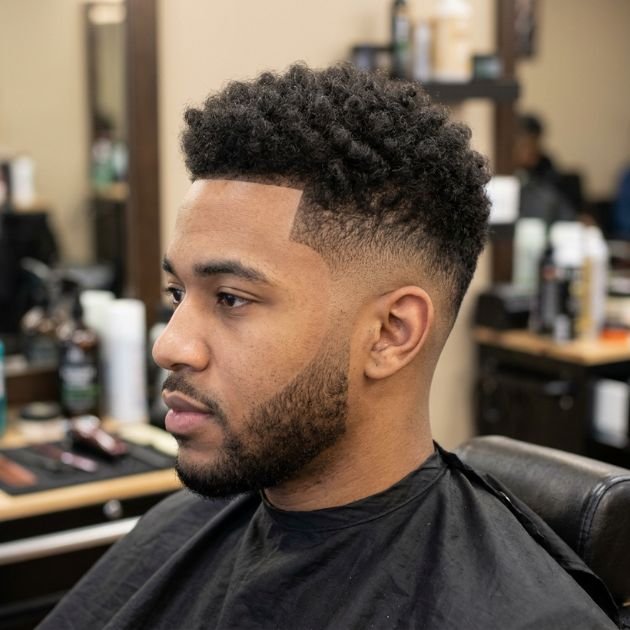
A high burst fade starts high on the sides, near the top of the head. The result is strong contrast and a lot of visible skin or very short hair.
It is the usual choice for mohawks, faux hawks and tall curly tops. It looks sharp, but it needs the most upkeep because the high edge loses its definition quickly as hair grows in.
Best burst fade styles to show your barber
A burst fade is a base, not a finished haircut. The top and back decide the final look. Here are five styles worth saving as reference photos.
1. Burst fade mullet
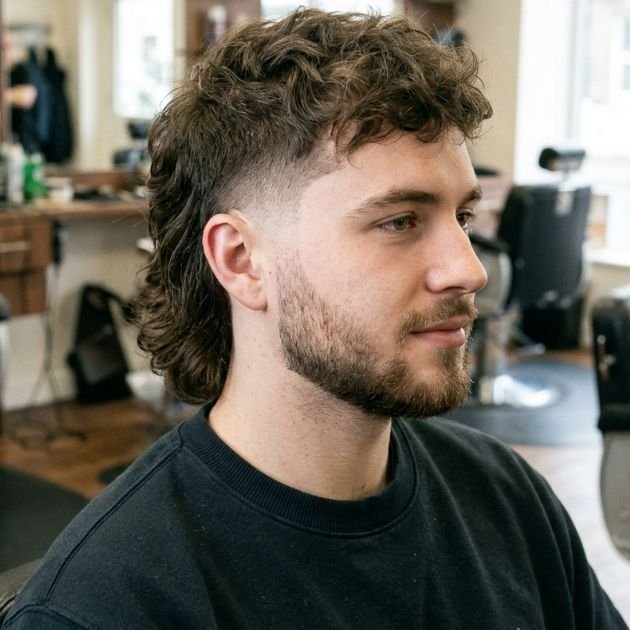
This is the most popular pairing right now. The sides fade out in a burst, while the back stays long and flows over the neck.
It works best on straight, wavy and curly hair. Ask for layers on top to blend into the length at the back, and decide how long you want the tail before you sit down.
See also: Mid Taper Fade Fringe: Complete Style & Length Guide (2026)
2. Burst fade mohawk or faux hawk

A high or mid burst clears the sides and leaves a strip of length running front to back. A true mohawk is tall and narrow. A faux hawk is softer and blends into the sides.
This style suits thick hair and anyone who likes a statement cut. Use a firm product on the top and expect to visit the barber often.
3. Curly or coily burst fade

Short sides frame the curls, and the burst adds shape around the ear. The result looks neat, and the curls keep their natural pattern.
Ask the barber to cut the curls dry, or to leave extra length on top so they can spring up. Skin or shadow bursts on coily hair give the sharpest contrast.
4. Short or textured-top burst fade
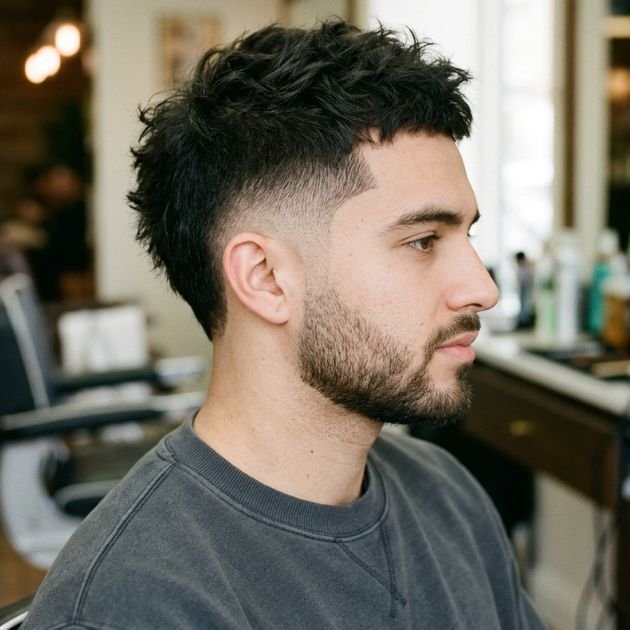
This version pairs the burst with a cropped, messy or buzzed top. It is simple, modern and low maintenance.
It suits men who want a clean cut that takes five minutes in the morning. Ask for texture to be cut into the top so it does not look flat.
5. Straight or wavy burst fade
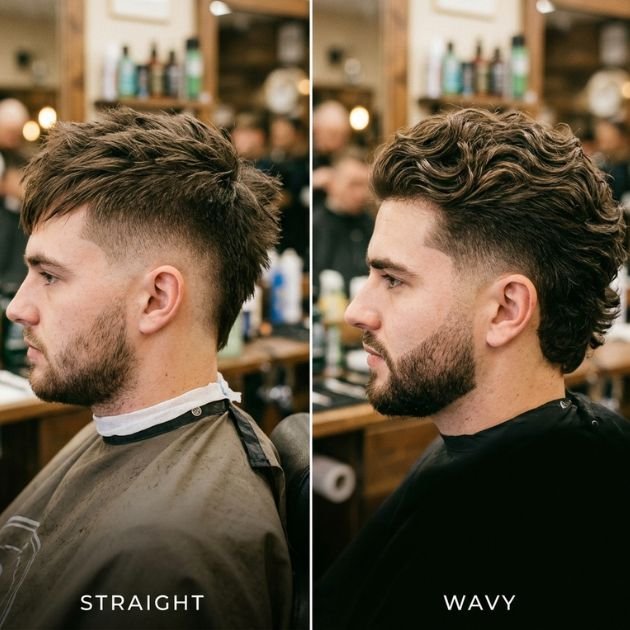
On straight or wavy hair, the burst adds structure around the ear and keeps the top soft. You can style it as a quiff, a side sweep or a relaxed flow.
Use a light cream or paste for movement. Avoid heavy gels on fine hair because they weigh it down.
See also: 8 Best Mid Taper Fade Textured Fringe Styles for Men (2026)
Burst fade vs drop fade, taper fade and skin fade
These terms overlap, which is why barbers and clients often talk past each other. The key is to separate shape from depth.
- Shape describes the path of the fade: curved around the ear (burst), curved down behind the ear (drop) or straight along the hairline (taper).
- Depth describes how short the hair gets: skin level (skin fade) or a visible shadow (shadow fade).
A burst fade can be a skin fade, a taper, or a shadow fade at the same time. That is why the shape and the depth must both be mentioned.
Burst fade vs drop fade
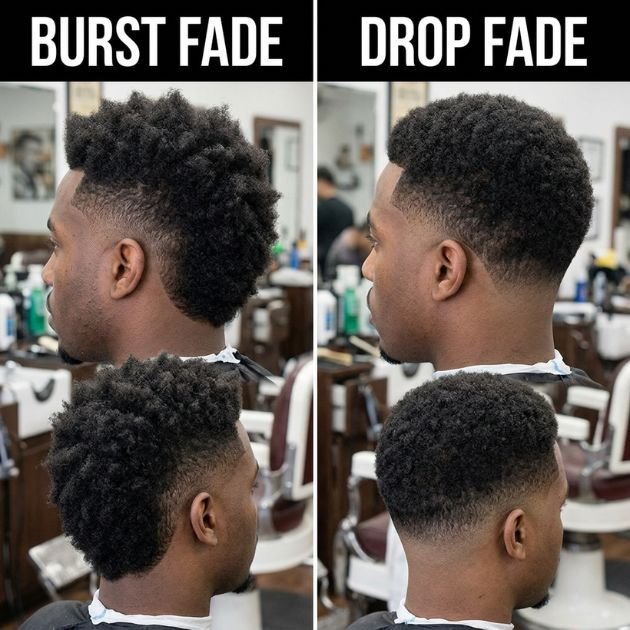
A drop fade curves down behind the ear and follows the head toward the nape. The burst fade circles the ear and stops, leaving the back longer.
In short, a drop fade travels around the head. A burst fade stays around the ear.
Burst fade vs taper fade
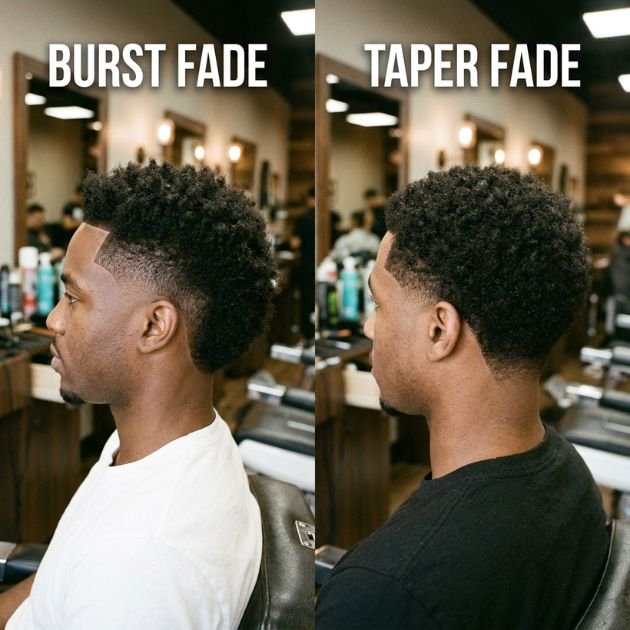
A taper fade is a clean, gradual shortening along the hairline, usually at the sideburns and neckline. It is subtle and traditional.
A burst fade creates a visible semicircle with more contrast. You can also combine them: a burst fade with a low taper keeps the neckline tidy while still showing the ear arc.
Burst fade vs skin fade
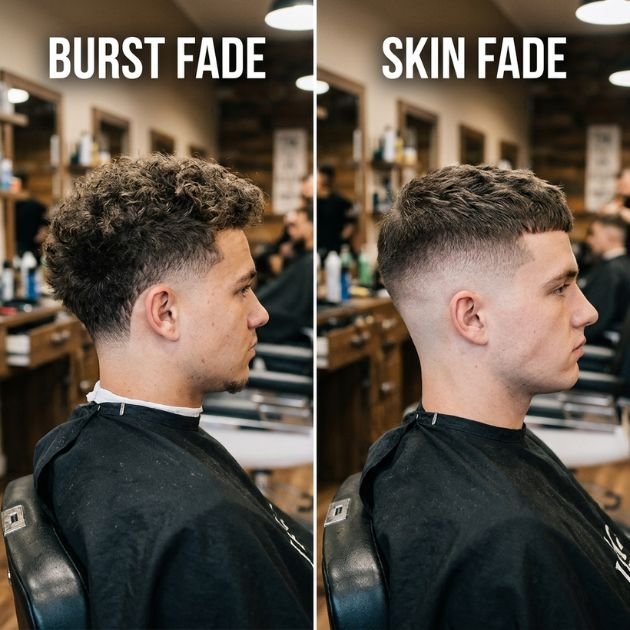
A skin fade, also called a bald fade, takes the hair down to bare skin at the shortest point. The burst fade describes the shape of the fade, not how short it goes.
So you can have a burst skin fade, a burst shadow fade, or a burst with a #1 guard at the bottom. Always state both the shape and the depth.
See also: 8 Best Mid Taper Fade Mullet Styles for Men (2026)
How to ask your barber for a burst fade?
Barbers use slightly different terms in different shops and countries. A clear brief prevents most disappointments.
Use a five-point barber brief
Cover these five points in one short message:
- Shape: “Burst fade around the ears, leaving the back longer.”
- Height: low, mid or high.
- Depth: skin, shadow or a number such as a #1 or #2 at the shortest point.
- Top length and style: for example “a textured crop” or “curls left long.”
- Back and neckline: blocked, tapered or natural, and how long the back should stay.
A sample line: “I would like a mid burst fade with a low skin fade, curls kept on top, and the back left long with a natural neckline.”
What should your reference photo show?
A good photo shows more than the front of the head. Bring or save:
- A side view showing the arc around the ear.
- A back view showing how long the nape stays.
- A photo with hair similar to yours in texture and density.
If you only have one photo, point to what you like and what you want changed, such as “this curve, but with a softer fade.”
What are the most common miscommunications?
- Burst and drop fade mix ups. The barber cuts a drop fade and shortens the nape. Mention the back length clearly.
- “Short” meaning different things. Use a guard number or a photo instead.
- Height confusion. Say low, mid or high and point to where the fade should begin.
- Surprise skin. If you do not want a skin fade, say “leave a shadow.”
- Overblended edges. Ask for a visible curve if the arc disappears.
How do you style a burst fade?
Styling takes only a few minutes. The sides are short, so the top and back do the work.
- Wash with a gentle shampoo and towel dry.
- Apply a leave in conditioner or cream if your hair is dry.
- Shape the top while the hair is still damp.
- Use a product that suits your top style.
- Check the arc in a mirror and wipe away stray product around the ears.
Styling by hair texture and top style
- Curly tops. Use a curl cream and a diffuser or air dry. Fluff the top with your fingers.
- Coily tops. Moisturize daily and pick the curls out for volume. A light oil adds shine without heaviness.
- Short textured tops. Use a matte clay or paste. Tousle it with your fingertips.
- Straight or wavy tops. Use sea salt spray or a light cream. Blow dry upward for volume.
- Mullets. Use a lightweight styling product on the back so it falls cleanly. Trim split ends regularly.
- Mohawks and faux hawks. Use a firm paste or gel and shape the strip upward with your hands.
How long does a burst fade last, and how do you maintain it?
A burst fade keeps its sharp look for two to three weeks. After that, the arc starts to blur as hair grows in. A low burst can look good for up to four weeks, while a skin or high burst loses its edge faster.
Touch-up timing and grow-out
| Version | Suggested touch-up |
| Low burst | Every 3 to 4 weeks |
| Mid burst | Every 2 to 3 weeks |
| High or skin burst | Every 1 to 2 weeks |
Between visits, you can ask your barber for a quick cleanup of the edges only, which is cheaper and faster than a full cut. As the fade grows out, it softens into a natural taper. Many people keep the burst going for a month and then switch to a different fade.
Scalp and skin care for very close or skin bursts
Close clipper work can irritate the skin around the ears. A few habits help:
- Cleanse the area gently and avoid scrubbing.
- Use a light, non greasy moisturizer.
- Apply sunscreen to exposed skin, because freshly cut areas burn easily.
- Avoid harsh products on irritated skin.
- If bumps or redness keep returning, ask a barber to use a slightly longer guard, and speak to a dermatologist if the problem persists.
Is a burst fade right for you?
Main benefits
- Flexible. It works with mullets, curls, crops and mohawks.
- Flattering. The curve frames the face and adds shape around the ear.
- Texture friendly. It suits straight, wavy, curly and coily hair.
- Customizable. You choose the height, depth and top style.
- Modern. It looks current without being hard to wear.
Trade-offs and edge cases
- Upkeep. Skin and high versions need frequent visits.
- Barber skill. A poor blend can look patchy or uneven.
- Prominent ears. A very short burst can emphasize them.
- Thinning or patchy hair. A strong contrast can highlight sparse areas.
- Strict dress codes. A high skin burst may be too bold for some workplaces.
- Sensitive skin. Close shaving can cause irritation.
If you have a few of these concerns, a low burst with a shadow fade is a safe middle ground.
What are the best alternatives to a burst fade?
If the burst fade is not quite right, consider these options:
- Taper fade. A subtle, classic option with low upkeep.
- Drop fade. A curved fade that follows the head down to the nape.
- Low fade. A clean option that starts just above the ear.
- Skin fade. Maximum contrast and a very sharp finish.
- Temple fade. Focuses on the sideburn and temple for a neat look.
- Classic scissor cut. A longer, softer option with no clipper fade.
Bring a photo of the one you like and ask your barber how it will suit your hair type.
FAQ’s
What is a burst fade haircut?
A burst fade is a curved fade around the ear that leaves the back and nape longer. It creates a clean semicircle on each side of the head.
What is the difference between a burst fade and a drop fade?
A burst fade circles the ear and stops, while a drop fade curves down toward the nape. The burst keeps the back longer.
How often should you get a burst fade touched up?
Most people need a touch-up every two to three weeks. Skin and high versions may need it every one to two weeks.
Does a burst fade work on curly or coily hair?
Yes. Curly and coily hair hold the arc well and give strong contrast with the short sides.
Should I choose a low, mid or high burst fade?
Choose low for a subtle, low upkeep look, mid for a balanced cut, and high for bold styles like mohawks.
Conclusion
The burst fade is popular for good reasons. It adds shape around the ear, keeps the back and top flexible, and works across hair textures. The key is to choose the right height, tell your barber the depth you want, and show clear reference photos.
Start with a mid or low burst if you are unsure. Use the five-point brief, plan your touch-ups, and look after your skin. With the right barber and a little upkeep, a burst fade can be one of the sharpest cuts you wear.

Abu Huraira is the administrator of Faxhion Crown, a blog dedicated to hairstyles, fashion trends, and personal style. He is passionate about helping readers discover fresh hairstyle ideas, explore modern fashion, and find inspiration for everyday looks. Through Faxhion Crown, Huraira aims to share helpful styling tips, beauty inspiration, and fashion insights that help readers express their individuality with confidence.
2 thoughts on “Burst Fade Haircut: What It Is, Types, Styles and Barber Guide”