

A low taper fade fringe is a short, neat haircut on the sides and back that keeps a longer fringe at the front. The taper starts low, near the ears and neckline, so the cut looks clean without looking harsh. It is one of the easiest ways to get a sharp haircut that still feels relaxed.
This guide walks you through what the cut is, how it looks from every angle, who it suits, and which of the 20 variations fits your hair type. You will also get a barber script, a home styling routine, product picks, upkeep timing, and typical costs.
What is a low taper fade fringe?
A low taper fade fringe is a men’s haircut with three parts:
- Low taper: the hair is trimmed shorter only around the sideburns, behind the ears, and along the nape.
- Fade element: the length blends gradually, sometimes down to skin at the very bottom edge.
- Fringe: the hair at the front is left longer and falls forward or sideways over the forehead.
The word “low” matters. It tells the barber to keep the shortest section near the bottom of the head. Most of the side hair stays at a medium length, which makes the cut easier to wear at work, school, or events.
In short, the sides stay tidy while the top does the talking.
Taper vs fade in plain words
A taper shortens hair gradually and usually leaves some length at the end. A fade shortens it more dramatically, often to bare skin. A low taper fade sits between the two. You get a soft, clean edge, not a bold bald contrast.
What it looks like from the front, side, and back?
Here is what you should see in the mirror.
Front view
- The fringe sits across or slightly above the eyebrows.
- The temples show a small, clean taper.
- The sideburns are short and shaped.
Side view
- Hair grows slightly longer as it moves up from the ear.
- A soft gradient wraps around the ear, not a hard line.
- The top flows forward into the fringe.
Back view
- The neckline is tapered, either squared, rounded, or naturally blended.
- The taper stays low, usually below the occipital bone, which is the bump at the back of your skull.
- The crown blends into the sides without a step or gap.
The overall silhouette is compact on the sides and fuller on top. That contrast is what makes the cut look intentional.
How it compares to similar cuts?
Many guys mix these names up. This quick comparison helps you ask for the right one.
- Low taper fade fringe vs mid fade fringe: a mid fade starts around the temple, so more scalp shows. The low version keeps more hair on the sides and grows out more softly.
- Low taper fade fringe vs high fade fringe: a high fade starts near the crown and looks bold and sporty. The low taper looks calmer and more professional.
- Low taper fade fringe vs undercut: an undercut has a sharp disconnect between top and sides. A taper blends them.
- Low taper fade fringe vs classic taper: a classic taper is usually scissor or clipper over comb with no skin showing. The fade version can get closer at the edges.
- Low taper fade fringe vs French crop: a French crop has a short, blunt, forward fringe. A fringe cut can be longer, wispier, or side swept.
- Low taper fade fringe vs mullet or wolf cut: those keep length at the back. The taper cleans the back up.
If you want the safest option between neat and trendy, the low taper is usually it.
Who does it suit?
This cut works for a wide range of people because the low taper is so adaptable.
- Office workers and students: the sides look polished, so it passes most dress codes.
- Teens and men in their 20s and 30s: it gives a modern look without much effort.
- Men over 40: a shorter, textured fringe can look fresh and sharp.
- Men with a high forehead or receding temples: the fringe adds coverage and softens the hairline.
- Men who dislike very short sides: the low taper keeps more hair than a mid or high fade.
It is less ideal if you want zero styling time and a completely uniform buzz.
A quick note on hair loss. If your crown is thinning, ask for a shorter, forward textured fringe. Heavy length on thin hair can make gaps more obvious.
Best fringe for your face shape
Face shape guides the fringe length, direction, and volume. Use this as a starting point, then adjust to your own proportions.
- Oval: most fringes work. A textured or side swept fringe keeps balance.
- Round: add height and avoid a heavy, blunt fringe. Try a textured fringe with lift or a side swept style.
- Square: a softer, wispy or messy fringe reduces the jaw’s hard angles.
- Rectangle or oblong: choose a fuller fringe that sits lower on the forehead to shorten the face visually.
- Heart: a side swept or curtain fringe balances a wider forehead and narrower chin.
- Diamond: a fluffy or textured fringe adds width at the forehead and softens prominent cheekbones.
- Triangle: build volume at the top and keep the sides tight.
Tip: stand in front of a mirror, pull your hair back, and check whether your face is longer, wider, or balanced. That tells you which direction to push the fringe.
20 best low taper fade fringe styles
Each style below includes what it is, who it suits, and one practical tip. Add a clear photo of each in your published version for the best user experience.
Low Taper Fade Textured fringe

The textured fringe is the most requested version. The barber cuts into the ends with point cutting or a razor so the hair separates and looks lived in. It suits straight to wavy hair of medium density. Use a matte clay and keep the fringe slightly forward.
See Also: 25 Best Mid Taper Fade Blowout Haircuts for Men (2026)
Low Taper Fade Messy fringe
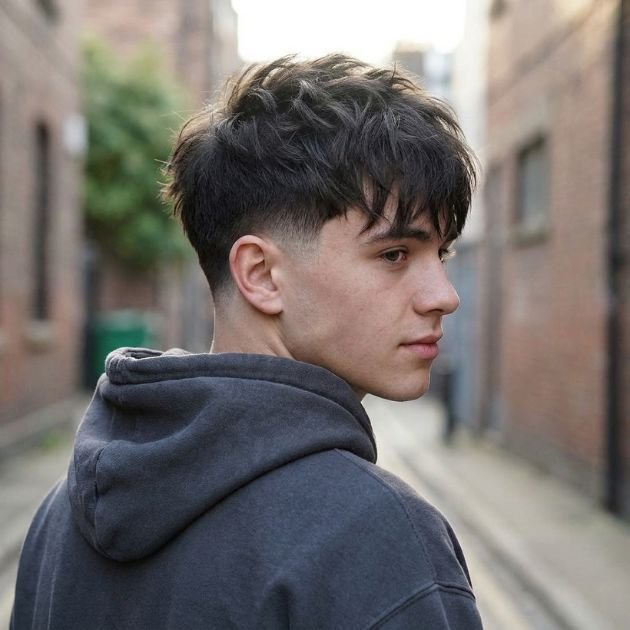
This one looks like you rolled out of bed, even though it takes a minute to set. It is loose, uneven, and relaxed. It suits teens, students, and creative jobs. Rough dry your hair and finish with a light paste.
Low Taper Fade Short fringe

A short fringe stops about a finger above the eyebrows. It is simple, low effort, and great for hot weather or active days. It suits round and oval faces. Ask for the top to be left at least 4 to 5 cm so it can still move.
Low Taper Fade Long fringe
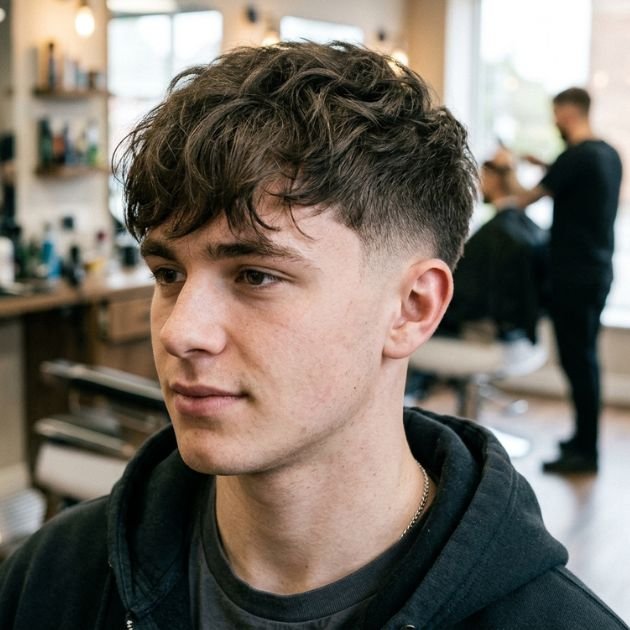
A long fringe falls to or past the eyebrows and can be tucked behind the ear. It gives a softer, artistic feel. It suits oval, heart, and square faces. Keep the ends trimmed to avoid a stringy look.
Low Taper Fade Curly fringe
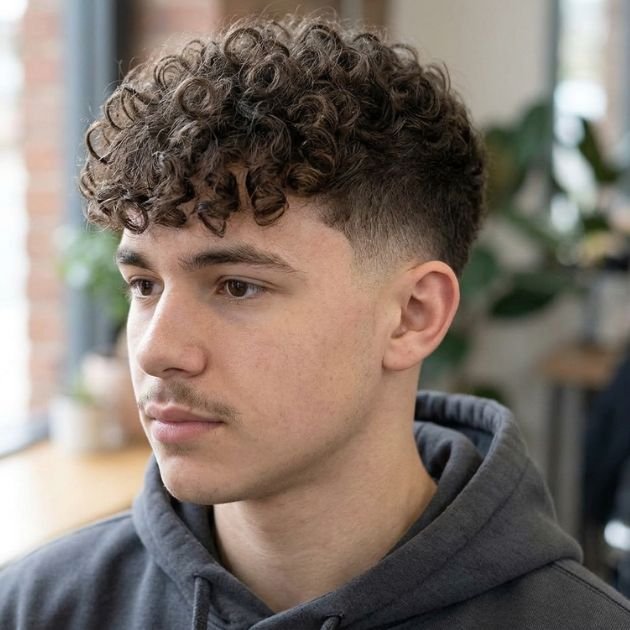
Natural curls form a bouncy fringe while the taper keeps the sides tidy. This cut suits curl types 2C to 3C. Cut curls dry or damp as your barber prefers so the spring is accurate, and use a curl cream to control frizz.
See Also: Mid Taper Fade for Boys: 10 Best Styles (2026)
Low Taper Fade Wavy fringe
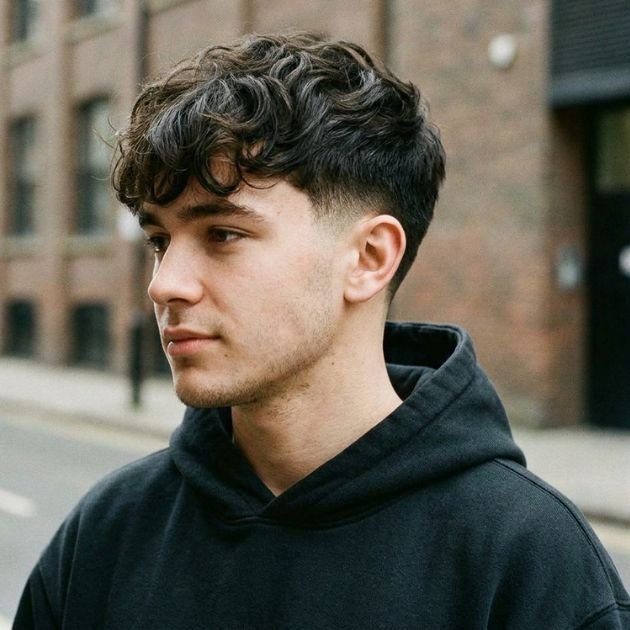
Waves give natural volume without much work. The fringe falls in an S shape across the forehead. It suits most face shapes. Scrunch in a sea salt spray and let it air dry for the best pattern.
Low Taper Fade Straight-hair fringe
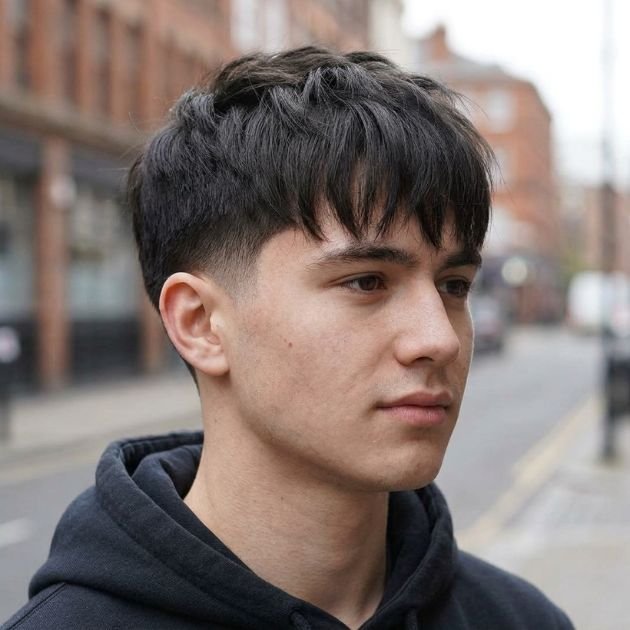
Straight hair can look flat, so layers matter. Ask for a slightly choppy fringe so it does not fall as one heavy sheet. It suits oval and square faces. A texture powder adds grip and lift.
Low Taper Fade Blowout with textured fringe
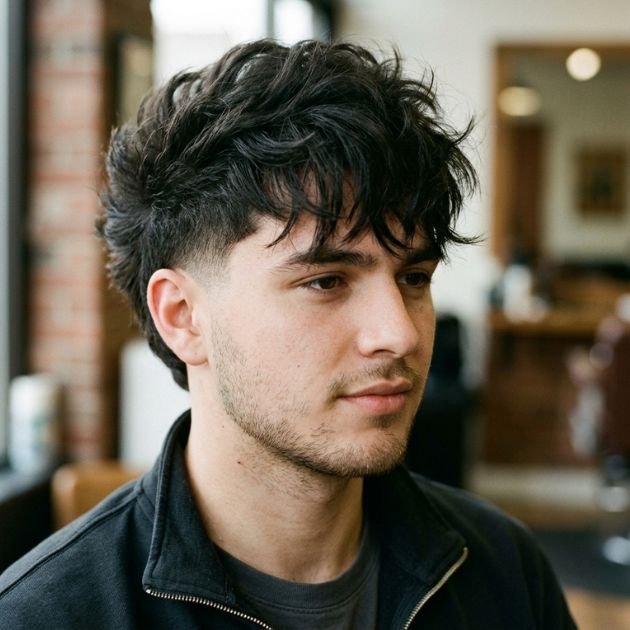
The blowout lifts the front with a dryer and brush for a full, upward and forward shape. It suits fine or medium hair that needs volume. Dry the roots first, then style with a light cream and finish with a flexible spray.
Low Taper Fade Fluffy fringe
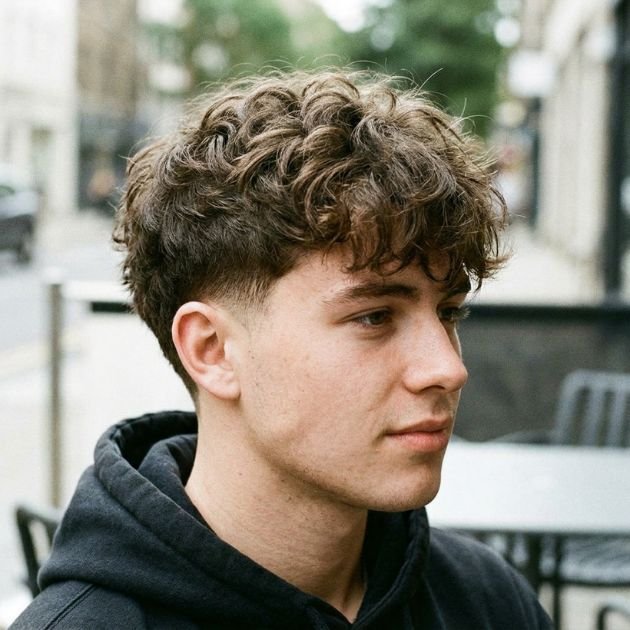
The fluffy fringe is airy, soft, and slightly puffed. It is popular with younger guys and anyone who likes a soft, boy band look. Use a volumizing mousse or sea salt spray, and skip heavy gel.
Low Taper Fade Side-swept fringe
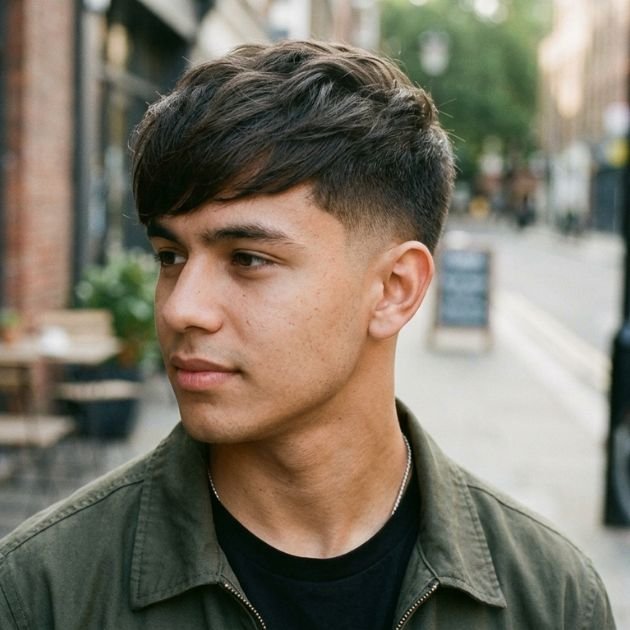
Hair is combed to one side across the forehead. It works well for formal settings and helps balance a wider forehead. Part along your natural parting line, not against it, so it stays in place.
Low Taper Fade Curtain fringe
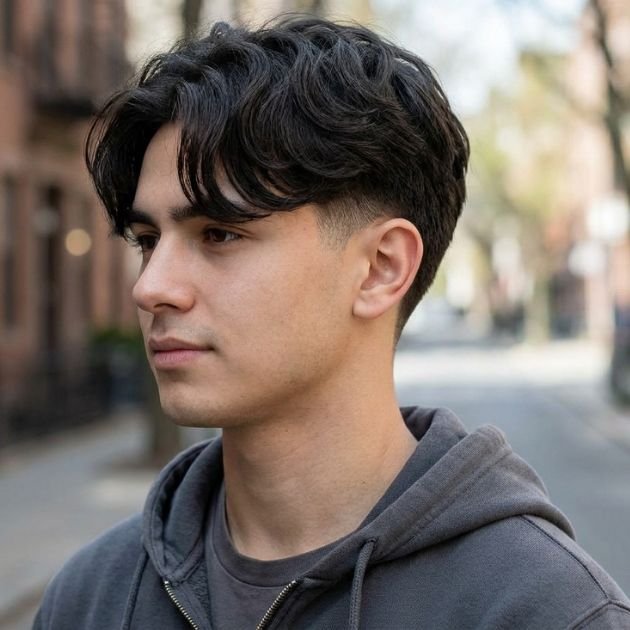
The curtain fringe parts in the middle and falls to both sides like drapes. It suits oval, rectangle, and heart faces. It looks best when the hair is at least 8 to 10 cm on top and slightly wavy.
See also: 8 Best Mid Taper Fade Textured Fringe Styles for Men (2026)
Low Taper Fade French crop
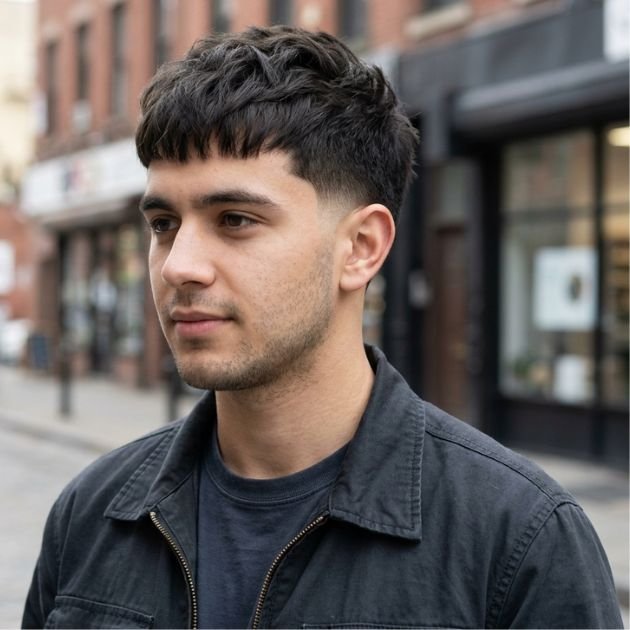
The French crop pairs a short, blunt, forward fringe with a tight taper. It is simple and sharp, and it hides a receding hairline well. It suits straight or wavy hair. Use a matte paste for a dry, natural finish.
Low Taper Fade Edgar fringe
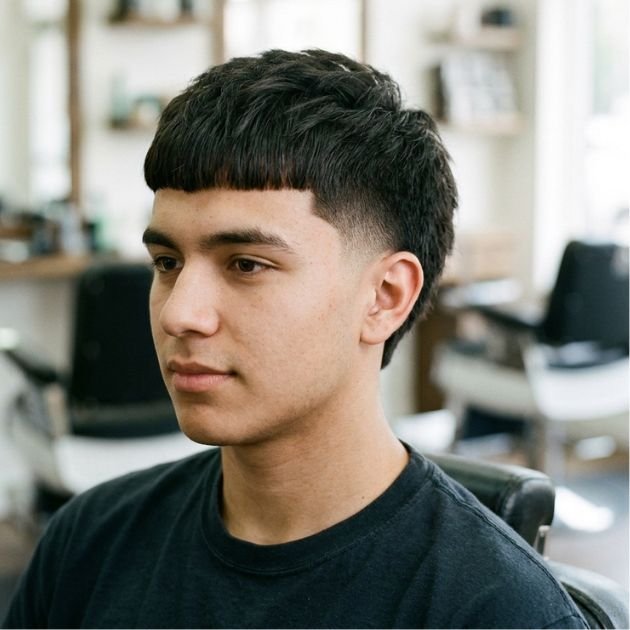
The Edgar cut features a short, straight line across the front with a clean taper on the sides. It is bold and graphic. It works best on thick or coarse hair and needs a skilled barber to keep the line even. Expect touch ups every two to three weeks.
Low Taper Fade Caesar fringe

The Caesar is a short, horizontal fringe with a uniform top length. It is easy to care for and ideal for thinning hair or early recession. It suits most face shapes. A tiny amount of clay keeps it in position.
Low Taper Fade Thick fringe

Thick hair can look bulky, so the barber removes weight inside the top while leaving a full outline. It suits oval, square, and rectangle faces. Ask for thinning shears or texturizing scissors, not just clippers.
Low Taper Fade Fine-hair fringe

Fine hair needs structure and lift. A slightly shorter, blunt cut often looks fuller. Avoid heavy waxes. Use a volume powder or light cream at the roots, and blow dry upward before styling the fringe forward.
Low Taper Fade Asian-hair fringe

Asian hair is often straight, strong, and grows in a consistent direction. A layered fringe with soft texture stops it from sitting too flat. Ask for point cutting and a light matte product. This works well with both medium and long fringes.
See Also: Mid Taper Fade Buzz Cut: Styles, Clippers & At-Home Guide (2026)
Low Taper Fade Coily or Afro-textured fringe

Coily hair holds shape well. The fringe can be a twisted crop, a defined coil top, or a rounded shape. Moisturize first, then define with a cream or gel. Taper the temples and nape, and keep the shape rounded with rounded edges.
Low Taper Fade Low skin taper fringe

This version takes the very bottom edge down to bare skin around the ears and neckline for extra contrast. It looks sharper but needs a refresh more often. It suits anyone who wants a clean outline without going to a mid or high fade.
Low Taper Fade Subtle natural fringe
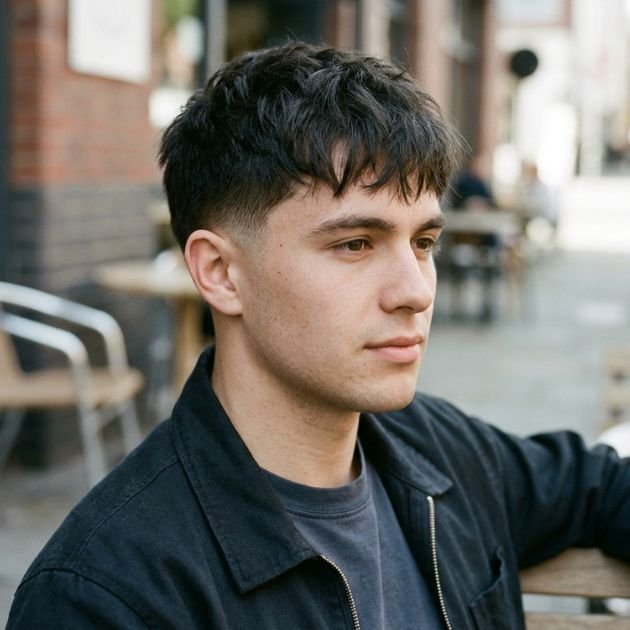
The most understated option. The taper is soft, the fringe is mild, and the cut grows out gracefully. It is ideal for conservative offices and for anyone trying a fringe for the first time.
How long should your hair be?
Length decides which fringe you can wear. Use these general guides.
- Short fringe: 3 to 5 cm on top
- Medium fringe: 5 to 8 cm on top
- Long fringe: 8 to 12 cm or more on top
- Sides at the low taper: usually the shortest guard at the bottom, then blended up to a number 2 or 3 length by the mid-sides, though the exact guard depends on your barber and hair type
Hair grows about 1 to 1.5 cm per month on average, so a barely there fringe can take two to three months to reach a comfortable length. If you are growing out, schedule trims of the taper only and leave the top untouched.
In the barber’s chair: what to ask for and what to expect
Good communication saves you from a bad haircut. Bring a photo, and say the words clearly.
A simple script you can use:
“I would like a low taper fade with a textured fringe. Keep the sides at a number 2 or 3, taper the sideburns and neckline, and leave about 6 cm on top. I want it to sit slightly forward with some texture.”
What to tell your barber:
- How high or low the taper should go.
- Whether you want skin showing at the bottom.
- The fringe length and direction.
- Your usual part, if you have one.
- How much time you spend styling each day.
What to expect during the cut:
- A consultation about your hair type, hairline, and face shape.
- Clippers with guards on the sides, then blending with a shorter guard or a lever.
- Scissor work and point cutting on the top.
- A neckline and sideburn cleanup with a trimmer.
- A quick style so you can see how it behaves.
Before you leave, ask how the barber styled it. That one question gives you your product list and your technique.
How to style it at home?
You can finish this look in about five minutes.
- Wash and towel dry. Leave your hair slightly damp.
- Apply a pre-styler. A little sea salt spray or volumizing mousse helps at the roots.
- Blow dry. Lift the roots with your fingers or a brush, directing the fringe forward.
- Warm the product. Rub a pea sized amount between your palms.
- Work it through the fringe. Use your fingertips, not a comb, for a natural look.
- Shape the ends. Pinch and twist small sections for separation.
- Set it. Use a light flexible spray, especially in humid weather.
Style tip: use less product than you think. Add more only if needed.
Best products
Pick products by hair type, not by hype.
- Matte clay: strong hold, no shine, good for thick or straight hair.
- Texture paste: flexible and works for messy or textured fringes.
- Sea salt spray: adds grip and beachy volume to fine or wavy hair.
- Volumizing mousse or powder: best for fine hair that needs lift.
- Curl cream or leave in conditioner: defines waves and curls and reduces frizz.
- Light hairspray: locks the shape without a stiff feel.
- Shampoo and conditioner for your scalp type: healthy hair styles better.
Avoid heavy pomades if you want a dry, natural fringe. Wash out product at night so it does not build up.
Maintenance and upkeep
A low taper stays neat for longer than a high fade, but it still needs regular attention.
- Neckline and sideburn cleanup: every 2 to 3 weeks keeps it crisp.
- Full haircut: every 3 to 5 weeks, depending on how fast your hair grows.
- Fringe trim: every 4 to 6 weeks to keep the length and shape.
- Washing: two to four times per week, based on oil and sweat.
- Conditioning: use conditioner on the fringe, especially for curly or coarse hair.
Trim the taper sooner if you have thick, dark hair or a skin taper. Those show regrowth faster.
Common mistakes to avoid
- Going too high on the fade. If you wanted a low taper, say so clearly.
- Cutting the fringe too short on the first visit. You cannot add length back.
- Ignoring hair growth patterns. Cowlicks at the front change how the fringe falls.
- Using too much product. It weighs the hair down and looks greasy.
- Skipping a blow dry. Even a quick dry makes fringes look fuller.
- Not showing a reference photo. Words like “short” mean different things to different barbers.
- Delaying neckline cleanups. Stray hair makes the whole cut look overgrown.
Pros and cons
What works
- Looks sharp and modern without being extreme.
- Suits many hair types, from straight to coily.
- Softer grow out than a high skin fade.
- Hides a high forehead or a mild receding hairline.
- Easy to dress up for work or down for the weekend.
- Gives you many styling options on top.
What to consider
- You will need regular neckline touch ups.
- A fringe can feel hot or heavy in humid weather.
- Very thin hair may need extra volume products.
- Strong cowlicks or hair whorls at the front can limit the style.
- Quality depends heavily on barber skill, so choose carefully.
How much does it cost?
Prices vary by country, city, and barber level. As a rough guide:
- Budget barbershop: about 15 to 30 US dollars
- Mid range barbershop or salon: about 30 to 60 US dollars
- Premium or celebrity barber: 60 US dollars and up
- Neckline and taper cleanup only: often 10 to 25 US dollars
- Styling products per month: roughly 10 to 30 US dollars
In many cities, local barbers charge much less than these figures, so check pricing in your area. Add a tip of about 15 to 20 percent where tipping is normal. If you visit every three to four weeks, budget for 12 to 17 haircuts a year.
Frequently asked questions
What is a low taper fade fringe?
It is a haircut with short, tapered sides near the ears and neckline and a longer fringe on top.
How often should I get a low taper fade fringe trimmed?
Book a full haircut every 3 to 5 weeks and a neckline cleanup every 2 to 3 weeks.
Is a low taper fade fringe good for thin or fine hair?
Yes, if you keep the fringe short to medium and use a light volumizing product.
Can curly or coily hair wear a low taper fade fringe?
Yes, the taper keeps the sides neat while curls or coils form a defined fringe on top.
What should I tell my barber to get a low taper fade fringe?
Say “low taper fade with a fringe,” give the guard numbers, state the fringe length, and show a photo.
Conclusion
The low taper fade fringe works because it balances two things most men want: a clean, controlled outline and a relaxed, personal top. You can wear it short and crisp or long and soft. You can go textured, messy, curly, or sleek. The right version depends on your hair type, face shape, and daily routine.
Start with a clear photo and a specific request. Choose a fringe length you can live with, then fine tune the taper at your next visit. Keep up with neckline cleanups, use the right product in small amounts, and your cut will look fresh for weeks.
Save this guide, pick two or three styles you like, and show them to your barber at your next appointment.

Abu Huraira is the administrator of Faxhion Crown, a blog dedicated to hairstyles, fashion trends, and personal style. He is passionate about helping readers discover fresh hairstyle ideas, explore modern fashion, and find inspiration for everyday looks. Through Faxhion Crown, Huraira aims to share helpful styling tips, beauty inspiration, and fashion insights that help readers express their individuality with confidence.
5 thoughts on “Low Taper Fade Fringe: 20 Fringe & Crop Styles With Images”