

A mid taper fade comb over is a haircut with short, blended sides that begin shortening around the temple and a longer top that is parted and swept to one side. It looks sharp in an office, relaxed on a weekend, and it grows out cleanly. The catch is that the style only works when the part, the fade and the products all agree with each other.
This guide covers eight styles, the hair types and face shapes they suit, the exact language to use with your barber, and the mistakes that make a comb over fall apart by lunchtime.
8 Best Mid Taper Fade Comb Over Styles
Each style below keeps the same mid taper on the sides. What changes is the top: its length, its texture and the detail around it.
Classic Mid Taper Comb Over
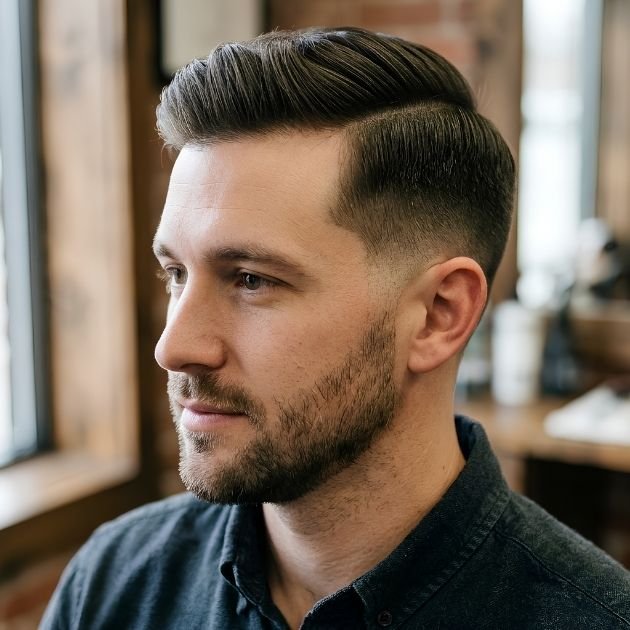
This is the reference version. The top is about 3 to 4 inches (8 to 10 cm), parted on a natural side, and combed across with a matte or low shine finish. The sides taper from a short guard at the neckline up to the temple.
- Best for: Straight and fine to medium hair
- Styling product: Light pomade or paste
- Why it works: The taper removes bulk, so the part stays visible and the top looks deliberate
Slick Comb Over
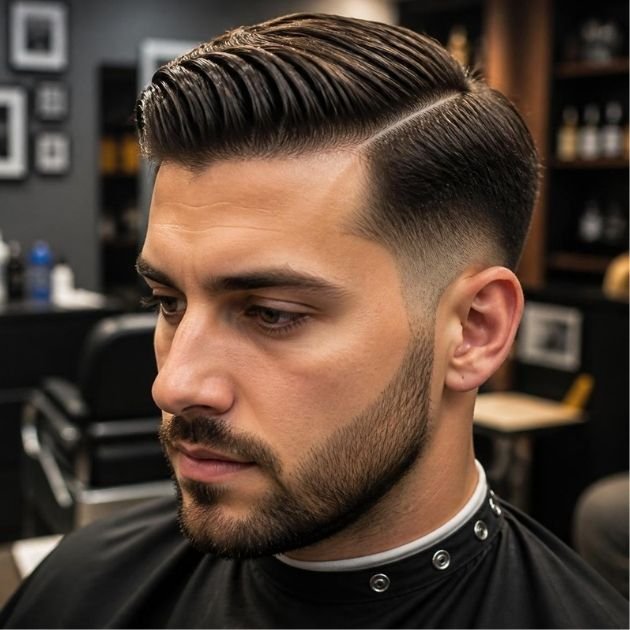
The slick version uses a deeper, harder part and a glossy or satin finish. The hair is combed flat against the scalp with a medium hold product. Many men pair it with a skin taper at the bottom for extra contrast.
- Best for: Straight, thick or coarse hair that needs weight to stay down
- Styling product: Water based pomade or a firm styling cream
- Watch out for: Too much product makes the hair look greasy and shows the scalp
Textured Comb Over

The barber point cuts or razors the top so the ends separate. You still have a part, but the surface looks broken up and natural. Finish with sea salt spray or clay and use your fingers instead of a comb for the last pass.
- Best for: Medium to thick hair, and men who dislike a stiff look
- Styling product: Matte clay or fiber paste
Wavy Comb Over
Waves are not a problem here. They add volume, which helps the swept shape look fuller. The key is cutting the top slightly longer, around 4 to 5 inches, so the weight of the hair lets the wave lie in one direction.
- Best for: Naturally wavy hair
- Styling product: Curl cream or light mousse, then a blow dryer on low heat
- Tip: Dry the hair while brushing it in the direction of the sweep
See Also: 8 Best Mid Taper Fade Edgar Cut Styles for Men (2026)
Comb Over with Beard

A mid taper blends nicely into a short beard because the fade line on the sides can connect to the sideburn and cheek line. A trimmed beard also balances a swept top, especially on rounder faces.
- Best for: Men with medium to full beards
- Barber note: Ask for the beard fade to start where the side fade ends, so the lines look continuous
Comb Over with Design
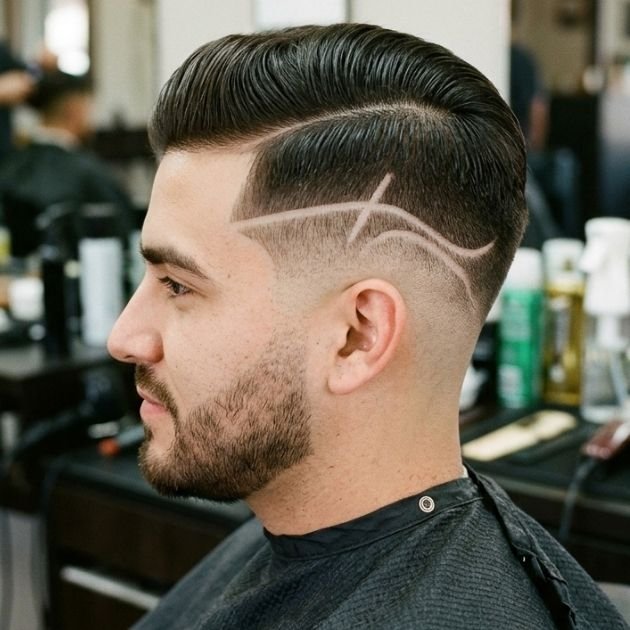
A hard part line shaved into the hair, or a thin razor line near the temple, adds a sharp accent. It is a small detail that looks great when freshly cut and shows quickly as it grows.
- Best for: Short to medium length tops and men who visit a barber every 2 to 3 weeks
- Tip: Keep the design simple. One clean part line is enough
Undercut Comb Over
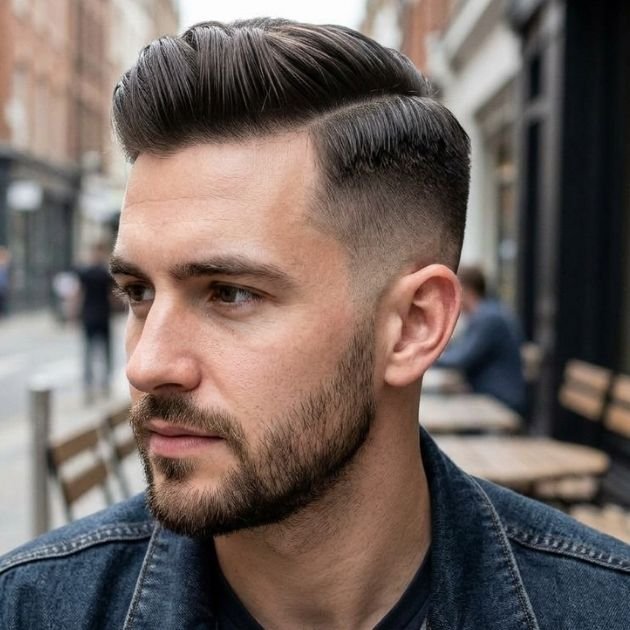
Here the sides are cut much shorter and are disconnected from the top, with a visible step instead of a gradual blend. It is a bolder look and works best with a longer top, 4 to 6 inches.
- Best for: Thick hair and confident, modern styling
- Note: This is technically not a pure taper, so mention “disconnected” to your barber
Soft Comb Over

The top is left a little longer on the sides of the part and styled with minimal product. There is no hard line and no heavy hold. It reads as neat but easygoing, and it grows out without looking messy.
- Best for: Busy men, beginners, and anyone growing out a shorter cut
- Styling product: A pea sized amount of cream or a sea salt spray
See Also: 17 Best Mid Taper Fade Curly Hair Styles (2026)
Mid Taper Fade Comb Over Explained: What Actually Holds the Part
Most guides talk about the fade and forget the part. Yet the part is what makes it a comb over.
Three things hold it in place:
- Hair length at the part line. Hair shorter than about 2 inches will not stay combed over. You need enough length for weight.
- A natural parting position. Every head has a direction in which the hair wants to fall. Find it by pushing your hair back with your fingers and seeing where it splits.
- The taper. Removing bulk on the sides lets the top lie smoothly instead of lifting off the head.
A mid taper is different from a mid fade. A taper keeps a short length at the neckline and sideburns and gets shorter gradually. A fade goes down to skin or near skin. If you want a cleaner, softer outline, a taper is the safer choice. If you want sharp contrast, ask for a skin taper.
In plain words, a mid taper starts shortening around the temple and the top of the ear, which is the middle of the head. It sits between a low taper, which stays near the ears, and a high taper, which climbs toward the crown.
Why the Comb Over Keeps Coming Back in 2026
The comb over has moved from “old fashioned” to “smart classic” for a few practical reasons.
- It works at the office and after hours. The same cut looks professional with a shirt and relaxed with a hoodie.
- It suits many hair types. Straight, wavy and thick hair can all hold it with the right product.
- It is easy to personalize. A beard, a razor line or a longer top changes the style without changing the technique.
- Short sides are still in. Tapers and fades remain standard in barbershops, and a longer top balances them.
- Natural texture is trending. Matte finishes and softer parts are replacing the glossy, helmet look.
It also helps that the cut is tolerant. If you skip one barber visit, the taper grows out slowly instead of turning shapeless.
Pros and Cons: What You’re Signing Up For
Pros
- Clean and professional appearance
- Works for many occasions
- Shows off hair length on top while keeping the sides neat
- Easy to adjust with different products
- Flatters most face shapes when the volume is right
Cons
- Needs a trim every 3 to 4 weeks to keep the taper crisp
- Requires a few minutes of styling each morning
- Thin or receding hair can make the part more visible
- Cowlicks near the part can fight against the sweep
- Wind and humidity can break the shape if the product is too light
The cut rewards men who are willing to spend 5 minutes on styling. If you want something you can ignore, choose the soft version.
Choosing by Hair Type: What Actually Holds the Part
Straight Hair
Straight hair is the easiest to part and comb. It can look flat, so use a texturizing product at the roots. A light pomade with a natural finish works well. Keep the top around 3 to 4 inches.
Wavy Hair
Wavy hair gives natural volume and a relaxed shape. Leave extra length so the waves lie down in the part direction. Apply product to damp hair and blow dry on low heat to control frizz.
Thick Hair
Thick hair holds a part well, but it can feel heavy and puffy. Ask the barber to thin the top with texturizing shears and to keep the taper tight on the sides. A firm cream or clay gives the control needed.
Curly Hair
Curly hair can carry a comb over, but it needs a softer approach. Think of it as a side swept curl rather than a flat comb across. Leave 3 to 5 inches on top, define curls with a cream, and use a pick or fingers instead of a fine tooth comb. A razor part line is a good way to add structure.
Face Shape Matchups
A comb over changes the proportions of the face, so the height and direction of the sweep matter.
Oval Face
Almost every version works. The classic mid taper comb over is a safe starting point.
Round Face
Add height at the front and keep the sides tight. A slightly higher taper and a textured top make the face look longer.
Square Face
The strong jaw already provides structure. A soft or textured comb over keeps the look from feeling too severe.
Heart-Shaped Face
Choose a medium length top with a side sweep that covers part of the forehead. Avoid very high volume, which exaggerates a wide forehead.
Long Face
Keep the top flatter and avoid too much height. A slightly longer taper blend and some side volume make the face look better balanced.
Diamond Face
A fringe leaning part or a softer sweep brings attention to the forehead and balances cheekbones. A beard also helps by filling out the jawline.
Rectangular Face
Go for a moderate top length with some volume to the sides. The slick style with too much height can lengthen the face further, so choose the classic or textured version.
Age Group Breakdown
Teenagers
A textured or soft comb over is a great choice. It looks modern and does not need much product. Keep the part natural and avoid anything too rigid.
Young Men
This group can try the undercut or the design version. A beard adds another layer of personality. It is also the best age to test different lengths.
Professional Men
The classic and slick versions look sharp in a business setting. Keep the finish matte or satin, and book a trim every 3 weeks if your job requires a polished look. For those with thinning hair, a slightly longer top with a softer part blends more naturally.
Talking to Your Barber: The Exact Guard Numbers
Barbers use different terms, so bring a photo and use clear numbers. These are common starting points. Your barber may adjust them based on hair density and head shape.
- Bottom of the taper at the neckline: Guard 1 or 1.5 (about 3 to 4 mm), or a skin finish for a skin taper
- Mid section around the temple and ear: Guard 2 (about 6 mm)
- Blend into the top: Guard 3 to 4, then scissor over comb for the final blend
- Top length: 3 to 5 inches (8 to 13 cm)
- Part: Natural part or hard part, depending on style
Use this script: “I would like a mid taper fade with a comb over. Start the taper at the temple, keep the neckline tapered, and leave about 4 inches on top with a natural side part.”
Also tell the barber how you style your hair at home and whether you have a cowlick. That detail changes how they cut the top.
Common Mistakes That Break the Part
- Cutting the top too short. Under 2 inches, the hair will not sweep.
- Ignoring the natural part. A forced part tends to pop up by midday.
- Using too much product. Heavy gel or grease looks flat and shows scalp.
- Skipping the blow dryer. Drying the hair in the sweep direction sets the shape.
- Starting the taper too high. A taper that sits too far up can make the top look disconnected.
- Waiting too long between cuts. The crisp outline softens after about 3 weeks.
- Using a wide tooth comb on fine hair. A fine tooth comb gives a cleaner line.
Maintenance Reality Check
Daily Styling
A good routine takes about 5 minutes.
- Start with damp (not dripping) hair.
- Blow dry the top in the direction of the sweep.
- Rub a small amount of product between your palms.
- Apply from back to front, then comb the part.
- Check the sides and tidy flyaways.
Products That Work Best
- Matte clay: Texture and control for thick or wavy hair
- Light pomade: Natural shine for classic styles
- Sea salt spray: Adds grip to fine hair before styling
- Styling cream: Soft hold for the low maintenance version
- Hairspray: Optional for humid or windy days
Washing Routine
Wash 2 to 3 times a week with a mild shampoo. Daily washing can dry the scalp and make hair harder to style. Rinse out heavy products fully, because buildup weighs the hair down.
Touch-Up Frequency
Visit the barber every 3 to 4 weeks for a standard taper. If you have a skin taper, a razor line or a beard fade, plan on 2 to 3 weeks.
Comb Over vs Other Styles
Comb Over vs Middle Part
A comb over uses a side part and a sweep, so it looks structured. A middle part splits the hair evenly and needs more length and a softer feel. The comb over suits shorter, neater looks.
Comb Over vs Slick Back
A slick back goes straight back and away from the face. It needs more length and tends to look more dramatic. A comb over keeps the hair across the forehead and tends to be easier to maintain.
Comb Over vs Regular Mid Taper
A regular mid taper refers only to the sides. The comb over refers to the top. You can pair the same taper with a crop, a quiff or a pompadour, but the comb over adds the side part and sweep.
Frequently Asked Questions
What is a mid taper fade comb over?
It is a haircut with short, gradually blended sides starting at the temple and a longer top parted and combed to one side.
How long should my hair be for a comb over?
Aim for at least 3 inches on top, though 4 to 5 inches gives the best sweep and holds the part longer.
How often should I get a mid taper fade comb over trimmed?
Every 3 to 4 weeks is typical, or every 2 to 3 weeks if you have a skin taper or a razor part line.
Can curly or thin hair pull off a comb over?
Yes. Curly hair works with a softer, side swept shape, and thin hair works with a slightly longer top and light, matte products.
What product is best for a comb over?
Choose a light pomade for a classic look, a matte clay for texture, and a cream for a soft, low maintenance finish.
Conclusion
The mid taper fade comb over stays popular because it is flexible. You can go formal with a slick part, casual with a textured top, or low effort with a soft finish. The details that matter most are the length on top, a part that follows your natural growth, and a clean taper that you refresh every few weeks.
Pick one of the eight styles, take a photo and the guard numbers to your barber, and test a simple 5 minute routine at home. Adjust the product and the length after the first cut, and you will quickly find the version that fits your hair, face shape and schedule.

Abu Huraira is the administrator of Faxhion Crown, a blog dedicated to hairstyles, fashion trends, and personal style. He is passionate about helping readers discover fresh hairstyle ideas, explore modern fashion, and find inspiration for everyday looks. Through Faxhion Crown, Huraira aims to share helpful styling tips, beauty inspiration, and fashion insights that help readers express their individuality with confidence.
2 thoughts on “8 Best Mid Taper Fade Comb Over Styles for Men (2026)”