

The mid taper fade is one of the cleanest cuts you can get if you have straight, thick, black hair. It keeps the sides neat, leaves room on top for real styling, and grows out without looking messy. This guide covers 15 mid taper fade Asian haircut ideas, how to match them to your hair type, face shape and age, what to tell your barber, and how to keep the cut sharp between visits.
Quick answer:
A mid taper fade Asian haircut starts the taper around the temple and ear level, blends the sides and back gradually into the skin or a short guard length, and leaves longer hair on top. It suits straight, thick Asian hair because the taper controls side volume while the top stays easy to shape.
What Is a Mid Taper Fade Asian Haircut?
A mid taper fade is a haircut where the sides and back get shorter in a smooth gradient, starting around the middle of the head. The start point sits roughly at the temple and just above the ear. It is higher than a low taper and lower than a high taper.
The word “taper” matters. A traditional fade can go all the way down to bare skin. A taper usually stops at a short guard length, especially around the sideburns and the nape. That makes it softer and easier to wear to the office, school or a family event.
The phrase “Asian” in this keyword is about hair, not a single look. Many men of East and Southeast Asian heritage have hair that is straight, dense and strong. That hair grows outward and downward, so untreated sides can look boxy fast. A mid taper fixes that by removing bulk where it flares most.
Here is what a mid taper fade normally includes:
- Starting point: around the temple and top of the ear
- Shortest length: often a number 0 to 2 guard at the base, or skin if you want a sharper look
- Blend zone: a smooth gradient from the base up to the parietal ridge, the curved edge where the head turns from side to top
- Neckline: tapered, squared or rounded, depending on your preference
- Top: anything from 3 cm to 12 cm or longer
Why Is This Haircut So Popular in 2026?
Three things keep the mid taper fade at the top of barbershop requests this year.
1. It balances neat and relaxed. The cut looks groomed without the harsh contrast of a skin fade. You can wear it with a hoodie or a suit.
2. It works with the Korean and Japanese hair influence. Soft fringes, middle parts and two-block shapes still dominate social media. The mid taper gives those styles a clean base without making the sides look too severe.
3. It grows out well. A taper loses shape slowly. Many men get a good three to four weeks before the sides look overgrown, which saves time and money.
It also suits low-effort routines. A quick blow dry and a pea-sized amount of paste is enough for most versions on this list.
15 Best Mid Taper Fade Asian Haircut Ideas
Each idea below explains the look, who it suits, how long the top should be and how to style it. Lengths are rough guides. Ask your barber to adjust them to your hair density and growth pattern.
Classic Mid Taper Fade
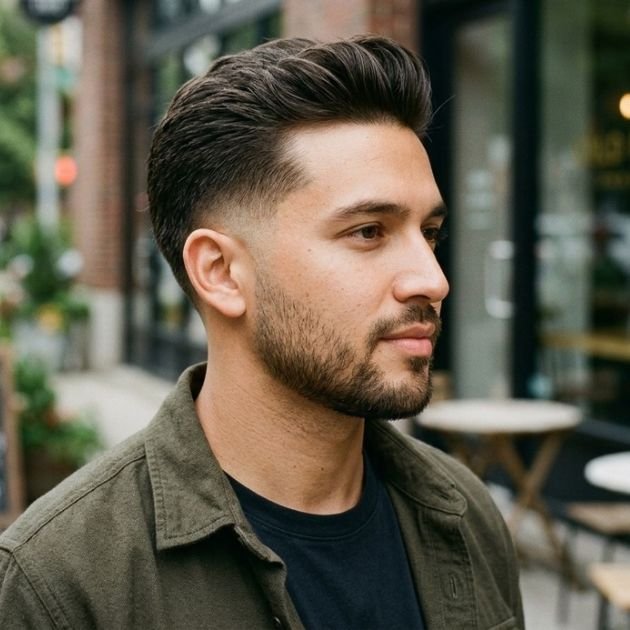
This is the base version. The top is about 4 to 6 cm, combed or pushed slightly to one side, and the sides taper smoothly from the temple down.
- Best for: first-time fade clients, office jobs, men who want a safe choice
- Styling: a light cream or matte clay, then comb through
- Why it works: it highlights straight hair without needing much volume
Textured Top Mid Taper
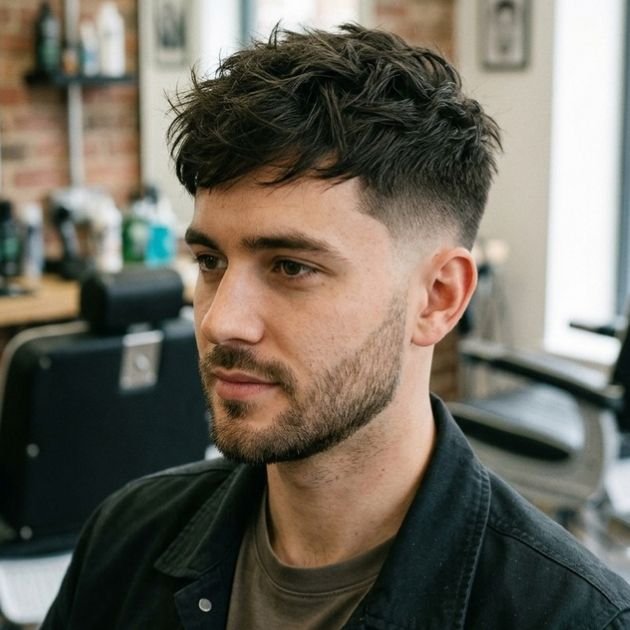
Your barber cuts the top with point cutting or a razor so the ends look broken up rather than blunt. The result has movement and visible separation.
- Best for: thick, straight hair that looks flat or heavy
- Styling: rub a matte paste between your palms and scrunch it in from the back to the front
- Tip: ask for texturizing, not thinning shears across the whole top, which can create frizzy ends
Messy Mid Taper Fade

This is the relaxed, slightly undone version. The top is a bit longer, around 6 to 8 cm, and styled forward and sideways with no strict direction.
- Best for: casual style, students, creative workplaces
- Styling: sea salt spray on damp hair, then a small amount of clay
- Tip: messy still needs shape. The taper keeps it from looking neglected
Korean Two-Block Mid Taper

The two-block cut separates the top from the sides with a clear disconnect. With a mid taper, the sides stay short and soft while the top is longer, often 7 to 10 cm, and falls over the forehead.
- Best for: straight hair, men who like a boyish, soft look
- Styling: blow dry the fringe down, then add a light spray for hold
- Note: the disconnect should be visible but not harsh
Middle Part Mid Taper
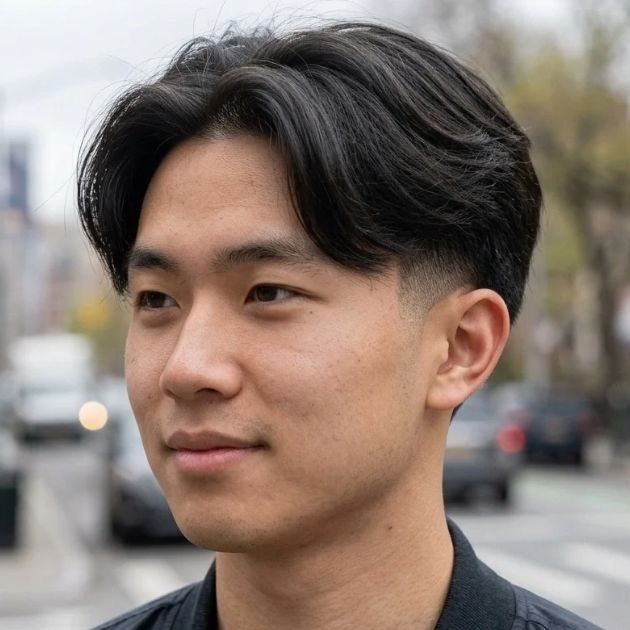
A center part splits the fringe evenly and frames the face. The taper keeps the sides tight so the part does not look heavy.
- Best for: oval, long and diamond faces, hair at least 7 cm on top
- Styling: use a comb to set the part, then blow dry each side outward
- Watch out for: cowlicks at the front hairline, which can make the part curve
Curtain Fringe Mid Taper
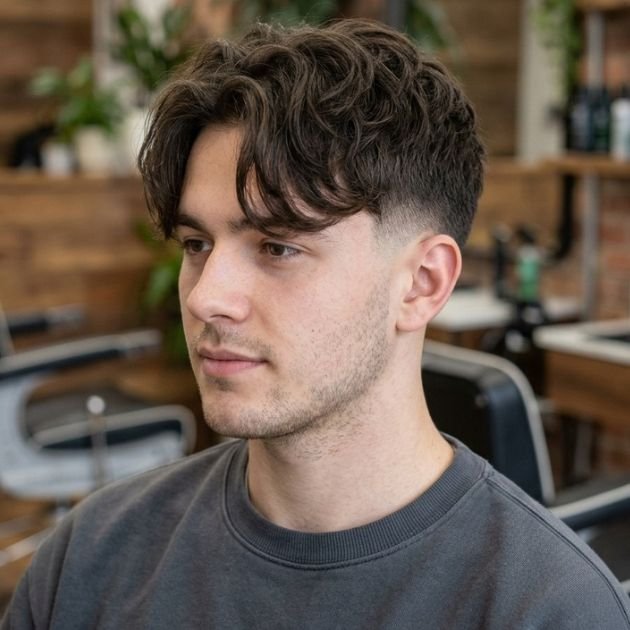
Curtain fringe is a middle part with the hair swept to each side, like open curtains. It is softer than a strict part and works well in warm, humid weather.
- Best for: medium-length hair, men who want a relaxed look
- Styling: dry the roots up first, then guide the ends down and out
- Tip: a round brush helps give the front some lift
Textured Fringe Mid Taper
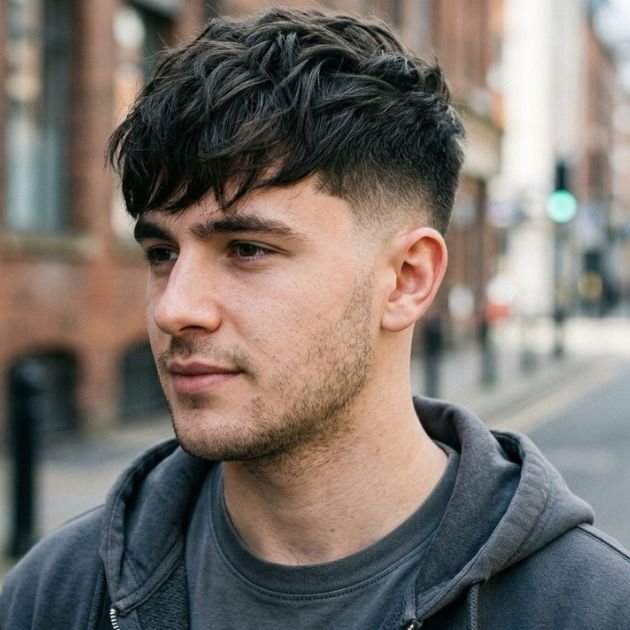
The fringe is cut with a ragged edge so it sits with light separation over the forehead. It looks modern and requires almost no precision when you style it.
- Best for: high foreheads, thick hair
- Styling: matte paste, fingers only
- Length: the fringe should reach the eyebrows or just above
Short Fringe Mid Taper
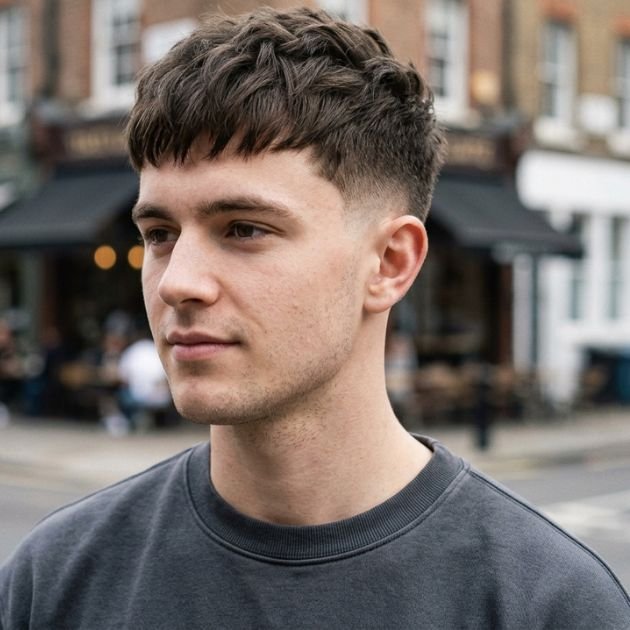
This is a more compact cut, with a short front fringe around 3 to 4 cm. It reads sporty and clean, and it keeps hair out of your eyes.
- Best for: teens, athletes, men who dislike styling
- Styling: towel dry, add a bit of clay and push forward
- Why it works: short fringe is hard to get wrong and tends to look tidy for longer
Quiff Mid Taper
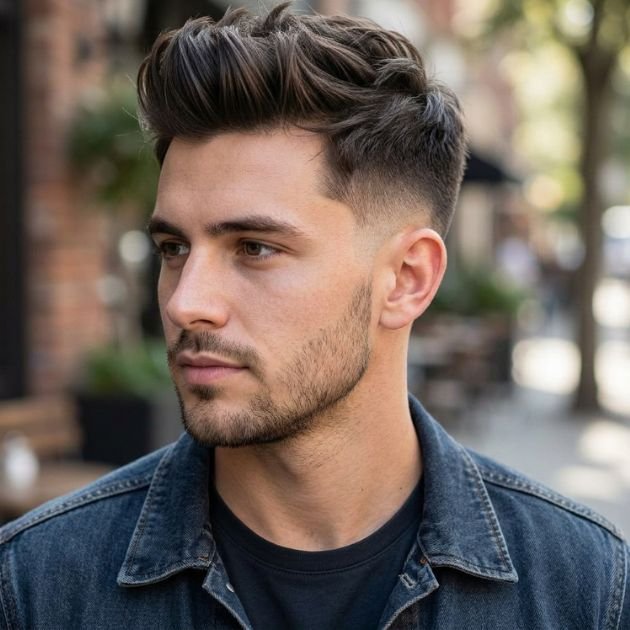
The quiff lifts the front up and back, creating height above the forehead. With a mid taper, the sides are tight so the volume on top stands out.
- Best for: round and square faces that need vertical height
- Styling: blow dry the front up with a vent brush, then finish with a strong hold product
- Note: straight Asian hair can fall flat, so use a pre-styling powder or mousse
Fluffy Mid Taper
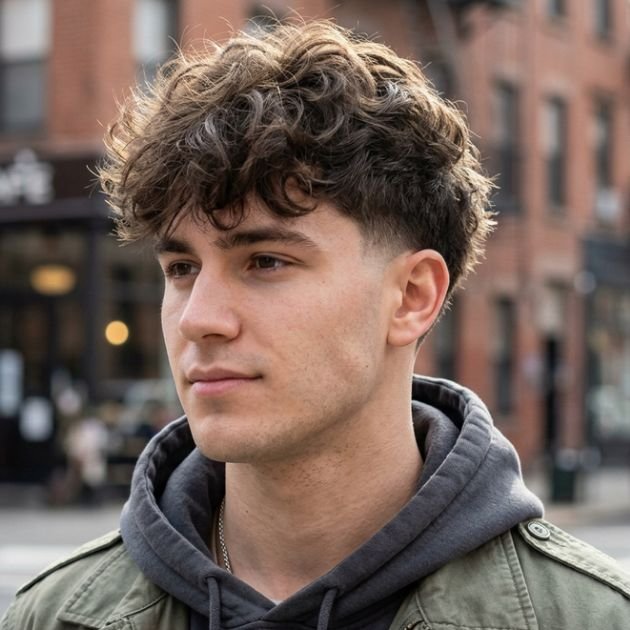
The fluffy mid taper is soft, airy and slightly puffed. It is popular in Korean and Japanese styling because it looks natural and youthful.
- Best for: fine to medium hair, men who want a light look
- Styling: blow dry with your fingers lifting the roots, then use a very light hold
- Tip: avoid heavy wax, which weighs fluffy hair down
Blowout Mid Taper
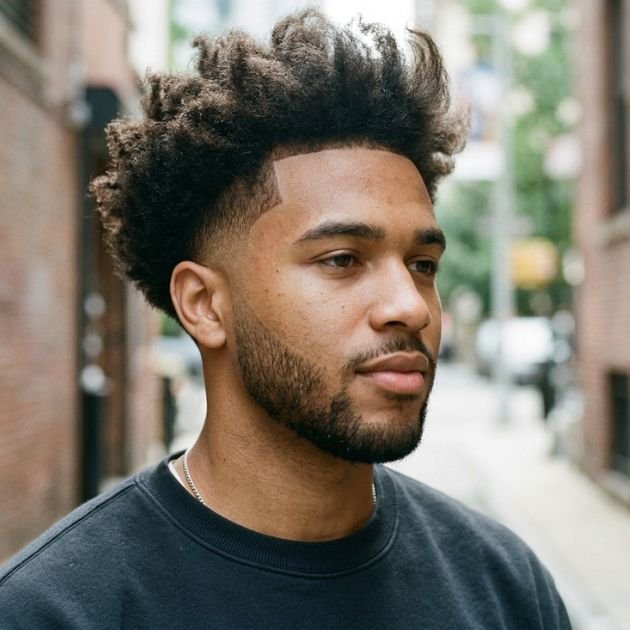
The blowout is a dried, shaped and lifted style with a voluminous top that sweeps back or sideways. The taper cleans up the sides so the volume looks intentional.
- Best for: thick hair, 8 to 12 cm on top
- Styling: apply sea salt spray, dry upward and backward, then set with a flexible hairspray
- Tip: use a heat protectant, since blowouts rely on daily heat
Slick Back Mid Taper
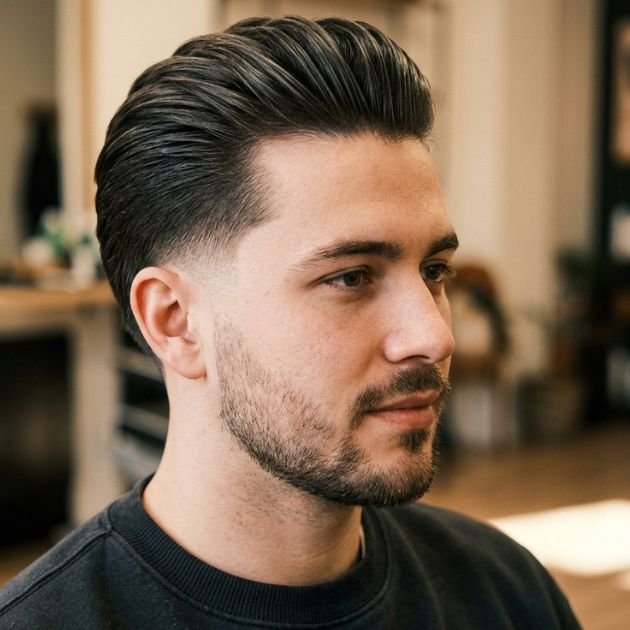
The top is combed straight back with a bit of shine. This version looks sharp and formal, and the taper gives the sides a crisp finish.
- Best for: professionals, weddings, interviews
- Styling: apply a water-based pomade on damp hair and comb back
- Watch out for: thick hair that springs up. Use a firmer hold and a blow dryer to set the direction
Side Part Mid Taper
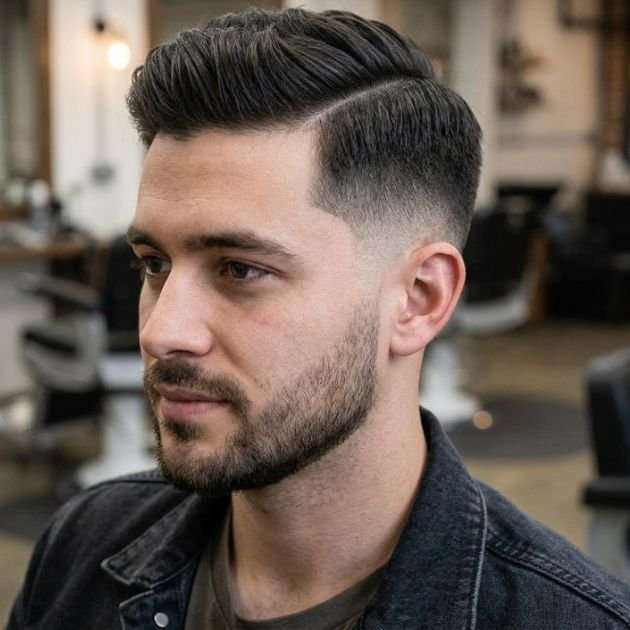
A defined side part pairs well with a mid taper for a classic, tidy outcome. The part can be natural or shaved in lightly as a hard part.
- Best for: business settings, men who want a timeless cut
- Styling: part the hair on damp roots, then use a light pomade
- Tip: part on the side where your hair naturally falls
Long Top Mid Taper
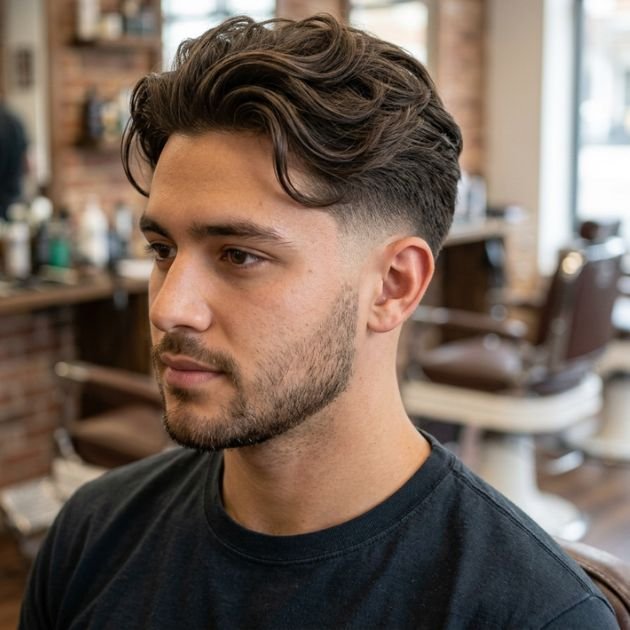
This style keeps 10 to 15 cm on top while the sides stay clean. It works if you want length but not a shaggy outline.
- Best for: men growing out their hair, long hairstyle fans
- Styling: use a leave-in conditioner and a light cream, then blow dry for shape
- Note: expect more frequent trims to keep the top healthy
Low-Volume Natural Mid Taper

This is the quiet option. The hair on top stays natural and flat, with only a gentle shape, and the taper does most of the work.
- Best for: busy men, minimal grooming routines
- Styling: towel dry, add a tiny amount of cream and comb
- Why it works: you get a neat look with about two minutes in the morning
How to Choose the Right Style for Your Hair Type
Hair type affects the result more than trends do. Match the cut to your hair first, then adjust for your face.
Straight Hair
Straight hair shows lines and shapes very clearly, which makes the taper look crisp. It can fall flat, so choose textured, fringe or quiff styles. A light texturizing powder gives it grip.
Wavy Hair
Wavy hair adds natural volume and movement. The messy, curtain fringe and fluffy styles work well. Avoid slick back unless you plan to use heat, since waves can spring out of place.
Thick Hair
Thick hair benefits most from a mid taper because the sides stay controlled. Ask for internal texturizing so the top does not feel heavy. Short fringe, textured top and blowout styles suit it best.
Fine Hair
Fine hair needs lighter products and less layering. Pick fluffy, low-volume or classic cuts and avoid heavy wax or thinning. A sea salt spray adds body without weight.
Medium-Length Hair
Medium length, about 5 to 8 cm, is the easiest range for a mid taper. Middle part, curtain fringe, messy and two-block styles all work. You can try most looks on this list without a big change.
Best Mid Taper Fade Asian Styles by Face Shape
Face shape guides where to place height, fringe and width. Use it as a starting point, not a rule.
Oval Face
Oval faces are balanced, so almost every style works. Try a middle part, side part or classic mid taper.
Round Face
Round faces look better with height and sharper angles. Quiff, textured top and side part styles add length. Avoid very full sides.
Square Face
Square faces already have strong jaws. Softer textures like curtain fringe or fluffy styles balance them. A short fringe also works.
Heart Face
Heart faces have a wide forehead and narrow chin. A textured fringe softens the forehead, and a slightly longer top balances the jaw.
Long Face
Long faces should avoid too much height. Choose fringe, curtain or messy styles that add width and cover some of the forehead.
Diamond Face
Diamond faces have prominent cheekbones. A middle part, curtain fringe or textured fringe keeps attention balanced across the forehead.
Rectangular Face
Rectangular faces benefit from volume at the sides and fringe at the front. Try a fluffy mid taper or a short fringe to avoid extra length.
Best Mid Taper Fade Asian Styles by Age Group
Teenagers
Teens usually want low upkeep and a modern look. Short fringe, messy and fluffy mid tapers are good options. Keep the taper conservative if school has dress codes.
Young Men
Men in their twenties and early thirties can try bolder cuts. Korean two-block, blowout, middle part and textured fringe styles all work. This is the age group where trend-driven cuts look most natural.
Professional Men
Professionals should lean toward clean, controlled shapes. Classic, side part and slick back mid tapers look polished and adapt well to meetings and events. Use matte products for a more natural finish.
How to Ask Your Barber for a Mid Taper Fade
A clear request gets better results than a photo alone. Use this simple script:
- Name the cut: “I would like a mid taper fade.”
- Give the starting point: “Start the taper around the temple and top of my ear.”
- Say how short: “Go down to a number 1 at the base, or skin if possible.”
- Describe the top: “Leave about 6 cm on top, with some texture.”
- Mention the neckline: “Please keep the neckline natural” or “squared.”
- Share a photo: pick one with similar hair density and direction.
- Mention your problem areas: cowlicks, double crown, flaring sides or sensitive skin.
If you are unsure, ask the barber for a longer taper first. You can always go shorter on your next visit, but you cannot add hair back.
Mid Taper Fade Tutorial: Video Guide
Watching a short tutorial helps you understand what a good blend looks like before you sit in the chair. Search for a recent video on a mid taper fade on straight hair from a licensed barber, and look for these points:
- The barber starts with a longer guard and works downward in steps
- The clipper is flicked outward at the end of each stroke to avoid lines
- Blending is done with scissors or a clipper over comb near the top
- The neckline and sideburns are cleaned last
You do not need to cut your own taper. The video is simply a reference for what to expect and what to ask for.
Common Mid Taper Fade Mistakes to Avoid
Most bad fades come from small habits, not big errors. Watch for these:
- Skipping product prep: damp hair with no product looks flat
- Using heavy wax on thick hair: it can leave the top stiff and greasy
- Waiting too long between cuts: sharp tapers soften quickly
- Over-washing: daily shampoo can dry the scalp and cause flakes
- Ignoring your hair direction: brushing against your growth pattern creates bumps
- Copying a photo exactly: a different hair density gives a different result
Common Barber Mistakes to Avoid
Sometimes the mistake is in the chair. Check for these signs:
- Visible lines or steps: the blend is incomplete
- Too high or too low a start: the cut looks like a different taper
- Uneven sides: compare both ears before you leave
- Over-thinned top: the hair looks wispy and loses shape
- Rushed neckline: the back edge looks crooked
- No consultation: a good barber asks about your routine and hair
Be polite, but ask for corrections before you pay. A professional barber will happily fix them.
How to Maintain a Mid Taper Fade Asian Haircut?
Good maintenance keeps the shape clean and the hair healthy. A few simple habits do most of the work.
Taper Maintenance
Book a touch-up every 2 to 4 weeks. Skin tapers need visits closer to two weeks, while softer guard-based tapers can stretch to four. Ask for a neckline clean-up between full cuts.
Daily Styling
Style on damp hair for control. Use a small amount of product, work it from the back to the front, and finish with your fingers or a comb. Heavier products suit shorter hair, while lighter creams suit longer lengths.
Shampoo and Conditioner
Wash two to three times a week, or daily if you sweat or use a lot of product. Use conditioner on the lengths, especially if the top is longer. Rinse well to avoid residue.
Heat Protection
If you blow dry daily, apply a heat protectant spray first. Keep the dryer on a medium setting and about 15 cm away from your hair.
Satin Pillowcase
A satin pillowcase reduces friction while you sleep. It helps prevent frizz, flat spots and a messy look in the morning.
Sulfate-Free Products
Sulfate-free shampoos clean gently and are less likely to strip natural oils. They are a good choice if your scalp is dry or your hair is color-treated.
Mid Taper Fade vs Other Haircuts
The names are easy to mix up. Here is how the mid taper compares with similar cuts.
Mid Taper Fade vs Low Taper
A low taper starts near the ears and neckline and leaves most of the side length. A mid taper starts higher, so it looks cleaner and has more contrast. Choose low for subtle, mid for balanced.
Mid Taper Fade vs Mid Fade
A mid fade usually goes to the skin and has a strong contrast. A mid taper often keeps some length and looks softer. The taper is easier to wear to work or school.
Mid Taper Fade vs Two-Block
A two-block is a structure, with a longer top clearly separate from short sides. A mid taper is a blending method. You can combine them, which is exactly what the Korean two-block mid taper does.
Mid Taper Fade vs Undercut
An undercut removes the sides with no gradient, leaving a hard line between lengths. A mid taper blends gradually. The taper looks softer and grows out more gracefully.
Frequently Asked Questions
What is a mid taper fade Asian haircut?
It is a haircut with sides that gradually shorten from the temple down, suited to straight, thick Asian hair. The top stays longer for styling.
Is a mid taper fade good for Asian men?
Yes. It controls side volume and keeps straight, dense hair neat and easy to shape.
How long does a mid taper fade last?
Most last two to four weeks before the sides look overgrown. Skin tapers soften faster.
What is the difference between a taper and a fade?
A taper leaves some length at the edges, while a fade often blends down to bare skin. Both create a gradual transition.
What hair length is best for a mid taper fade?
About 4 to 8 cm on top suits most styles. Longer cuts need more regular trims.
Can I get a mid taper fade with thin or fine hair?
Yes. Choose a lighter top and avoid thinning scissors so the hair keeps density.
How often should I get a mid taper fade?
Every two to four weeks keeps the shape clean. Stretch it longer if you prefer a softer look.
What should I tell my barber to get a mid taper fade?
Say “mid taper fade,” give a guard number for the base and a length for the top. Add a photo.
Is a mid taper fade professional?
Yes. Classic, side part and slick back versions look neat in most offices.
What products work best for a mid taper fade?
Matte clay or paste for texture, light cream for soft looks, and water-based pomade for slick styles.
Conclusion
The mid taper fade works because it solves a real problem for Asian hair. It keeps thick, straight sides tidy while giving the top room to be soft, textured, long or sharp. Whether you pick a classic cut, a Korean two-block or a fluffy fringe, the shape stays neat and easy to maintain.
Start with the hair type and face shape sections above, bring a clear photo to your barber, and use the script to explain the start point and guard length. Then keep up with trims every few weeks and use light products. Pick the version that fits your routine, and you will have a haircut that looks good on busy days and special days alike.

Henry Lawson is the administrator of Faxhion Crown, a blog dedicated to hairstyles, fashion trends, and personal style. He is passionate about helping readers discover fresh hairstyle ideas, explore modern fashion, and find inspiration for everyday looks. Through Faxhion Crown, Henry aims to share helpful styling tips, beauty inspiration, and fashion insights that help readers express their individuality with confidence.