

A blowout taper keeps the sides and back neat while leaving real volume on top. It gives you a clean outline without the harsh, bald look of a high fade. That balance is why barbers get asked for it so often.
This guide covers what the cut is, where to place the taper, which finish to choose, and how to adapt it to your hair type. It also includes a barber script and a grow-out plan.
What Makes a Blowout Taper Different?
A blowout taper is a short, gradually tapered perimeter paired with a longer, lifted top. The sides stay close to the head. The top stands up or moves forward, with body and texture.
Two things set it apart from a standard taper:
- Top volume is the point. The hair on top is cut to hold shape, not lie flat.
- The taper is subtle. Length reduces slowly around the ears and neckline instead of dropping to skin fast.
Think of it as a frame and a picture. The taper is the frame. The blowout is the picture.
Blowout Taper From the Side, Back and Front
Each angle shows something different, so check all three before you commit to a photo.
- Side view: Hair shortens gradually from the temple down to the sideburn. The top should look noticeably longer than the sides, with a soft transition between them.
- Back view: The neckline is either softly tapered or squared off. The crown should not look flat. Good barbers leave enough weight there to match the volume up front.
- Front view: The hairline frames the face. A fringe, a lifted front, or a swept section shows here. The temples should look clean, not carved too high.
Low vs Mid Blowout Taper Placement
Placement means how high up the head the shortening begins. It changes the whole feel of the cut.
| Feature | Low blowout taper | Mid blowout taper |
| Starts near | Ear and neckline only | Mid-side, above the ear |
| Look | Soft, natural, conservative | Sharper, more modern |
| Best for | Office settings, thicker sides | Strong contrast, fast style |
| Grow-out | Slower, more forgiving | Quicker to look untidy |
Compare your preferences first
Ask yourself these questions before the chair:
- Do I want people to notice the taper, or only the top?
- Do I wear hats, helmets, or hard hats that flatten the sides?
- How often can I visit the barber?
- Is my head shape round, narrow, or flat at the back?
If you answered “subtle” and “rarely,” go low. If you want contrast and can book every three to four weeks, go mid. A mid taper also adds height to a rounder head shape, because the shortened sides make the top look taller.
Shadow, Zero or Skin?
The finish at the bottom of the taper changes how sharp the cut looks. Here are the three common options:
- Shadow: The hair is cut very short but not to bare skin. It looks soft and forgives regrowth. It is the safest first choice.
- Zero: The clipper runs without a guard, leaving a light stubble that looks nearly shaved. It is cleaner than a shadow but still not harsh.
- Skin: The area is shaved to the skin. It gives the strongest contrast and the most dramatic look, but it needs the most upkeep.
Quick pick: Choose shadow if you want low upkeep, zero if you want a crisp middle ground, and skin if you want maximum contrast and will keep up with appointments.
How the Blowout Changes by Hair Type
The haircut is not one fixed template. The right length, product, and technique depend on your strands.
Blowout Taper by Hair Type
Blowout Taper Straight hair
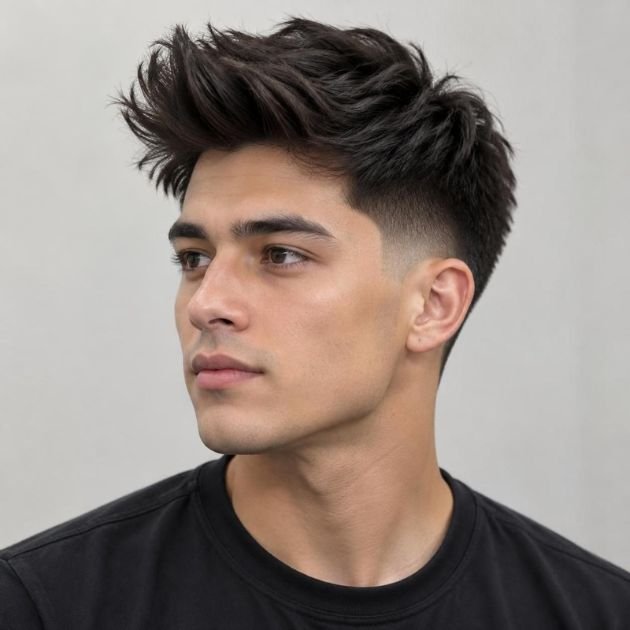
- Needs lift. Ask for some layering or texturizing on top so it does not fall flat.
- Use a blow dryer and a round brush, or fingers with a light spray.
- Matte clay or powder gives grip.
Blowout Taper Wavy hair

- Wavy hair is the most flexible. It holds a natural blowout shape with little effort.
- Ask for slightly longer length on top so the wave pattern shows.
- Use a light cream or sea salt spray, then dry with a diffuser or by hand.
Blowout Taper Curly hair
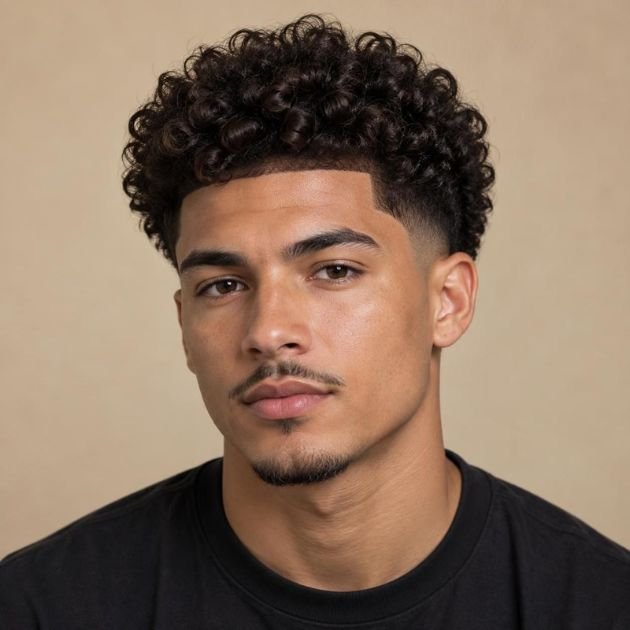
- The taper keeps the sides tidy while the curls act as the blowout.
- Keep the top long enough for curls to form, usually three to four inches.
- Define curls with a leave-in cream or curl gel, and avoid brushing dry.
Blowout Taper Coily or textured hair

- A mid or low taper with a rounded, shaped top gives height without bulk at the sides.
- Moisture matters. Use a leave-in conditioner and an oil on the ends to prevent breakage.
- A pick or wide-tooth comb lifts the shape without frizz.
Blowout Taper Thin or fine hair

- Keep the sides tighter, since contrast makes the top look fuller.
- Use volumizing powder and avoid heavy pomades that weigh hair down.
- Avoid going too long on top, as thin hair collapses under its own weight.
Ways to Wear a Blowout Taper
The same cut can look very different depending on how you finish it.
Swept Back
This is the polished version. You dry the top back and away from the face, then set it with a light-hold product.
- Rough dry the hair with your fingers, pushing it back.
- Use a dryer on medium heat to build lift at the roots.
- Add a pea-sized amount of paste or clay.
- Finish with a short pass of cool air to set the shape.
It works well for work, events, and anyone who wants a neat look.
Forward Fringe
Here the top falls forward over the forehead. It looks relaxed and youthful.
- Cut the fringe so it sits above the eyebrows, not in the eyes.
- Add texture with scissors or a razor, so the ends look broken and light.
- Use sea salt spray for grip without stiffness.
This works especially well for oval and long faces, because the fringe shortens the forehead.
With a Beard
A blowout taper and a beard fit together when the beard line blends into the taper.
- Ask for the sideburns to flow into the beard, with no hard stop.
- Keep the cheek line clean and the neckline rounded.
- Match the beard length to the top. A very long beard with very short sides can look top-heavy or out of balance.
A shadow or zero finish helps the beard blend more smoothly than a skin finish does.
Blowout Taper vs Blowout Fade
These two get mixed up constantly, so here is the simple difference.
- Taper: Length shortens gradually and stays visible. It leaves hair at the ear and neckline.
- Fade: Length blends down to skin or near skin. The change is more dramatic and happens over a larger area.
| Blowout taper | Blowout fade | |
| Sides | Short, with visible hair | Close to skin at the bottom |
| Contrast | Soft | Strong |
| Upkeep | Lower | Higher |
| Style | Classic, polished | Bold, trendy |
If you are unsure, start with a taper. You can always go shorter next time, but you cannot add hair back.
How to Style a Blowout Without Making It Rigid?
A stiff, helmet-like top is the most common styling complaint. These steps keep it soft and natural.
- Start with damp hair, not soaking wet. Towel dry until it stops dripping.
- Apply a light pre-styler. Sea salt spray or a volume mousse works. Use a small amount.
- Dry in sections. Lift the roots first, then dry the length.
- Use fingers more than brushes. This keeps movement in the hair.
- Add product last. Warm a pea-sized amount in your palms and work it through the ends first.
- Skip heavy hairspray. If you need hold, use a flexible spray from a distance.
Rule of thumb: If your hair does not move when you shake your head, you used too much product.
What to Tell Your Barber?
Photos help, but exact words help more. Here is a simple script you can adapt:
“I want a blowout taper. Please keep the top about three to four inches with some texture. Start the taper low (or mid) and finish it with a shadow. Leave the neckline natural, and blend the sideburns.”
Add these details to avoid surprises:
- Top length: Give a number or show it with your fingers.
- Taper height: Low or mid.
- Finish: Shadow, zero, or skin.
- Neckline: Rounded, squared, or natural.
- Your styling routine: Tell them if you air dry or use a blow dryer.
Bring two or three photos that match your hair type. A photo of straight hair will not translate well if yours is coily.
Maintenance and Grow-Out
Taper upkeep depends on placement and finish.
- Low taper with shadow finish: Every 4 to 6 weeks.
- Mid taper with zero finish: Every 3 to 4 weeks.
- Skin finish: Every 2 to 3 weeks to keep the contrast sharp.
Between visits:
- Wash with a gentle shampoo two to three times a week.
- Use conditioner on the lengths, especially for curly and coily hair.
- Trim stray hairs at the neckline only if you are confident. Otherwise leave it for your barber.
Growing it out:
- Stop the clippers on the sides first and let the length catch up.
- Keep the neckline tidy so the grow-out looks intentional.
- Ask for a low taper trim every 6 to 8 weeks to shape the in-between stage.
- Expect hair to grow roughly half an inch per month, so a four-inch top takes several months to reach a new length.
Common Blowout Taper Mistakes
Avoid these and your results improve fast.
- Cutting the top too short. Under two inches limits the blowout effect.
- Going too high on the taper. A very high start looks harsh and moves the cut into fade territory.
- Ignoring hair type. What works on straight hair may fail on curls.
- Using too much product. It makes the hair stiff and greasy.
- Skipping the consultation. Not describing length and finish leads to guesswork.
- Dry brushing curls. It causes frizz and breaks the pattern.
- Letting the neckline grow out untidy. A messy neckline makes even a good cut look unfinished.
Frequently Asked Questions
What is a blowout taper haircut?
It is a haircut with short, gradually tapered sides and a longer, voluminous top. The taper keeps things neat while the blowout adds shape.
Is a blowout taper the same as a blowout fade?
No. A taper shortens gradually and keeps visible hair, while a fade blends down to skin or near skin for stronger contrast.
How long should my hair be on top for a blowout taper?
Aim for about three to four inches on top. Straight hair may need a bit more length for lift, while curls can work slightly shorter.
How often should I get a blowout taper trimmed?
Every three to six weeks, depending on taper height and finish. Skin finishes need the most frequent visits.
Does a blowout taper work on thin or curly hair?
Yes. Curly hair gets natural volume, and thin hair looks fuller when the sides are kept tight.
Conclusion
The blowout taper works because it balances sharp and soft. You get a tidy outline and a top with room for personality. The keys are choosing the right taper placement, picking a finish that fits your upkeep habits, and matching the cut to your hair type.
Bring a clear script and photos that match your texture, then style with light products and your fingers. Do that, and the cut looks sharp without looking stiff. If you want a second version, such as a curly-specific or beard-specific guide, I can write that next.
Related Hairstyles:
Mid Taper Fade: Styles, Barber Instructions, and Maintenance
Burst Fade Mullet: Styles, Hair Types, Barber Guide and Maintenance
Burst Fade Haircut: What It Is, Types, Styles and Barber Guide
Low Taper Fade Haircut for Straight Hair: Complete Style Guide for 2026

Abu Huraira is the administrator of Faxhion Crown, a blog dedicated to hairstyles, fashion trends, and personal style. He is passionate about helping readers discover fresh hairstyle ideas, explore modern fashion, and find inspiration for everyday looks. Through Faxhion Crown, Huraira aims to share helpful styling tips, beauty inspiration, and fashion insights that help readers express their individuality with confidence.
1 thought on “Blowout Taper Haircut: Styles, Types, and How to Get the Look”