

A clean mid taper fade already looks sharp. Add a well-placed design and it becomes a haircut people actually remember. The challenge is picking a design that fits your hair, your face, and your daily life, then explaining it to your barber without a photo-guessing game.
This guide covers all of it. You will learn what the cut is, why it is trending, the honest pros and cons, ten design ideas, how to match a design to your hair type, face shape, and age, and how to keep the lines crisp between visits. Every tip comes from how barbers actually work the clippers, not from a copy-paste trend list.
What Is a Mid Taper Fade with Design?
A mid taper fade with design is a short haircut where the hair on the sides and back gets gradually shorter, starting around the temple and ear level, with a pattern shaved or lined into the faded area.
Three parts make up the cut:
- The taper: the gradual drop in length from the top down toward the neckline and sideburns.
- The mid position: the fade starts at roughly the middle of the sides, not near the crown (high) or near the ear (low).
- The design: a line, shape, symbol, or pattern carved into the sides or back with a trimmer or razor.
The design is usually cut into the shortest part of the fade, because skin or very short stubble gives the cleanest contrast. The top can stay long, textured, curly, or cropped. That is why the haircut works as a base for so many looks.
Quick note on terms: a taper reduces length gently and often leaves the natural hairline at the neck and ears. A fade usually goes shorter, sometimes down to skin. A mid taper fade blends both ideas, so you get softness at the edges and contrast in the middle.
Why Mid Taper Fade with Design Is So Popular in 2026?
Three things keep this cut at the top of barbershop requests.
- It is the safe middle ground. A mid fade is bolder than a low fade and less dramatic than a high fade. It suits an office and a night out.
- Personalization is the trend. Men want a cut that feels like theirs. A small design does that without needing a wild top style.
- Social media pushes detail. Close-up photos and short barber clips reward sharp lines, so clients ask for details that show up on camera.
There is also a practical reason. The sides stay tidy while the top grows at its own pace, so you can change your style without changing the whole cut.
Pros and Cons
No haircut is perfect. Here is the honest picture.
Pros
- Versatile: works with straight, wavy, curly, and coily hair.
- Professional and creative: the design can be subtle enough for work.
- Flattering shape: the fade adds structure around the head and jawline.
- Easy styling: the sides need no effort, so only the top needs attention.
- Customizable: the design can be changed, softened, or removed later.
Cons
- Frequent upkeep: lines blur within one to two weeks as hair regrows.
- Barber skill matters: a shaky hand or a poor trimmer makes the design look messy.
- Costs more: designs usually add time and sometimes an extra fee.
- Workplace or school rules: some places have grooming policies, so check first.
- Hard to hide: if you dislike the result, you wait for regrowth or ask for a buzz.
10 Best Mid Taper Fade with Design Ideas
The ideas below are grouped by style so you can find your lane quickly. Each one includes who it suits, how it looks, and what to tell your barber.
Single Line Design
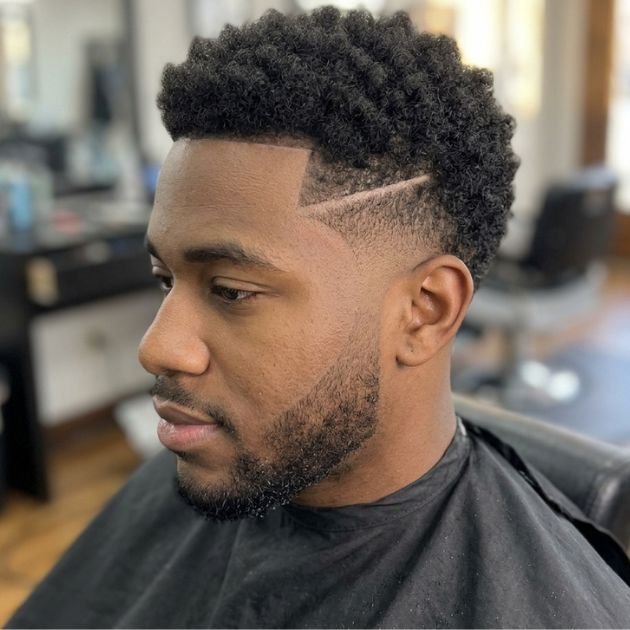
A single line is one thin cut, usually near the temple or just above the ear, following the curve of the head. It is subtle and sharp.
- Best for: first-timers and professionals.
- Barber tip: ask for a thin line that follows the natural fade direction, not a straight cut across.
- Upkeep: touch up every 7 to 10 days to keep the edge crisp.
Double Line Design

Two parallel lines create rhythm and make the sides look more deliberate. The gap between them matters. Too narrow and the lines merge as hair grows.
- Best for: men who want more than a single line without going bold.
- Barber tip: ask for equal spacing and the same length for both lines.
- Pairs well with: a textured crop or a short quiff.
See Also: Mid Taper Fade for Boys: 10 Best Styles (2026)
Side Part Line Design
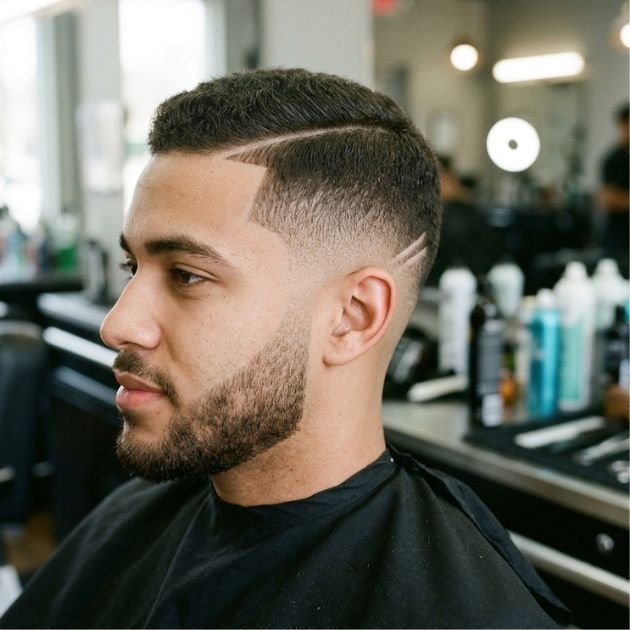
This design carves the part into the hair so it is visible even when the top is short. The part line connects the top to the faded side, which gives a cohesive, finished look.
- Best for: classic styles, slick backs, and formal settings.
- Barber tip: show your natural part first, then ask the barber to follow it.
- Upkeep: the part sharpens every few days with a light trim, so ask your barber for a quick maintenance tip.
Cross Design
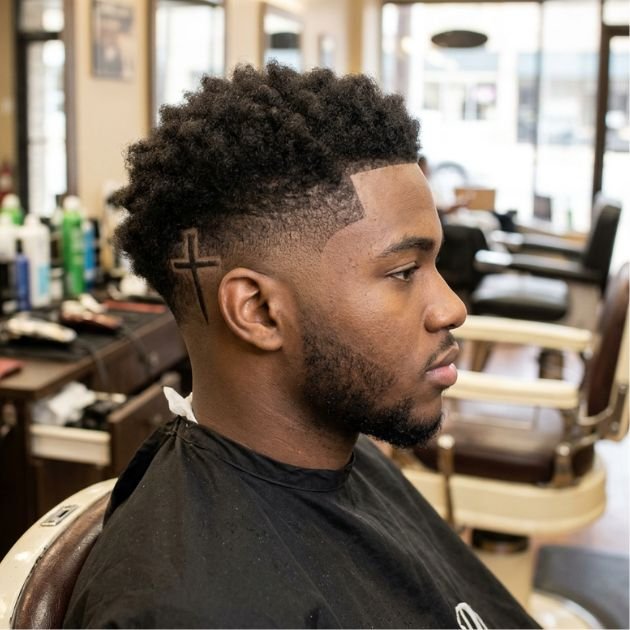
A small cross shaved on the side or back. Keep it small and proportional so it does not look heavy. A thin outline often looks better than a filled shape.
- Best for: men who want a meaningful symbol with a clean finish.
- Barber tip: bring a reference and agree on size before the first cut.
Star Design
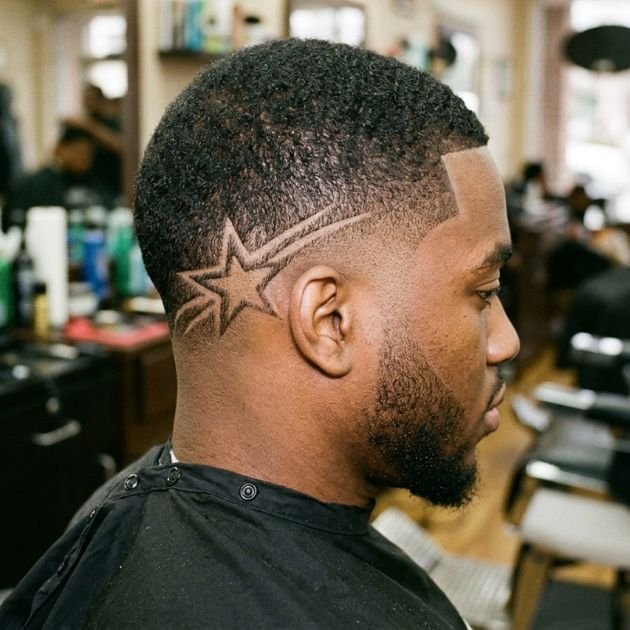
A star works well when placed slightly above the ear where the fade is shortest. A five-point star gets blurry quickly, so a simple, bold shape usually lasts longer.
- Best for: younger men and creative styles.
- Barber tip: ask for a single, slightly larger star rather than several tiny ones.
See Also: 8 Best Mid Taper Fade Textured Fringe Styles for Men (2026)
Zigzag Design
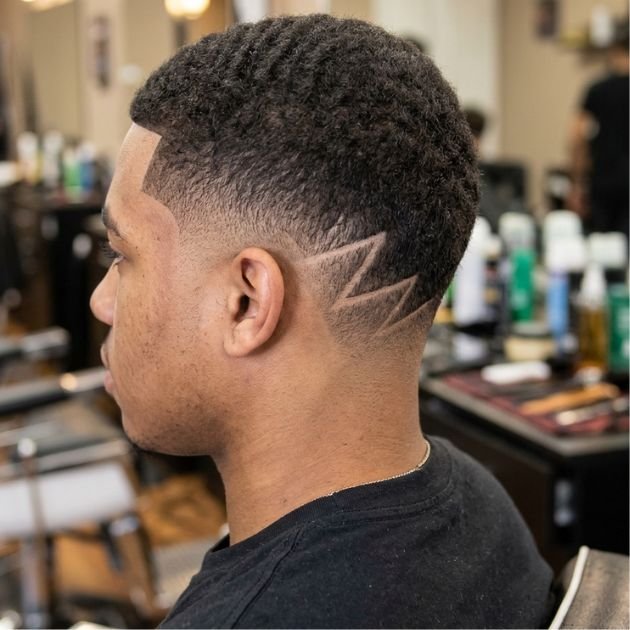
A zigzag (lightning-style) line adds movement. It is a good match for men who like edgy details but do not want a literal symbol.
- Best for: athletic, streetwear, and modern looks.
- Barber tip: keep angles consistent. Uneven angles are the first sign of a rushed design.
Spider Web Design
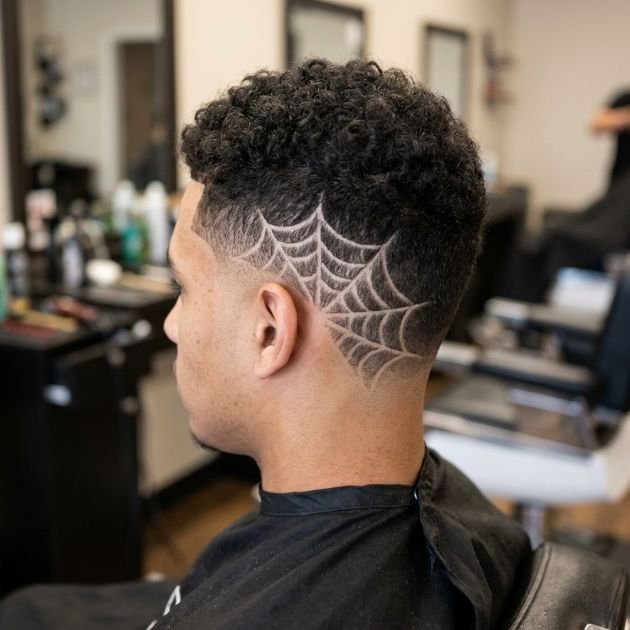
A spider web uses radiating lines and curved connectors, often anchored behind the ear. It is dramatic, so the top should stay simple to avoid visual clutter.
- Best for: confident personalities and creative workplaces.
- Barber tip: ask to see their previous web work before booking.
- Reality check: fine lines fade fast, so plan a refresh within a week.
Geometric Pattern Design

Triangles, squares, and angled shapes create a sharp, architectural look. Geometry works particularly well with square and rectangular faces because it echoes their structure.
- Best for: men who like precision and symmetry.
- Barber tip: ask for symmetry on both sides or deliberately offset patterns, not almost-matching ones.
See Also: 8 Best Mid Taper Fade Afro Styles for Men (2026)
Back Design
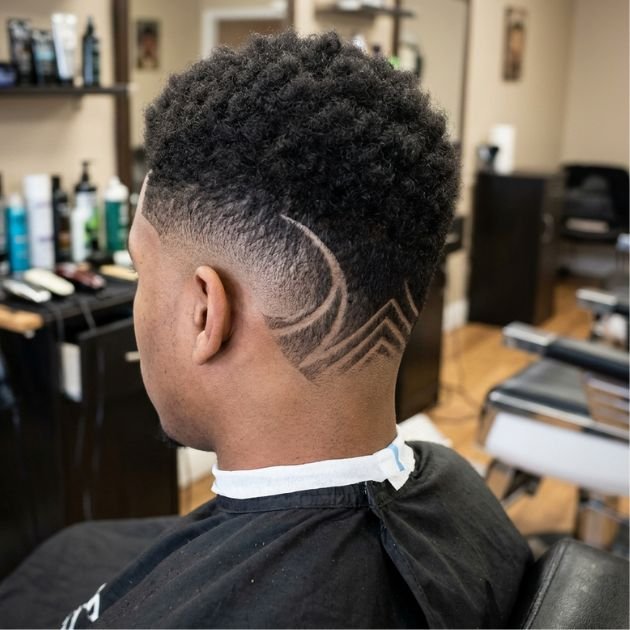
A design on the back of the head stays hidden from the front. You can show it or hide it depending on the day, which makes it good for people with grooming rules at work or school.
- Best for: men who want a private detail.
- Barber tip: ask for a clean neckline first, because the design sits on top of it.
- Note: you cannot see it yourself, so take a mirror photo before you leave.
Initial or Letter Design
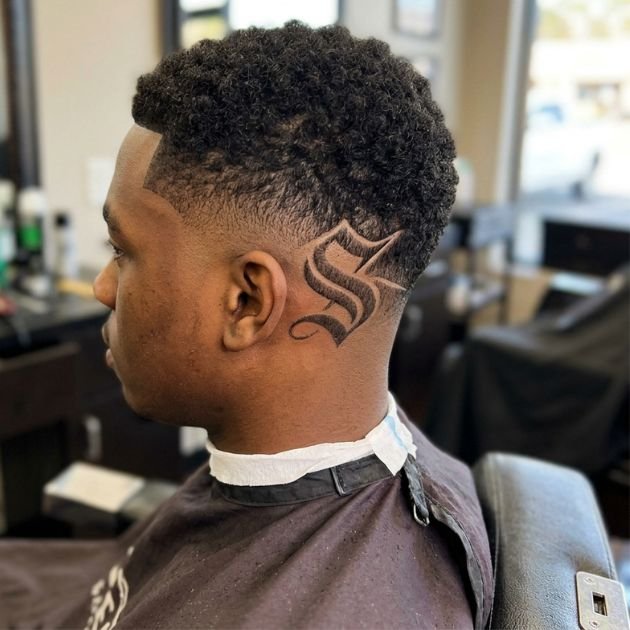
An initial, number, or short word placed above the ear or at the nape. Letters work best when they are simple, upright, and a little larger than you think you need.
- Best for: sports fans, couples, and personal milestones.
- Barber tip: choose a block font. Script letters smudge as hair grows.
How to Choose the Right Design for Your Hair Type?
Hair texture decides how crisp a design looks and how long it lasts. Match the design to the texture and the cut does half the work for you.
Straight Hair
Straight hair shows lines clearly because it lies flat. Fine, thin lines look sharp and stay readable. A single or double line is easy to keep, and geometric patterns look especially precise.
Curly Hair
Curly hair has volume on top, which makes the contrast against the faded sides stand out. Bold shapes like stars, crosses, and zigzags read well. Keep the lines clean and avoid very thin details that disappear under regrowth.
Wavy Hair
Wavy hair sits between straight and curly. Side part lines and single lines look natural because they follow the wave direction. A short crop or textured quiff on top balances the design.
Coily and Afro-Textured Hair
Coily hair holds shapes beautifully. Spider webs, geometric designs, letters, and detailed lines all look excellent because the skin contrast is strong. Moisturize the scalp and avoid razor bumps by letting your barber use clean tools and the right blade direction.
Fine Hair
Fine hair can look sparse when cut very short. Choose bigger, simpler designs rather than delicate patterns. A single line or a small cross gives definition without exposing thin areas.
Best Mid Taper Fade Designs by Face Shape
The goal is balance. Use the design to soften strong angles or add structure where the face looks soft.
Oval Face
Almost anything works. Single lines, geometric patterns, and symbols all suit an oval face because the proportions are even.
Round Face
Choose designs with vertical or angular lines, like a zigzag or a side part line, to add length and definition. Skip big circular shapes near the temples.
Square Face
Geometric patterns echo the jawline, while soft curved lines (a single swoop line) can soften it. Pick whichever feels more like you.
Heart-Shaped Face
Keep designs lower and smaller to add visual weight near the jaw. A back design or a small line above the ear works well.
Long Face
Avoid tall designs. Horizontal lines and wider shapes make the face look balanced. Keep the top shorter rather than very tall.
Diamond Face
Use designs that add width at the forehead and chin area, such as a side part line. Avoid large designs at the cheekbone level.
Rectangular Face
Horizontal double lines and compact symbols help shorten the look of the face. Skip very tall patterns that extend the vertical line.
Best Mid Taper Fade Designs by Age Group
Teenagers
Teens can experiment, but school rules often limit the choice. A single line, a small star, or a zigzag works for most settings. Choose something that you will still like after a few months of growth.
Young Men
This group has the most freedom. Spider webs, geometric patterns, and initials are all popular. Pair a bold design with a relaxed top, such as curls or a textured crop.
Professional Men
Go subtle. A single line, side part line, or back design reads polished and intentional. Keep the top neat, and use a matte product so the overall look stays clean in meetings.
How to Ask Your Barber for a Mid Taper Fade with Design?
A clear request saves time and prevents regret. Use this simple formula.
- Name the cut: “I want a mid taper fade.”
- State the ending length: skin, shadow, or short stubble at the bottom.
- Describe the top: how long, and whether you want it textured, combed, or curly.
- Show the design: bring two or three photos, ideally of hair like yours.
- Agree on placement and size: point to the exact spot on your head.
- Ask for a mirror check: review the lines before the barber finishes.
A sample script: “Can I get a mid taper fade, skin at the bottom, with a single curved line above my right ear? I want it thin and about two inches long.”
Two extra tips that barbers appreciate:
- Book a longer appointment for a first design.
- Be honest about how often you can return for touch-ups.
Mid Taper Fade with Design: Video Guide
A short video helps you see the technique, but only if you know what to watch for. Search for a mid taper fade with design tutorial on YouTube and look for these signals before you trust the advice:
- The barber explains guard sizes or blade settings.
- They show how to check the blend with a comb, not just by eye.
- The design is outlined first, then cut, not freehanded without a guide.
- The final shot shows both sides and the back.
Use the video as a reference to show your barber, not as a recipe for cutting your own design at home.
Common Mid Taper Fade Design Mistakes to Avoid?
- Choosing a design that is too small. Tiny details vanish within days.
- Skipping the consultation. Showing a photo is not the same as agreeing on size and placement.
- Picking a design that fights your face shape. Large shapes on a narrow face can look heavy.
- Ignoring your hair density. Thin areas make complex patterns look patchy.
- Letting an inexperienced barber try something advanced. Ask to see past work.
- Overdoing the top. A loud design needs a quiet top.
- Forgetting upkeep. A design that is not refreshed looks messy rather than stylish.
- Cutting your own design at home. One slip with a trimmer cannot be undone.
How to Maintain a Mid Taper Fade with Design?
A design looks best in its first week. Good habits stretch that window.
Touch-Up Frequency
- Plain mid taper fade: every 2 to 4 weeks.
- With a simple line design: every 1 to 2 weeks.
- With detailed or bold designs: every 7 to 10 days.
Many barbers offer quick line-up visits at a lower price than a full haircut. Ask about it.
At-Home Touch-Ups
You can keep things neat between visits without touching the design itself.
- Use a small trimmer only around the neckline and sideburns.
- Never trim into the design lines.
- Wash with a gentle shampoo so the scalp stays calm and free of irritation.
- Moisturize the skin around the faded area to prevent dryness and flaking.
Products and Daily Care
- Use a light styling product on top, such as a matte clay or paste.
- Wear a soft cap or sleep on a silk or satin pillowcase if you have curly or coily hair.
- Apply sunscreen on the shaved areas outdoors, because the skin is exposed.
- Avoid heavy oils on the fade, which can make lines look blurry.
Mid Taper Fade with Design vs Other Styles
Design vs Plain Mid Taper
| Feature | Mid Taper with Design | Plain Mid Taper |
| Look | Personalized and detailed | Clean and understated |
| Upkeep | Every 1 to 2 weeks | Every 2 to 4 weeks |
| Cost | Often higher | Standard |
| Skill needed | Higher | Moderate |
| Best for | Self-expression | Simplicity |
If you want low effort, go plain. If you enjoy the extra detail and do not mind regular visits, go with the design.
Design vs the 3-2-1 Guard Technique
These are not competitors, because they solve different problems. The 3-2-1 guard technique is a method for blending a fade by stepping through clipper guard sizes, for example from a longer guard near the top to a shorter one near the bottom. A design is a decorative detail added afterward.
In practice, a barber uses a guard progression like 3-2-1 to build the fade, then adds the design on top. If you are cutting at home, learn the blend first, and leave designs to a professional.
Frequently Asked Questions
What is a mid taper fade with design?
It is a mid-height fade with a shaved pattern, such as a line, shape, or symbol, added to the faded sides or back.
How long does a mid taper fade design last?
Most designs look crisp for 7 to 14 days before regrowth blurs the edges.
Is a mid taper fade with design okay for work?
Yes, if you choose subtle options like a single line, side part line, or back design.
Can I get a mid taper fade design with curly hair?
Yes, the contrast between curly volume on top and a clean fade makes designs stand out.
How much does a mid taper fade with design cost?
Prices vary by city and barber, but designs usually cost a little more than a plain fade because they take extra time.
Conclusion
A mid taper fade with design gives you a sharp base and a personal detail in one cut. Start by picking a design that suits your hair type and face shape, explain it clearly to your barber, and plan your touch-ups before you sit in the chair.
If you are new to hair art, begin with a single line or a side part line, then move to bolder options once you know how much upkeep you enjoy. Take photos, ask questions, and choose a barber whose past work you trust. The best design is the one you can keep looking fresh.

Abu Huraira is the administrator of Faxhion Crown, a blog dedicated to hairstyles, fashion trends, and personal style. He is passionate about helping readers discover fresh hairstyle ideas, explore modern fashion, and find inspiration for everyday looks. Through Faxhion Crown, Huraira aims to share helpful styling tips, beauty inspiration, and fashion insights that help readers express their individuality with confidence.
2 thoughts on “10 Best Mid Taper Fade with Design Ideas for Men (2026)”